
How to Evaluate OEM Industrial Machinery: Key Specs, Customization Options, and Supplier Risks
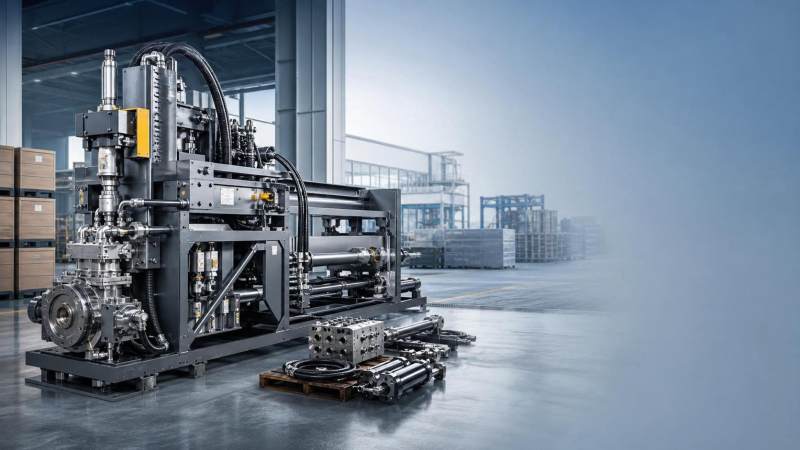
How to Evaluate OEM Industrial Machinery: Key Specs, Customization Options, and Supplier Risks
Evaluating OEM industrial machinery goes far beyond checking price tags or brochures.
The real decision sits at the intersection of technical fit, customization depth, operating cost, and supplier execution risk.
That is especially true in heavy-industry sectors where downtime, transport limits, and site conditions quickly turn a good quote into a poor investment.
For buyers comparing OEM industrial machinery, the goal is not simply to buy equipment.
It is to secure a machine that performs as promised, adapts to the project, and remains supportable for years.
This guide breaks down the practical checkpoints that improve sourcing accuracy and reduce avoidable risk.
Start with the operating scenario, not the catalog
A common mistake in OEM industrial machinery selection is starting from the standard model list.
In practice, the better starting point is the operating scenario.
Ask how the machine will actually work on site, under load, across shifts, and through weather variation.
This matters even more for machinery used in tunneling, mining, lifting, road construction, and heavy haulage.
The same rated machine can perform very differently in high altitude, abrasive geology, narrow access zones, or extreme temperatures.
Before comparing suppliers, define these inputs clearly:
- Material type, density, hardness, and moisture conditions
- Expected daily throughput and peak production windows
- Duty cycle, shift pattern, and planned annual operating hours
- Transport constraints, assembly space, and foundation limits
- Power supply, fuel strategy, and emissions requirements
- Operator skill level and maintenance capability at site
Once those conditions are pinned down, OEM industrial machinery comparisons become more objective.
You stop buying a generic machine and start buying project fit.
Focus on the specifications that drive output and reliability
Brochures often highlight headline power, capacity, or size.
Those figures matter, but they rarely tell the full story.
When evaluating OEM industrial machinery, it helps to separate visible specifications from performance-critical specifications.
Core performance metrics
Check rated output against continuous output, not only peak output.
A machine that only reaches target numbers under ideal conditions may underperform in real operations.
For OEM industrial machinery, compare:
- Rated versus sustained capacity
- Torque curves, breakout force, or lifting moment
- Cycle time under loaded conditions
- Fuel or energy consumption per ton, meter, or shift
- Availability target and mean time between failures
Structural and component quality
Ask what sits behind the specification sheet.
Frame design, steel grade, weld standards, and fatigue assumptions often decide service life.
The same applies to hydraulic systems, reducers, motors, control systems, bearings, and wear parts.
Well-known sub-suppliers are not a guarantee, but they do improve traceability and replacement planning.
Compliance and interface compatibility
OEM industrial machinery must also fit the regulatory and system environment around it.
Review emission standards, electrical compatibility, safety interlocks, control interfaces, and telemetry options.
This becomes critical when equipment must connect with fleet platforms, remote diagnostics, or plant-level automation.
Treat customization as a value driver, not a sales extra
Customization is one of the biggest reasons buyers choose OEM industrial machinery.
Still, not every customization improves results.
Some options solve a real operating constraint.
Others add complexity, longer lead times, and spare-part headaches.
The useful question is simple: which changes improve project economics or risk control?
- Functional customization: attachments, cutter tools, boom configuration, counterweight, or dump body design
- Environmental customization: cold-weather kits, desert filtration, altitude tuning, corrosion protection
- Control customization: remote operation, sensor packages, automation layers, localized interfaces
- Maintenance customization: centralized lubrication, service access, modular components, onboard diagnostics
When suppliers propose customized OEM industrial machinery, request evidence from prior projects.
That evidence can include drawings, test data, field references, and change-control procedures.
A serious supplier can explain which modules are proven and which remain newly adapted.
That distinction reduces the chance of becoming the first field test.
Look beyond purchase price to total cost of ownership
The lowest quote for OEM industrial machinery is often not the lowest long-term cost.
Recent market shifts make this even more obvious.
Energy volatility, freight uncertainty, and tighter delivery schedules raise the cost of poor equipment decisions.
For procurement decisions, total cost of ownership should cover at least five areas:
This also means comparing warranty terms carefully.
A cheaper OEM industrial machinery package with weak coverage can become expensive very quickly.
Look at exclusions, consumable definitions, response obligations, and whether overseas service is truly included.
Assess supplier risk with the same rigor as machine risk
A technically strong machine can still be a weak procurement decision if the supplier cannot execute.
Supplier risk is one of the most underestimated parts of OEM industrial machinery sourcing.
Production and delivery risk
Check manufacturing capacity, key process control, and backlog visibility.
Ask which components are made in-house and which rely on outside vendors.
Long supply chains can expose OEM industrial machinery projects to hidden lead-time risk.
Service and parts risk
After-sales support should be verified, not assumed.
Review spare-parts stocking policy, regional warehouses, technician coverage, and escalation paths.
For remote projects, support logistics can matter more than list price.
Financial and contractual risk
A supplier’s financial condition affects warranty credibility, parts continuity, and project completion.
Look for audited information where possible, or at least stable export history and referenceable installations.
Contract terms for OEM industrial machinery should define milestones, acceptance tests, penalties, documentation, and dispute handling clearly.
Use a structured evaluation process before award
A disciplined sourcing process improves both pricing and decision quality.
For OEM industrial machinery, a practical sequence usually works best.
- Issue a detailed requirement sheet with operating conditions and target outputs
- Request deviations list, not only quotations
- Score technical compliance before commercial comparison
- Validate customization scope and freeze interfaces early
- Run supplier due diligence, including references and factory review
- Model lifecycle cost using realistic utilization data
- Tie payments to inspection, test, shipment, and commissioning milestones
This approach creates a cleaner comparison between competing OEM industrial machinery offers.
It also makes internal approval easier because technical, financial, and operational assumptions are visible.
Make the final decision on evidence, not claims
The best OEM industrial machinery decision usually comes from evidence layered across several sources.
That includes test data, site references, drawings, component traceability, commercial clarity, and realistic support commitments.
In sectors shaped by power, precision, and project risk, that discipline pays back quickly.
For teams navigating global heavy equipment markets, informed evaluation is a strategic advantage, not an administrative step.
A well-chosen OEM industrial machinery platform should match the job, support the operating model, and hold up under pressure long after delivery.
Build the shortlist carefully, challenge every assumption, and let measurable fit drive the award decision.
Related News
 Oct 02, 2026How to Evaluate Heavy Equipment Technology Suppliers for Fleet Uptime and SupportHeavy equipment technology suppliers can make or break fleet uptime. Learn how to assess diagnostics, data access, parts, service coverage, and support terms before you buy.
 Oct 01, 2026How to Use Technical References to Benchmark Industrial Equipment PricesIndustrial equipment technical reference pricing: learn how to normalize specifications, scope, service life, and operating costs to benchmark quotes accurately and choose the best-value equipment.
 Sep 30, 2026What Does an Ultra-Large Excavator Really Cost Over Its Service Life?Ultra-large excavators cost far more than purchase price. Explore lifecycle expenses, uptime risks, energy use, maintenance, and cost-per-tonne insights.
 Sep 29, 2026Infrastructure Construction Standards: A Project Manager’s Guide to ComplianceInfrastructure construction standards guide for project managers: turn requirements into field controls, hold points, traceability, and compliant delivery.


Ms. Elena Rodriguez
Weekly Insights
Stay ahead with our curated technology reports delivered every Monday.