
Geotechnical construction insights that improve site safety
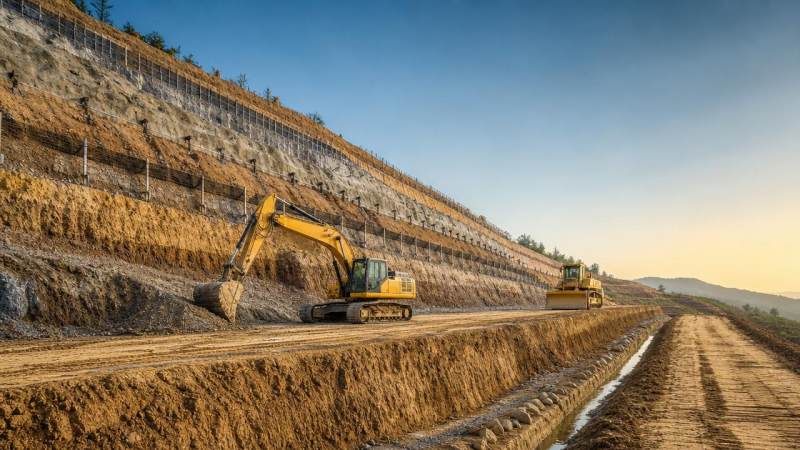
Geotechnical construction insights are essential for quality and safety managers who need to reduce ground-related risks before they escalate into delays, failures, or incidents. From soil behavior and slope stability to excavation control and heavy equipment coordination, informed site decisions create safer workflows, stronger compliance, and more reliable project outcomes across complex infrastructure and earth engineering environments.
Why geotechnical construction insights matter before work starts
For quality control and safety teams, the most expensive site risk is often the one hidden below grade. Weak strata, water ingress, unexpected voids, unstable slopes, and poor haul-road bearing capacity can turn a manageable project into a chain of nonconformities, stoppages, and safety events.
That is why geotechnical construction insights should not be treated as design paperwork alone. They are operational tools. They shape excavation sequences, equipment positioning, temporary works, dewatering plans, lifting exclusions, and inspection frequency across tunneling, mining, road works, and heavy lifting environments.
In global heavy industry, the link between ground conditions and machinery performance is direct. A TBM reacts differently in mixed face geology than in uniform rock. A crawler crane has a very different stability envelope on compacted granular fill than on saturated clay. Mining dump trucks face braking, rutting, and rollover risks when haul roads are not matched to subgrade behavior.
- They reduce uncertainty during site mobilization and early excavation.
- They improve the quality of method statements, lift plans, and permit controls.
- They help teams set measurable hold points for inspection, testing, and corrective action.
- They support safer coordination between civil works and high-value heavy equipment.
From subsurface data to field decisions
The practical value of geotechnical construction insights lies in translation. Borehole logs, lab data, settlement predictions, and groundwater records must be converted into simple site rules: where equipment can stand, how deep crews can excavate before support is installed, what rain thresholds trigger stoppage, and which zones require enhanced monitoring.
Which site hazards should safety managers evaluate first?
Not every project faces the same geotechnical risk profile, but several hazard groups repeatedly affect infrastructure and earth engineering operations. Safety managers should rank them by consequence, probability, and exposure duration rather than by familiarity.
The following table helps organize geotechnical construction insights into a site-level hazard review that supports inspection planning and control selection.
A key lesson from these hazards is that visual checks alone are not enough. Geotechnical construction insights become far more useful when paired with trigger-action-response plans, especially where production pressure encourages crews to normalize small deformations or water-related warning signs.
How different project types use geotechnical construction insights
Tunnel boring and underground works
In TBM projects, geology controls cutter wear, face stability, slurry or EPB balance behavior, settlement potential, and segment loading. Quality teams need inspection points tied to ground class transitions, while safety teams need fast escalation rules for water ingress, gas indications, or abnormal torque and thrust patterns.
Open-pit mining and large excavation zones
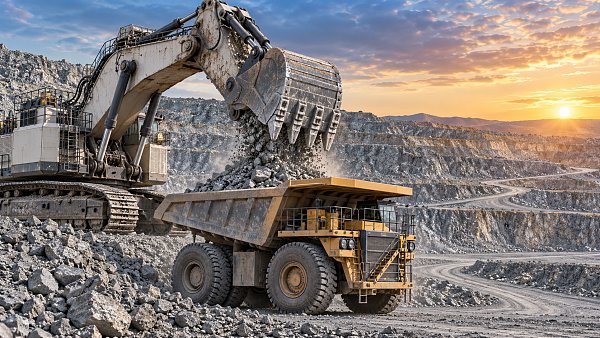
Mining operations depend on stable benches, predictable blasting response, and reliable haul roads. Here, geotechnical construction insights inform slope angles, berm integrity, dump placement, drainage pathways, and traffic controls under high load and continuous movement conditions.
Crawler crane and ultra-large lifting operations
Lift safety is never just a crane chart issue. The ground is part of the lifting system. Safety managers must check mat design assumptions, subgrade moisture changes, nearby excavation influence, and repetitive loading effects that can degrade temporary working platforms over time.
Road construction and heavy traffic corridors
For large road machinery, subgrade variability drives compaction strategy, pavement layer performance, drainage durability, and work-zone stability. Poor geotechnical decisions at formation level often reappear later as rutting, edge cracking, or premature maintenance demands.
- TBM sites need face condition alerts linked to equipment behavior and segment quality.
- Open-pit sites need slope movement review tied to traffic plans and rain events.
- Heavy lifting zones need working platform verification before each critical lift stage.
- Road projects need tighter moisture, density, and drainage control before paving progresses.
What quality and safety teams should inspect before equipment moves in
One recurring problem in earth engineering is the gap between geotechnical reports and field readiness. Before major plant arrives, teams should verify whether site conditions still match the assumptions used in design, temporary works, and construction planning.
The checklist below converts geotechnical construction insights into practical pre-mobilization controls for high-risk projects.
This kind of structured review helps prevent a common failure mode: mobilizing expensive machinery onto a site that is technically open but not operationally safe. It also gives quality personnel stronger evidence when holding work pending correction.
How TF-Strategy supports better geotechnical decisions in heavy industry
TF-Strategy is positioned around the meeting point of geology, machinery capability, and infrastructure execution. That matters because quality and safety managers rarely need isolated data. They need connected intelligence that explains how a ground condition changes machine behavior, schedule exposure, total cost of ownership, and field risk.
For TBM, open-pit mining, crawler cranes, large road machinery, and mining dump trucks, TF-Strategy tracks not only sector developments but also the operational logic behind them. This is especially useful when teams are evaluating new excavation methods, remote-control trends, electrified fleets, or updated material choices that can change construction sequencing and site controls.
Why this matters to quality control personnel
- Better alignment between machine parameters and geotechnical constraints improves inspection planning.
- Market and technical intelligence helps teams compare methods before procurement commitments are locked in.
- Commercial insight supports more realistic risk pricing for temporary works, monitoring, and support measures.
Why this matters to safety managers
- Cross-sector observation reveals recurring failure patterns that local teams may not see early enough.
- Equipment-focused intelligence helps define safer stand-off distances, platform checks, and operational limits.
- Trend analysis supports forward planning where digital monitoring and remote operation are changing exposure profiles.
Procurement and method selection: what should you compare?
Many site incidents start with a procurement shortcut. A method, machine, or temporary support option may appear cost-effective at tender stage, yet perform poorly once groundwater, weak layers, or restricted access are encountered. Geotechnical construction insights should therefore be part of every comparison framework.
Decision points worth testing
- Does the equipment load profile match verified bearing capacity, not assumed bearing capacity?
- Can the method tolerate groundwater variability without major productivity loss or emergency support?
- What monitoring is required to maintain compliance and defend hold-point decisions?
- How sensitive is the option to weather, access restriction, and material supply interruptions?
- What are the downstream quality consequences if ground behavior differs from the initial model?
A useful rule is simple: the lower the geological certainty, the more procurement should reward adaptability, monitoring access, and safe recovery options rather than headline production rate alone.
Standards, compliance, and documentation that should not be overlooked
Geotechnical compliance is rarely defined by one standard. Projects usually combine local excavation rules, temporary works procedures, lifting guidance, mining regulations, contract specifications, and internal permit-to-work systems. The challenge for safety and quality managers is not only knowing the rules, but proving controls were selected on current site evidence.
In practice, documentation should be reviewed as a live system rather than a handover archive.
- Geotechnical baseline information should be traceable to field revisions and new observations.
- Temporary works calculations should align with the actual construction sequence and load path.
- Lift plans and traffic plans should reflect changing ground conditions, not only initial layouts.
- Inspection test plans should include ground-related hold points, trigger levels, and escalation routes.
Where international contractors work across regions, this discipline becomes even more important. A robust site file makes it easier to reconcile local regulatory expectations with multinational client assurance requirements.
Common misconceptions about geotechnical construction insights
“The geotechnical report is enough for execution.”
A report is a starting point, not a substitute for field verification. Seasonal water change, undocumented fills, construction disturbance, and neighboring works can all change conditions after investigation is completed.
“If equipment can enter the area once, the platform is acceptable.”
Initial access does not prove long-term stability. Repetitive tracking, rainfall, vibration, and crane cycling can progressively weaken a platform. Verification must continue throughout the operation.
“Groundwater is mainly a productivity issue.”
Groundwater affects visibility, erosion, face pressure, uplift, electrical exposure, slope stability, and support performance. It is both a safety and quality issue, not just a delay factor.
FAQ: practical questions from quality and safety managers
How often should geotechnical conditions be reassessed during construction?
Reassessment frequency depends on hazard level, excavation depth, groundwater sensitivity, and weather exposure. As a practical rule, conditions should be reviewed after major rain, blasting, dewatering changes, support installation delays, or any visible deformation. Critical lifts and new excavation stages also justify fresh verification.
Which geotechnical construction insights are most useful for heavy lifting safety?
The most useful insights are working platform strength, moisture sensitivity, settlement risk under cyclic load, and the influence of nearby excavations or buried services. These factors often matter more than nominal crane capacity when stability margins are tight.
What should quality teams request before approving excavation progression?
They should ask for updated face or slope observations, drainage status, support installation records, relevant monitoring data, and confirmation that hold points were closed against current conditions rather than planned assumptions. Photographic evidence and supervisor sign-off strengthen traceability.
Are digital tools changing how geotechnical risk is managed?
Yes. Remote monitoring, connected machinery, and condition dashboards are improving response time and trend visibility. However, they add value only when teams define meaningful thresholds and link alarms to clear site actions. Data without response logic does not improve safety.
Why choose us for intelligence that strengthens site safety
TF-Strategy helps quality and safety leaders move beyond isolated reports by connecting geotechnical construction insights with machine behavior, construction methods, and commercial decision pressure. This is especially valuable on projects involving TBM operations, open-pit production, crawler crane lifts, large road machinery deployment, and heavy haulage planning.
You can consult with TF-Strategy on practical topics that affect real project outcomes: parameter confirmation for equipment-ground interaction, method comparison for difficult geology, likely impacts on delivery schedule, monitoring priorities, cost-sensitive support options, and intelligence that informs safer procurement choices.
If your team is reviewing site risk before mobilization, evaluating a new heavy equipment package, or tightening compliance for a complex earth engineering project, contact us to discuss selection logic, operational constraints, delivery timing, documentation expectations, and tailored intelligence support for safer execution.
Related News
 Oct 09, 2026Ultra-Large Excavator Bucket Size: Capacity, Width, and Site Fit ExplainedUltra large excavator bucket size explained: compare capacity, width, payload, truck matching, and site conditions to select a reliable, high-productivity bucket.
 Oct 08, 2026How to Evaluate a Heavy Machinery Information Platform for Project Equipment SourcingHeavy machinery information platform guide: compare equipment fit, source reliability, lifecycle costs, supplier capability, and compliance to make smarter sourcing decisions.
 Oct 07, 2026How to Evaluate a Hydraulic System Component Supplier for Heavy Equipment UptimeChoose a hydraulic system component supplier with proven quality, technical fit, and reliable delivery to reduce heavy equipment downtime and lifecycle costs.
 Oct 06, 2026Selecting Petrochemical Overhead Cranes for Hazardous Areas and Heavy Process LoadsPetrochemical overhead cranes for hazardous areas: learn how to match capacity, duty, controls, corrosion protection, and maintenance access for safer, reliable lifts.
Ms. Elena Rodriguez
Weekly Insights
Stay ahead with our curated technology reports delivered every Monday.