
What infrastructure development strategies still work in 2026
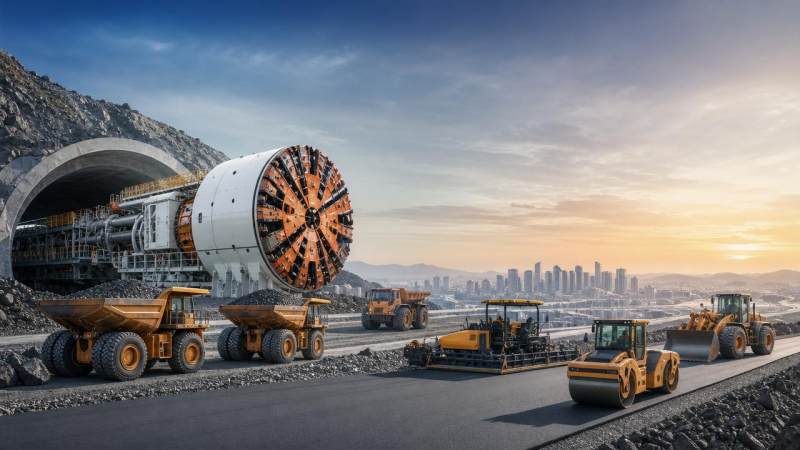
In 2026, infrastructure development strategies that still deliver results are no longer defined by scale alone, but by intelligence, resilience, and lifecycle efficiency.
Capital is tighter, energy systems are changing, and delivery risks are harder to ignore across transport, mining, utilities, and urban works.
That shift makes infrastructure development strategies more operational than rhetorical. The best plans now connect equipment selection, geology, logistics, safety, data, and long-term maintenance.
For global heavy industry, this means choosing methods that improve output quality while reducing total cost of ownership, delay exposure, and performance uncertainty.
TF-Strategy tracks this change closely across TBM systems, open-pit mining fleets, crawler cranes, road machinery, and mining dump trucks, where execution details shape strategic outcomes.
Infrastructure development strategies in 2026: a practical definition
In practical terms, infrastructure development strategies are coordinated decisions that guide how assets are planned, built, financed, operated, and renewed.
In 2026, strategies still work when they support three outcomes: faster delivery, stronger resilience, and better lifecycle economics.
This is especially true for heavy projects involving tunneling, mining support, energy foundations, logistics corridors, and high-capacity road networks.
A viable strategy is not just a funding plan. It must also define construction methodology, equipment productivity, material flow, digital oversight, and risk controls.
Where these elements are disconnected, projects often suffer from idle machinery, change orders, weak quality consistency, and poor asset performance after handover.
Core features of effective strategies
- They match engineering method to ground, climate, and transport conditions.
- They prioritize lifecycle value over lowest initial bid.
- They use equipment data to improve reliability and scheduling.
- They include resilient supply planning for parts, fuel, and materials.
- They align construction output with energy transition and safety standards.
Current market signals shaping infrastructure development strategies
Several market signals explain why some infrastructure development strategies remain effective while others lose relevance.
Project owners increasingly require predictable delivery under inflation pressure, stricter environmental controls, and more complex stakeholder expectations.
Meanwhile, heavy equipment is becoming more digital, more energy-efficient, and more specialized for demanding jobsite conditions.
Which infrastructure development strategies still work
The most durable infrastructure development strategies share one trait: they convert engineering complexity into manageable, measurable operating systems.
1. Method-first planning
Successful projects start with construction method, not only final design. In tunneling, TBM configuration must reflect geology, alignment, and spoil handling realities.
In mining-linked infrastructure, haul road design, excavator loading logic, and dump truck cycle efficiency should be modeled before budget locking.
2. Lifecycle cost control
Infrastructure development strategies still work when they reduce long-term maintenance burden, fuel use, component wear, and service interruptions.
This favors durable cutter materials, efficient hydraulic systems, modular crane serviceability, and road machinery with precision compaction control.
3. Data-led execution
Remote diagnostics, fleet telemetry, geotechnical monitoring, and digital worksite coordination have moved from optional upgrades to strategic basics.
These tools help teams detect underperformance early, rebalance schedules, and avoid cascading downtime across interconnected work packages.
4. Resilient supply architecture
Spare parts, steel inputs, cutter consumption, tire availability, and transport windows now carry strategic weight in major infrastructure programs.
Projects with dual-source planning and local service capacity are better positioned than projects that rely on single, fragile supply channels.
5. Decarbonization with productivity discipline
Green goals matter, but only practical decarbonization supports enduring infrastructure development strategies.
Electrification, energy recovery, and lower-emission fleets work best when charging, duty cycles, and site power availability are realistically integrated.
Business value across major infrastructure segments
The value of strong infrastructure development strategies becomes clearer when viewed through operating results instead of policy language.
Typical application paths for infrastructure development strategies
Different project types require different emphasis, yet the strongest infrastructure development strategies follow several repeatable paths.
- Transit corridors: prioritize alignment certainty, tunneling productivity, and urban disruption control.
- Mining-adjacent infrastructure: focus on heavy haul efficiency, slope safety, and equipment endurance.
- Energy construction: integrate crane logistics, component handling, and weather-risk planning.
- Road modernization: use paving data, surface quality metrics, and lifecycle maintenance forecasting.
- Cross-border projects: build redundancy in suppliers, compliance review, and transport permissions.
TF-Strategy’s heavy-equipment intelligence model is relevant here because strategic success often depends on machine physics as much as financial structure.
A tunnel boring machine with unsuitable cutterhead logic, or a dump truck fleet without altitude adaptation, can undermine otherwise sound infrastructure development strategies.
Implementation priorities and common mistakes
Good infrastructure development strategies can still fail during execution if decision frameworks are too abstract or too slow.
Implementation priorities
- Define asset performance targets before procurement starts.
- Link geotechnical findings directly to equipment and method decisions.
- Use measurable uptime, fuel, wear, and output indicators.
- Plan local service, parts stocking, and technician access early.
- Review energy supply assumptions for hybrid or electric fleets.
Common mistakes
- Treating infrastructure development strategies as policy statements without operational detail.
- Choosing equipment mainly by price instead of lifecycle fit.
- Underestimating site logistics, weather exposure, or consumable lead times.
- Ignoring digital integration until problems become visible.
- Assuming decarbonization automatically improves economics.
A grounded next step for 2026 planning
The infrastructure development strategies that still work in 2026 are grounded, measurable, and equipment-aware.
They combine resilient planning with field-level precision across tunneling, mining, lifting, paving, and heavy haul operations.
A useful next step is to review current projects through five filters: method fit, lifecycle cost, digital visibility, supply resilience, and energy realism.
This approach reveals whether existing infrastructure development strategies can still support quality delivery under 2026 conditions.
For organizations tracking global heavy-equipment trends, intelligence from TBM systems, mining fleets, crawler cranes, road machinery, and dump trucks offers a sharper strategic baseline.
That is where TF-Strategy adds value: connecting machinery capability, construction methodology, and infrastructure intent into decisions that remain practical when conditions change.
Related News
 Oct 09, 2026Ultra-Large Excavator Bucket Size: Capacity, Width, and Site Fit ExplainedUltra large excavator bucket size explained: compare capacity, width, payload, truck matching, and site conditions to select a reliable, high-productivity bucket.
 Oct 08, 2026How to Evaluate a Heavy Machinery Information Platform for Project Equipment SourcingHeavy machinery information platform guide: compare equipment fit, source reliability, lifecycle costs, supplier capability, and compliance to make smarter sourcing decisions.
 Oct 07, 2026How to Evaluate a Hydraulic System Component Supplier for Heavy Equipment UptimeChoose a hydraulic system component supplier with proven quality, technical fit, and reliable delivery to reduce heavy equipment downtime and lifecycle costs.
 Oct 06, 2026Selecting Petrochemical Overhead Cranes for Hazardous Areas and Heavy Process LoadsPetrochemical overhead cranes for hazardous areas: learn how to match capacity, duty, controls, corrosion protection, and maintenance access for safer, reliable lifts.
Ms. Elena Rodriguez
Weekly Insights
Stay ahead with our curated technology reports delivered every Monday.