
Heavy Equipment Market Insights: What Lifting Demand Signals for Fleet Investment?
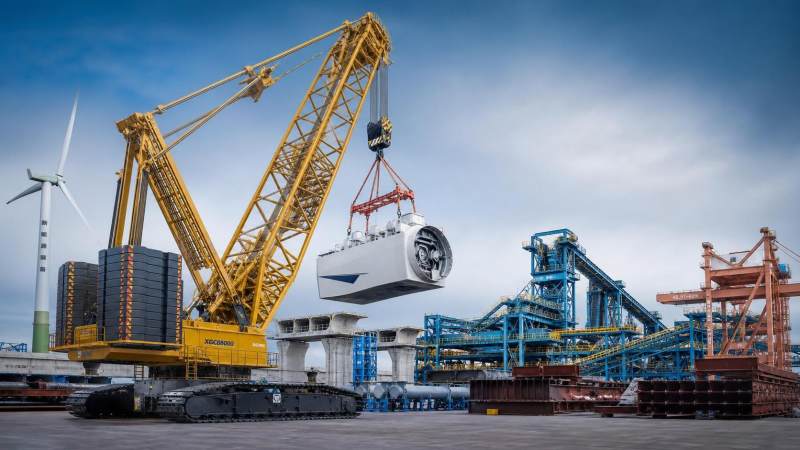
What lifting demand really tells you about the heavy equipment market
The phrase heavy equipment market insights lifting is often treated as a narrow question about crane orders or project starts. That is too shallow. In practice, lifting demand is one of the clearer leading indicators for how capital-intensive construction cycles are changing, because heavy lifts usually appear where engineering complexity, schedule pressure, and financing confidence meet. When contractors, developers, and industrial owners start planning more high-capacity lifts, they are not just moving bigger components. They are revealing what kinds of assets are entering the field, how work is being sequenced, and whether fleets need to shift from general-purpose support machines to specialized capacity.
That matters for fleet investment because lifting demand rarely moves in isolation. It is tied to the dimensions and weights of wind turbine components, modular petrochemical units, precast bridge segments, mining plant assemblies, TBM launch support systems, and grid infrastructure. A rise in lifting requirements can signal a market that is becoming more technically demanding even when the total number of projects is not expanding at the same pace. For owners and fleet planners, the question is not simply whether there is “more demand,” but what kind of demand is taking shape and whether existing equipment can serve it without eroding margins.
Lifting demand is a structural signal, not just a utilization number
In heavy industry, utilization rates are useful but incomplete. A fleet can appear busy while still being poorly matched to the market. A crawler crane working continuously on lower-complexity lifts is not the same commercial signal as a crawler crane mobilized for repeated heavy picks under tight radius, wind, and ground-bearing constraints. The second case usually points to a project environment where technical capability and engineering assurance command more value than simple machine availability.
This is why experienced operators watch lifting demand through several lenses at once: load class, lift height, site congestion, assembly sequence, transport constraints, and duration of deployment. A market may look stable in broad construction volume terms while actually shifting toward heavier nacelles, longer blades, larger reactor modules, or more prefabricated civil elements. Each of those changes alters the economics of fleet composition. Machines that were adequate five years ago may still function, but their commercial fit can weaken if they require more auxiliary equipment, more time on site, or a narrower weather window to do the same job.
Why energy and industrial projects are driving the conversation
One reason lifting has become such a useful market lens is that the most visible infrastructure transitions are material-intensive. Wind power is the obvious example. As turbines grow, the lifting challenge is no longer only about rated capacity on paper. It is about hook height, boom configuration, transportability, site access, and the time penalty of assembly and disassembly. The crane that can technically complete the lift may still be the wrong investment if mobilization costs and idle days consume the project economics.
The same logic applies in petrochemical, nuclear-adjacent construction environments, mining process plants, and large civil packages. Modularization changes the profile of demand. More work is completed off-site, but that does not reduce lifting intensity. It often concentrates it. Fewer lifts may carry far greater consequence, because the components are larger, installation windows are tighter, and the cost of a delay spreads across multiple contractors. In those environments, the market rewards reliability, engineering support, and predictable performance under difficult site conditions, not just the headline tonnage class of the machine.
For a platform such as TF-Strategy, which tracks TBM systems, open-pit mining, and ultra-large lifting machinery together, this crossover matters. The heavy equipment market does not divide neatly by product category in the field. A tunnel project may trigger demand for shaft lifting, segment handling, and logistics support. A mine expansion may require large excavators, haulage systems, and major erection work for crushers or conveying infrastructure. The fleet signal emerges from the engineering system around the machine, not from the machine alone.
Common mistakes in reading lifting demand
A common mistake is to equate more lifting demand with an automatic case for buying larger cranes. That is not always true. In some markets, what is growing is not peak capacity demand but the need for faster assembly cycles, better mobility between sites, or reduced dependence on complex support fleets. In other words, a contractor may be better served by a smaller number of high-spec machines with stronger configuration flexibility than by chasing the largest available class.
Another misread is treating project announcements as bankable demand. Heavy lifting is particularly exposed to slippage. Financing delays, permitting changes, grid connection issues, and EPC sequencing decisions can all move actual equipment demand away from the original schedule. Fleet investment based only on announced capacity pipelines can leave owners with machines arriving before the market is ready to absorb them.
There is also a tendency to overfocus on acquisition cost. In lifting, total cost of ownership is heavily affected by transport packages, site setup, counterweight logistics, crew capability, maintenance support, and the commercial cost of downtime. A machine that looks expensive at purchase can still outperform on lifecycle economics if it reduces mobilization complexity or secures access to projects that lower-spec fleets cannot bid competitively.
What decision-makers should actually watch
If the goal is to turn heavy equipment market insights lifting into an investment decision, the useful indicators are more specific than broad “market optimism.” The strongest questions usually look like this:
- Are project components getting heavier, taller, or less tolerant of installation delays?
- Is demand concentrated in a few landmark jobs, or is it broadening across repeatable industrial programs?
- Do customers increasingly ask for lift planning, engineering assurance, and risk transfer, rather than just machine rental?
- Is transport and site access becoming the binding constraint instead of nominal lifting capacity?
- Can the current fleet maintain acceptable utilization without discounting rates to win work?
Those questions help separate a temporary spike from a genuine structural shift. A stable flow of technically demanding work is usually a better investment signal than a short burst of oversized projects with weak continuity. The difference matters because heavy lifting fleets are exposed to long payback periods and a narrow resale market when specifications become too specialized.
Fleet strategy is increasingly about fit, not size
The old habit of measuring fleet strength by the presence of a flagship machine is less useful than it once was. In many regions, competitive advantage comes from having the right mix across the job chain: machines capable of major lifts, support cranes that reduce bottlenecks, transportable configurations, and technical teams that can model ground conditions and erection sequences early. A contractor with balanced capability often captures more value than one with isolated extreme capacity.
This is where intelligence quality matters. Market monitoring should connect equipment trends with construction methodology and supply-chain reality. For example, an increase in heavier turbine components may support investment in larger crawler cranes, but only if blade transport routes, site road design, and erection windows also align. In mining and tunneling, the same principle applies. Equipment demand becomes strategic when machine parameters, project design, and logistical conditions reinforce each other. Without that connection, fleet investment becomes speculation dressed up as market insight.
Where the signal is strongest for the next cycle
The clearest lifting signals tend to emerge where infrastructure is scaling in both physical size and execution pressure. Energy transition projects fit that profile. So do selected industrial modernization programs, port upgrades, mineral processing expansions, and transport corridors with high prefabrication content. These markets demand machines, but they also demand planning discipline. The equipment owner who understands that distinction is less likely to chase volume and more likely to build a fleet that earns premium utilization.
That is also why cross-sector observation has become more valuable. A company focused only on crane tender counts may miss the deeper drivers appearing earlier in adjacent sectors: raw material flows, component design changes, project financing behavior, remote-control adoption, or contractor preferences for modular construction. TF-Strategy’s view across TBM, mining, haulage, and lifting reflects this reality. Major equipment categories increasingly move in connected cycles, and lifting demand often makes that connection visible before it appears in headline market summaries.
A practical reading of the market
For business decision-makers, the useful takeaway is straightforward. Lifting demand is not just a proxy for busier job sites. It is a readout on project scale, technical complexity, and the willingness of the market to pay for execution certainty. When those factors strengthen together, fleet investment can make sense even in a mixed macro environment. When they do not, more capacity can become an expensive burden.
The better investment question is therefore not “Will lifting demand rise?” but “What does this pattern of lifting demand imply about the next workable fleet configuration?” That shift in framing leads to better capital decisions. It forces attention onto application boundaries, engineering constraints, and asset fit. In heavy equipment, that is usually where the real market insight starts.
Related News
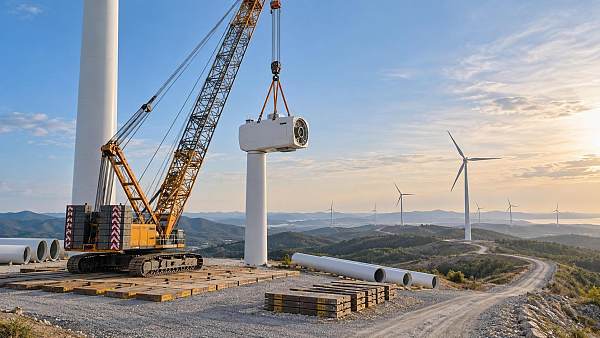
 Sep 13, 2026Crawler Crane Application Analysis for Wind Farms, Bridges, and Confined SitesCrawler crane application analysis for wind farms, bridges, and confined sites—optimize lift paths, ground conditions, access, and schedules for safer project delivery.
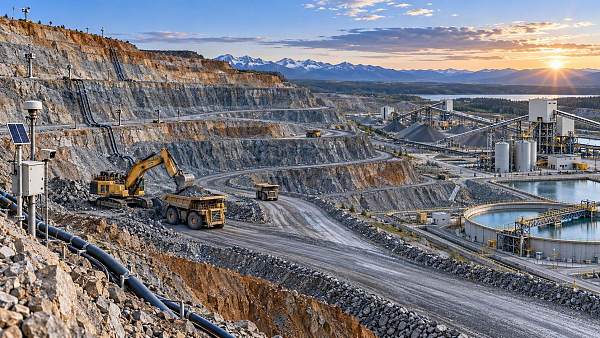
 Sep 12, 2026Open-Pit Mining in North America: Key Project Risks and Planning PrioritiesOpen-pit mining North America: uncover key risks and planning priorities for geology, permitting, water, fleet strategy, and resilient project delivery.
 Sep 11, 2026TBM Systems in Southeast Asia: Key Selection Factors for Variable Ground ConditionsTBM systems Southeast Asia: discover key selection factors for variable ground, pressure control, monsoon resilience, and safer tunnel delivery.
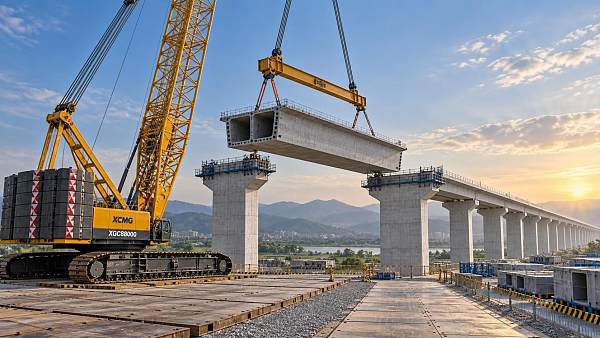
 Sep 10, 2026How to Select Bridge Lifting Machinery for Span, Load, and Site ConstraintsLifting machinery for bridges: learn how to match capacity, span, radius, ground conditions, and access constraints for safer, cost-effective bridge erection.

Ms. Elena Rodriguez
Weekly Insights
Stay ahead with our curated technology reports delivered every Monday.