
What Are New Energy Construction Systems and Where Do They Fit in Modern Projects?
What Are New Energy Construction Systems and Where Do They Fit in Modern Projects?
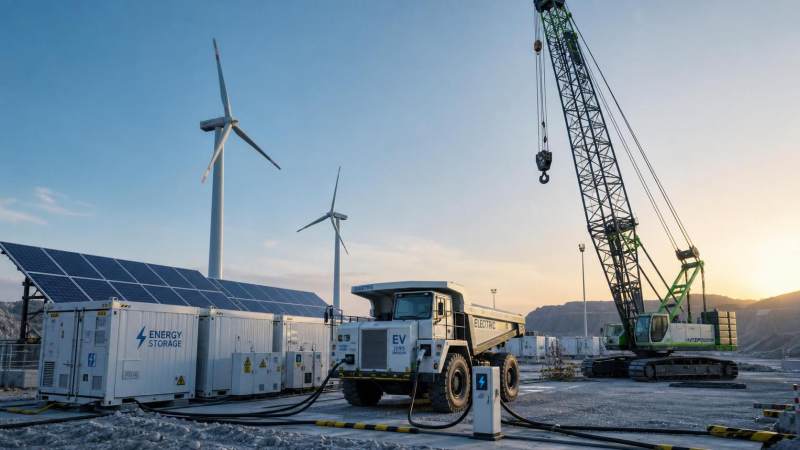
The phrase new energy construction systems is easy to misunderstand because it sounds broader than it is. In project practice, it usually does not refer to a single machine, a standalone power source, or a green label added late in procurement. It points to a coordinated construction approach in which energy generation, power distribution, equipment selection, charging or fueling infrastructure, control systems, and site operations are planned as one technical system. The distinction matters. A diesel-heavy jobsite with a few electric machines is not automatically operating under a new energy construction system. The system only becomes real when the project’s power logic changes.
That change is now visible across infrastructure. On one end are wind, solar, grid-connected storage, hydrogen, and hybrid microgrids entering construction sites that once depended almost entirely on diesel gensets. On the other end are electrified or partially electrified work fleets: battery-electric mining trucks, plug-in service equipment, electric tower and crawler crane support systems, cable-fed tunneling equipment, and digitally managed charging schedules. Between those ends sits the hard part, which is integration. Heavy construction does not care whether a technology sounds advanced; it cares whether peak load, uptime, terrain, duty cycle, safety, and logistics still work under pressure.
In other words, these systems belong wherever energy has become a design variable rather than a background utility. That is why the term appears more often in large infrastructure, mining, tunneling, industrial plants, ports, and utility-scale energy works than in light construction. The larger the machine fleet and the more demanding the site conditions, the more obvious the energy architecture becomes.
What the term actually covers
A useful way to read the term is to separate “new energy” from “construction systems,” then put them back together. “New energy” typically includes low-carbon or non-fossil power inputs such as grid electricity from increasingly decarbonized sources, onsite solar, battery energy storage, hydrogen in some pilot or specialized applications, and hybrid power architectures that reduce direct fuel burn. “Construction systems” means the operational whole: machines, substations, temporary power networks, charging interfaces, telemetry, dispatch logic, maintenance routines, and even shift scheduling.
This is why the concept cannot be judged by equipment brochures alone. A battery-electric machine may fit one project and fail in another, not because the machine is weak, but because the surrounding system is missing. If haul cycles are long, ambient temperatures are extreme, or the site has no stable charging window, the project may need battery swapping, trolley assist, regenerative braking capture, or hybrid support generation. If those elements are absent, the “new energy” label is superficial.
The same logic applies in tunneling. Tunnel boring operations already depend on large electrical loads, fixed plant coordination, slurry or segment logistics, ventilation, dewatering, and continuous monitoring. In that environment, new energy construction systems often fit more naturally than people expect, because the work is already system-based. The question is less about introducing electricity and more about how to decarbonize associated support processes, optimize load stability, and reduce the fuel dependence of auxiliary fleets and temporary site infrastructure.
Where they fit best
They fit best where three conditions overlap: predictable energy demand, high equipment utilization, and enough project duration to justify infrastructure investment. That usually includes long-cycle projects rather than short, fragmented jobs.
In open-pit mining, the case is straightforward. Haulage consumes enormous energy, and the operational profile is repetitive enough to model charging, trolley lines, or hybrid power support with some confidence. The commercial appeal here is not abstract sustainability language; it is whether operators can manage energy cost, maintenance burden, payload impact, and production continuity better than under pure diesel dependence. A mine at altitude or in severe temperature conditions may still face serious constraints, but the energy model is visible enough to analyze in detail.
In ultra-large lifting projects, the fit is narrower but still important. Crawler cranes and lifting systems for wind, nuclear, and petrochemical works are not “new energy” simply because they are used on energy projects. The concept becomes relevant when the temporary power setup, transport coordination, auxiliary machinery, and erection sequence are optimized around lower-emission site energy. Wind farm construction is a good example of where this can matter, because the project often takes place in remote terrain with repeated lifting tasks, temporary roads, and high logistics sensitivity.
Road machinery sits somewhere in the middle. Asphalt production, paving trains, compaction, and material transport involve mixed loads and distributed workflows, so full electrification is harder than many headlines imply. Yet partial adoption can still make sense in support fleets, mobile storage, depot charging, and selected equipment classes. The key is to avoid treating every road project as if it shares the same energy profile. Urban resurfacing, long-distance highway paving, and smart road corridor construction do not impose the same constraints.
Ports, industrial yards, and major precast facilities also tend to be strong candidates. They combine fixed geography, repeated duty cycles, and easier access to permanent or semi-permanent electrical infrastructure. Once equipment routes and peak demand are understood, system design becomes more practical.
Why the concept matters beyond emissions
A common mistake is to frame new energy construction systems as an environmental add-on. In reality, they affect project delivery logic. Energy choice influences machine layout, standby strategy, refueling or charging windows, spare capacity planning, fire safety design, cable routing, ventilation requirements, and maintenance skills. It also changes who needs to be involved early. Energy planners, temporary power engineers, OEM service teams, digital monitoring specialists, and site logistics managers end up sharing decisions that were once handled more narrowly by plant and procurement teams.
This is especially relevant in billion-dollar engineering environments, where a poor energy decision does not merely raise utility cost. It can slow tunneling progress, constrain lifting windows, interrupt haulage rhythms, or force oversized backup systems. That is why serious evaluation tends to focus on total operating logic rather than on headline equipment efficiency alone.
There is also a strategic layer. As contractors and owners face tighter reporting requirements, pressure to reduce direct emissions, and more scrutiny on lifecycle cost, energy architecture becomes part of bid competitiveness and asset planning. Even where regulation is uneven, lenders, insurers, multinational clients, and public-sector procurement bodies increasingly ask harder questions about energy intensity, resilience, and technology risk.
What people often get wrong
One misunderstanding is that “new energy” means full electrification. It often does not. In heavy-duty construction, hybrid systems may be the practical step because they reduce fuel use without forcing the project into a fragile operating model. Another misunderstanding is that decarbonized equipment automatically lowers total cost of ownership. It may, but only when utilization, charging infrastructure, maintenance capability, and residual value line up. If a site has unstable grid access or poor service support, the economics can reverse.
There is also a tendency to assume the technology question is mainly about vehicle range or battery size. Those metrics matter, but they are not enough. Peak power demand, simultaneous charging, downtime tolerance, cable management, substation placement, ground conditions, weather exposure, and workforce training often decide success earlier than the nameplate specification does.
Hydrogen creates another area of confusion. It is frequently discussed as part of the new energy transition, but its place in construction remains highly case-dependent. Storage, transport, safety protocols, fueling logistics, and local supply chains all matter. In some use cases it may become valuable, especially where high energy density and rapid refueling are decisive. In others, direct electrification or hybridization remains the more grounded option.
How to judge whether a project really has one
A practical test is to ask five questions.
- Is the site’s energy supply planned as a system, with known sources, backup logic, and load management?
- Do equipment choices match actual duty cycles rather than sustainability targets on paper?
- Are charging, fueling, or power distribution constraints incorporated into schedule and layout planning?
- Do safety, maintenance, and operator training reflect the chosen energy architecture?
- Can the project team explain the tradeoff between carbon reduction, uptime, capex, and operational flexibility?
If most of those answers are unclear, the project may be adopting isolated low-emission technologies rather than operating a true new energy construction system.
This is where industry intelligence becomes more valuable than broad trend language. For heavy sectors such as TBM operations, open-pit mining, ultra-large lifting, and heavy haulage, the decisive questions are rarely generic. They sit in the physical details: cutterhead support logistics, ramp gradients, crane assembly windows, ambient temperature effects, site electrification capacity, component transport limits, and maintenance response time. Those details determine whether the energy transition is operationally credible.
A better way to think about the term
The most useful definition is not “construction powered by cleaner energy.” It is “construction whose methods and machine ecosystem are reorganized around a new power model.” That framing is less catchy, but it is closer to how real projects work. It captures why some sites can move faster than expected while others stall despite strong policy pressure or ambitious procurement language.
For anyone researching the topic, the right next step is not to ask whether new energy construction systems are the future in some general sense. It is to ask where the system boundary starts, which loads dominate the job, what infrastructure must exist before equipment arrives, and what operational compromises the project can tolerate. Once those questions are answered, the term stops being vague. It becomes a concrete engineering and investment framework.
Related News
 Oct 27, 2026Construction Equipment Efficiency: How to Reduce Idle Time on JobsitesBoost construction equipment efficiency with smarter scheduling, telematics, and safe shutdown practices. Discover how to reduce idle time and fuel waste on your jobsite.
 Oct 26, 2026How TBM Electrical Systems Distribute Power and Protect Against FaultsExplore how TBM equipment electrical systems distribute power, coordinate fault protection, and maintain essential services. Learn what to check for safer, more reliable tunneling.
 Oct 25, 2026Comparing Industrial Equipment Suppliers: Lead Times, Warranties, and ServiceMake a smarter industrial equipment supplier comparison. Explore lead times, warranty coverage, and service support to reduce downtime risk and choose with confidence.
 Oct 24, 2026Choosing Lifting Equipment for Middle East Petrochemical Plants in Hazardous AreasExplore petrochemical lifting equipment Middle East plants can rely on. Compare hazardous-area certification, capacity, and heat limits to make informed procurement decisions.
Related News

Ms. Elena Rodriguez
Weekly Insights
Stay ahead with our curated technology reports delivered every Monday.