
Heavy equipment market analysis shows where margins are tightening

Heavy equipment market analysis is revealing a sharper reality for dealers, distributors, and agents: margins are tightening as input costs rise, competition intensifies, and project buyers demand more value. In this shifting landscape, understanding where profits are under pressure—and which segments still offer pricing power—has become essential for smarter inventory planning, channel strategy, and long-term growth.
What does heavy equipment market analysis actually show about margin pressure?
A useful heavy equipment market analysis goes beyond sales volume.
It tracks gross margin, service mix, financing costs, utilization, and replacement cycles.
Today, the clearest signal is margin compression across multiple equipment categories.
Steel, hydraulics, electronics, freight, and labor have all lifted total equipment cost.
At the same time, many bids are becoming more transparent and price-sensitive.
That combination reduces room for markups, especially in standardized machine classes.
Heavy equipment market analysis also shows a split between unit margin and lifecycle margin.
Initial equipment sales may weaken, while aftermarket support remains more resilient.
This matters across integrated heavy industries, from mining to tunneling to lifting.
For intelligence-driven platforms like TF-Strategy, the critical question is not only where demand exists.
It is where technical complexity still protects pricing and where it does not.
The main forces behind tighter margins
- Rising input and logistics costs
- Longer procurement cycles for critical components
- More aggressive discounting in mature categories
- Higher customer expectations for service and uptime guarantees
- Pressure from financing rates and slower project approvals
Which heavy equipment segments are seeing the fastest margin erosion?
Heavy equipment market analysis does not point to one universal answer.
Margin pressure differs by segment, application intensity, and technical specialization.
In broad terms, commoditized categories face the fastest erosion.
Machines with many comparable alternatives are easier for buyers to benchmark.
That drives price competition and narrows the premium available to channel partners.
Segments commonly under pressure
Large road machinery often faces specification-based bidding with thinner commercial flexibility.
Standard excavator classes can also be vulnerable in saturated regional markets.
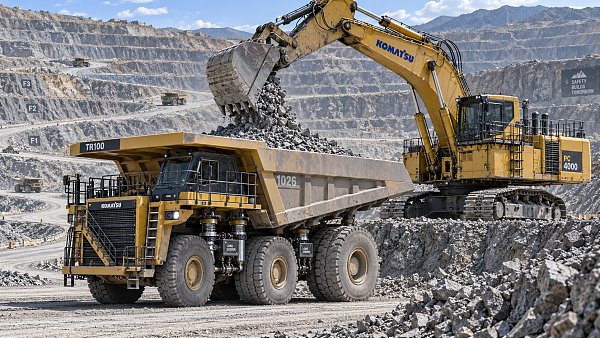
Some dump truck categories see pricing stress when commodity cycles soften.
Used equipment inflows can intensify that pressure by capping new equipment premiums.
Segments that still retain pricing power
TBM systems remain less exposed when projects require geology-specific engineering support.
Crawler cranes for wind, nuclear, and petrochemical work often retain stronger pricing.
Ultra-large excavators also perform better when uptime affects mine economics directly.
In these segments, support capability matters almost as much as machine specification.
Heavy equipment market analysis repeatedly shows that complexity protects margins.
Customization, commissioning, safety compliance, and digital monitoring all add defensibility.
Why do technically advanced machines often hold margins better?
The answer is not only product sophistication.
It is the commercial value of reduced risk across billion-dollar infrastructure projects.
When downtime can stop tunneling, delay a mine plan, or interrupt turbine installation, price becomes relative.
Buyers compare not only purchase cost, but total cost of ownership and schedule exposure.
That changes the economics of negotiation.
TF-Strategy’s focus areas illustrate this clearly.
TBM cutter head material upgrades can improve advance reliability in difficult geology.
Remote-controlled excavation can lower operating risk and improve precision.
Pure electric mining trucks can reshape long-term operating economics and emissions profiles.
Each of these features supports a broader value conversation.
That is exactly where heavy equipment market analysis becomes strategic rather than descriptive.
Margin resilience usually appears when three conditions align
- The machine is difficult to replace with a standard alternative.
- Operational failure would create high project losses.
- The supplier can prove service depth, parts readiness, and technical intelligence.
How should channel strategy change when heavy equipment market analysis shows tighter margins?
A shrinking margin environment rewards discipline more than volume chasing.
Discount-led growth can increase revenue while weakening overall profitability.
That is why heavy equipment market analysis should directly shape channel priorities.
Practical channel adjustments
- Shift emphasis from unit sales to solution bundles.
- Protect parts and service attachment rates.
- Use project intelligence to prioritize sectors with stronger funding visibility.
- Reduce speculative inventory in slow-turn categories.
- Develop financing structures linked to utilization and lifecycle support.
The strongest channels are becoming information-rich, not only machine-rich.
They understand project tenders, raw material shifts, regional regulations, and fleet modernization timing.
That intelligence reduces pricing mistakes and improves equipment positioning.
TF-Strategy’s model reflects this direction.
Engineering intelligence can become a margin tool, not just a research product.
What common mistakes weaken profit decisions in heavy equipment market analysis?
The first mistake is treating all demand growth as healthy demand.
Some sales expansion comes from discounting that damages long-term price expectations.
The second mistake is ignoring lifecycle economics.
A lower-margin machine sale may still be attractive with strong service capture.
The third mistake is underestimating the speed of technology repositioning.
Digital control, electrification, and safety systems can quickly separate premium and exposed categories.
Another common error is reading national averages without segment detail.
A regional mining boom may support dump truck pricing while road machinery weakens nearby.
Heavy equipment market analysis works best when it is layered by application and project type.
Quick warning signs of hidden margin risk
- Fast sales growth but declining service penetration
- Inventory aging in standard machine classes
- Higher warranty exposure after rushed sourcing changes
- Frequent tender participation with low conversion quality
How can heavy equipment market analysis guide better next-step decisions?
The best next step is to build a simple decision framework.
Focus on margin by segment, project visibility, service potential, and technical defensibility.
This keeps strategy grounded in actual profit drivers.
In practical terms, heavy equipment market analysis should become a recurring management routine.
Review it by segment, region, and project cluster, not only by monthly revenue.
That approach makes tightening margins visible earlier and easier to address.
The market is not simply becoming harder.
It is becoming more selective about where value is rewarded.
For firms tracking tunneling, mining, lifting, and strategic infrastructure, the opportunity remains strong.
But profit will favor informed positioning, lifecycle thinking, and better technical intelligence.
Use heavy equipment market analysis to identify where margins are tightening, where pricing power survives, and where smarter decisions can reshape growth before the next cycle does.
Related News
 Oct 12, 2026How to Assess a High-Altitude Mining Equipment Manufacturer for Remote ProjectsHigh altitude mining manufacturer assessment guide: compare derating, cold-climate reliability, remote service, parts resilience, and lifecycle risk for smarter project decisions.
 Oct 11, 2026What Drives TBM Cutter Head Material Cost and Life-Cycle Value?Cutter head material cost explained: compare TBM alloys, wear protection, downtime risk, and life-cycle value to choose the most reliable, cost-effective solution.
 Oct 12, 2026How to Read Mining Equipment Performance Reviews Beyond Headline MetricsMining equipment performance reviews explained: learn to assess productivity, availability, maintenance risk, site conditions, and total ownership cost for smarter fleet decisions.
 Oct 11, 2026Payload Management Systems: Preventing Overloads Without Slowing ProductionPayload management helps prevent overloads, protect equipment, and keep production moving. Learn how accurate targets, pass planning, alerts, and calibration improve every load.



Ms. Elena Rodriguez
Weekly Insights
Stay ahead with our curated technology reports delivered every Monday.