
How to Evaluate Mining Excavator Suppliers for Reliability, Parts Support, and ROI
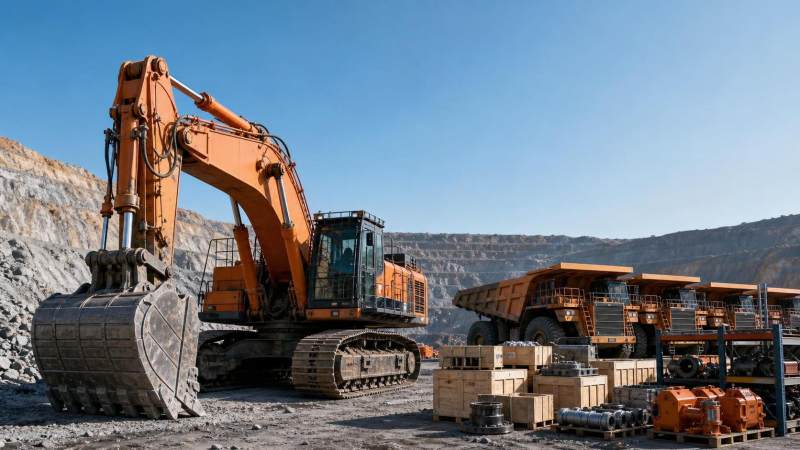
Supplier choice changes the economics of a mine long before the first bucket enters the bank. A low entry price can be erased by delayed commissioning, weak structural life, poor parts fill rates, or slow field response when a machine stalls in a critical loading zone. When comparing mining excavators suppliers, the practical question is whether the supplier can sustain production hours under the exact digging, loading, swing, and travel conditions of the site while keeping ownership cost predictable across the machine life.
The first layer of evaluation is equipment fit. A supplier may present a strong machine on paper, yet the match can still be wrong if the excavator is sized for a different bench height, haul truck class, or material profile. The review should go beyond operating weight and bucket capacity. Digging force, boom and arm geometry, cycle suitability, ground bearing pressure, swing torque, engine derating behavior at altitude, and hydraulic cooling margin under high ambient temperature all affect productivity and fatigue life. In fractured rock, shot material, or abrasive overburden, the front attachment and bucket wear package matter as much as the base machine. If the supplier cannot explain how tooth system, lip design, shrouds, side cutters, and wear plate configuration align with the loading environment, the proposal is still incomplete.
Reliability Starts with Design Transparency
Reliable supply is tied to reliable engineering. A serious supplier should be able to discuss frame construction, welding control, pin and bushing materials, cylinder rod protection, hose routing, filtration levels, and access for routine service. This does not require disclosure of proprietary drawings, but it does require technical clarity. Vague claims such as “heavy-duty structure” or “optimized hydraulics” have little procurement value unless they are translated into serviceable details.
Look closely at the parts of the excavator that typically absorb mining stress. The undercarriage on track machines, slew bearing support area, boom foot region, stick nose, bucket linkage, and pump compartment often reveal how the supplier thinks about fatigue and maintenance. In severe-duty open-pit work, a machine that is easy to inspect and rebuild can be economically stronger than one with a slightly lower purchase price but poor service access. If guards are difficult to remove, grease points are awkward, or hose bundles are crowded near heat sources, the maintenance burden may rise throughout the ownership cycle.
Field reliability is also tied to control architecture. Modern excavators increasingly depend on electronic monitoring, hydraulic control logic, and telematics gateways. That can improve diagnostics, but it also creates dependency on software tools, calibration procedures, and technician competence. Ask whether troubleshooting can be performed locally, whether fault codes are readable without proprietary bottlenecks, and whether replacement controllers or sensors require long lead times. A machine that cannot be restored quickly after an electrical fault may become an operational liability even if its mechanical platform is robust.
Parts Support Should Be Tested Before the Contract Is Signed
Many supply decisions fail at the spare parts stage. The machine arrives, performs acceptably for a period, and then loses availability because common wear and service items are trapped in a weak logistics chain. A supplier should be assessed not only on whether parts exist, but on where they are stored, how they are identified, and how failures are escalated when the needed item is not in stock.
Useful evaluation points include the supplier’s approach to:
- consumables such as filters, seals, hoses, bucket GET, lubricants, and belts that drive routine maintenance cycles;
- high-value components including hydraulic pumps, swing drives, travel motors, cylinders, radiators, electronic modules, and engine subassemblies;
- rebuildable structures and exchange options for major components when full replacement is not the fastest route back to operation;
- packing standards for long-distance shipment, especially where corrosion, impact damage, or customs delay can affect component condition.
It is worth asking for a recommended initial spare parts package tied to the first service intervals and expected wear profile. This often exposes whether the supplier understands mining duty or is simply adapting a general earthmoving catalog. If the package ignores expected abrasion rates, contamination risk, or remote-site replenishment windows, the support model may be too generic.
Another practical point is parts traceability. Part numbers should map cleanly to machine serial numbers, production changes, and retrofit status. If there is confusion around interchangeable components, superseded numbers, or optional configurations, downtime can increase when the wrong part is shipped to site. This problem is common when a machine platform has multiple regional variants or undocumented running changes.
After-Sales Capacity Is a Technical Capability, Not a Sales Promise
Supplier reliability often depends less on front-end negotiation and more on what happens after handover. Service support should be judged by the depth of technical personnel, escalation path, and workshop capability. A supplier with strong sales coverage but thin field engineering presence may struggle when the excavator develops hydraulic instability, structural cracking, or recurring overheating during peak shifts.
Ask for a clear picture of the after-sales chain: who handles commissioning, who signs off on performance acceptance, who can reach the mine for urgent intervention, and which repairs can be done on site versus in a regional workshop. The answer should distinguish between dealer labor, factory involvement, subcontract technicians, and third-party rebuild houses. If that structure is blurry, responsibility may become difficult to pin down during a failure event.
Commissioning quality deserves special attention. Early life problems are often linked to rushed setup, incorrect pressure calibration, incomplete operator familiarization, contamination introduced during assembly, or weak baseline inspection records. A disciplined supplier should have a startup protocol covering fluid cleanliness, attachment alignment, pressure and flow verification, slew and travel testing, alarm validation, and initial parts consumption monitoring.
ROI Depends on the Full Operating System Around the Excavator
Return on investment is frequently distorted when evaluation stops at purchase price, freight, and nominal fuel use. In mining, the excavator sits inside a larger production system. ROI depends on pass match with trucks, queue behavior, loading face layout, digging resistance, shift organization, maintenance windows, and availability of skilled technical support. A supplier that understands this system is easier to evaluate than one selling a machine in isolation.
To compare commercial value, break cost into operating categories rather than relying on a single headline figure. Fuel burn should be considered together with cycle efficiency, idle control, and hydraulic response under real bucket loads. Wear cost should include bucket package consumption, track wear, pin and bushing life, and the effect of material abrasiveness. Downtime cost should reflect not only component failure but also waiting time for diagnosis, approval, dispatch, and installation. Financing terms may matter, yet they should not mask weak machine support fundamentals.
A useful commercial discussion often includes these questions:
- How is component life estimated under severe digging and high swing frequency rather than moderate duty assumptions?
- Which service tasks require specialized tooling or factory software, and which can be handled by the mine’s own maintenance team?
- When a major hydraulic or structural issue appears, is the supplier prepared for repair, replacement, or interim machine support?
These points move the ROI conversation toward controllable operating realities instead of brochure assumptions.
Look for Misalignment Between Proposal Language and Site Reality
One of the most common procurement errors is accepting a polished quotation that does not match the actual mine environment. A supplier may describe standard ambient conditions while the site faces dust ingestion, high altitude, low-quality fuel, corrosive water, extreme haul road vibration, or long travel distances between pit and maintenance area. Each of those conditions can change radiator sizing, filtration needs, seal life, hose protection, fuel system sensitivity, and preventive maintenance intervals.
If the machine will load blasted rock with oversize fragments, ask how the supplier addresses shock loads through the attachment and hydraulic circuit. If the site requires long idling during truck positioning, ask how that affects cooling and fuel use. If the excavator must relocate frequently across uneven benches, assess travel gear robustness rather than assuming all wear will come from digging only. A supplier that pushes a standard specification without revisiting these operating conditions may be transferring engineering risk into the contract.
Transport, Assembly, and Handover Can Shift Cost in Hidden Ways
Large excavators often move in disassembled form. Transport envelope, packing sequence, preservation method, assembly tooling, crane requirements, and site preparation all influence project timing and cost. A supplier should define shipment splits, lifting plans for major modules, torque procedures for structural joints, lubrication and fluid fill responsibilities, and preservation steps if the machine will sit before assembly.
Do not treat delivery as complete when the crates arrive at port or site gate. The real handover point should connect to assembled condition, tested systems, verified performance, documentation package, and spare parts reconciliation. Missing assembly hardware, unclear torque records, or absent commissioning consumables can create delays that are rarely visible in the original commercial summary.
Documentation quality matters here more than many teams expect. Service manuals, wiring diagrams, hydraulic schematics, parts books, software access instructions, and inspection forms should be reviewed before award if possible. Weak documentation is often an early indicator of weak life-cycle support.
Interview the Supplier Through Failure Scenarios
Suppliers are easiest to compare when the discussion is built around realistic failure events rather than generic capability statements. Ask how they would respond if the excavator develops a swing reduction issue, repeated hose failure in the boom circuit, contamination in the hydraulic system after a cylinder event, or structural cracking near a high-load attachment point. The content of the response matters more than its tone. A credible supplier will discuss diagnosis steps, temporary containment, spare parts path, field labor, and whether root-cause analysis can be documented.
This approach also helps separate strong mining excavators suppliers from companies that mainly understand standard construction duty. Mining support requires a different rhythm: longer operating hours, tighter uptime pressure, heavier wear, and greater consequence when a primary loading unit stops.
Warning Signs During Evaluation
Some risks appear early if attention stays on the technical and operational details. Repeated changes in quoted configuration, uncertainty around component origin, slow answers on parts lead time assumptions, or reluctance to define service responsibility are all warnings. So is a proposal that lists many options without identifying which specification is necessary for the stated material and climate conditions.
Another warning sign is overreliance on broad assurances. If reliability is described without maintenance intervals, if parts support is discussed without stock logic, or if lifecycle cost is presented without assumptions behind wear and downtime, the offer may be harder to control after award. Strong suppliers tend to be explicit because they expect their commitments to be examined.
The most useful comparison is usually built from a disciplined matrix covering machine fit, component durability, maintainability, spare parts structure, field response capability, documentation quality, transport and assembly scope, and commercial exposure during downtime. Once those elements are visible, the lowest quoted price may still win, but only if the support architecture is strong enough to protect production continuity. That is the threshold that turns an excavator purchase into a durable asset rather than a recurring site problem.
Related News
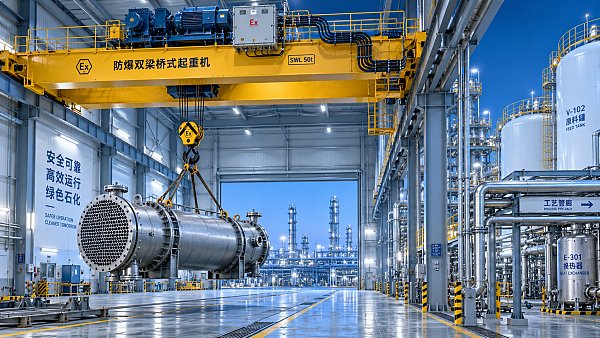
 Oct 06, 2026Selecting Petrochemical Overhead Cranes for Hazardous Areas and Heavy Process LoadsPetrochemical overhead cranes for hazardous areas: learn how to match capacity, duty, controls, corrosion protection, and maintenance access for safer, reliable lifts.
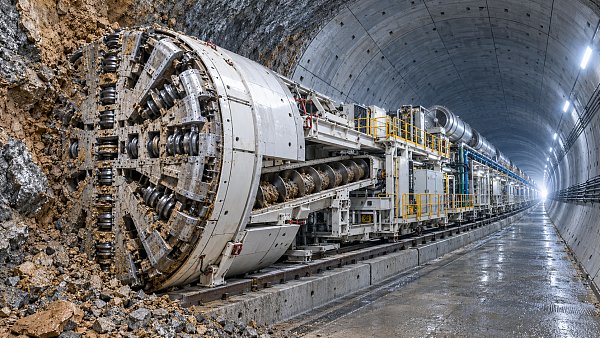
 Oct 05, 2026Tunneling Equipment Specification Planning: Key Criteria for Ground and Project RisksEquipment specification planning tunneling: learn how to match TBM systems to ground risks, geometry, safety, logistics, and lifecycle cost for more reliable project delivery.
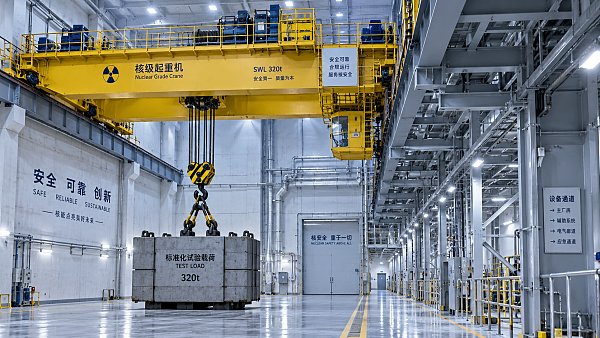
 Oct 04, 2026Nuclear Lifting Equipment Cost: Budgeting for Compliance, Testing, and Lifecycle RiskNuclear lifting equipment cost explained: budget for compliance, proof-load testing, installation, documentation, and lifecycle risk to make confident procurement decisions.
 Oct 03, 2026How to Assess TBM Manufacturers for Hard-Rock Tunneling Projects?Choose the right tunnel boring machine manufacturer for hard-rock projects. Explore key criteria for design, lifecycle cost, factory quality, and service support.
Ms. Elena Rodriguez
Weekly Insights
Stay ahead with our curated technology reports delivered every Monday.