
How Smart Highway Lighting Systems Improve Visibility, Energy Control, and Road Safety
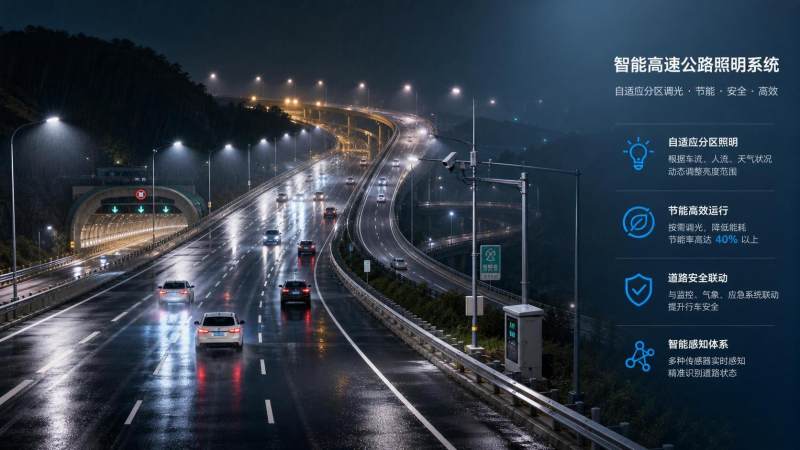
Why are smart highway lighting systems getting so much attention?
Smart highway lighting systems have moved beyond basic illumination. They now sit inside wider transport, energy, and safety strategies.
For road operators, the question is no longer whether lighting matters. The real question is how lighting can become measurable infrastructure intelligence.
That matters because visibility, power consumption, maintenance planning, and incident response are now closely linked on modern road networks.
In practical terms, smart highway lighting systems use connected controls, sensors, adaptive dimming, and data feedback to adjust light output by need.
Instead of running every fixture at a fixed level all night, the system reacts to traffic flow, weather, time windows, and fault conditions.
This shift is especially relevant on high-speed corridors, interchanges, tunnels, freight routes, and smart highway projects.
It also fits the broader infrastructure logic tracked by TF-Strategy, where road machinery, digital control, and safety standards increasingly work as one system.
Seen from that angle, lighting is no longer an isolated asset. It becomes part of the operating discipline behind resilient transport corridors.
What exactly makes a highway lighting system “smart”?
The simplest definition is this: a smart system can sense, communicate, and respond.
Traditional lighting turns on and off by schedule. Smart highway lighting systems can do much more than that.
They usually combine LED luminaires, central management software, remote diagnostics, controllers, and field sensors.
Some networks also connect with traffic cameras, weather stations, variable message signs, and emergency management platforms.
That integration is where the value often becomes visible. A lighting point stops being a passive power load and becomes an addressable node.
Common capabilities include:
- Adaptive brightness based on traffic density
- Higher output during rain, fog, or incidents
- Automatic fault alerts for failed drivers or lamps
- Energy reporting by zone, route, or time period
- Remote scheduling and maintenance planning
In other words, smart highway lighting systems are not defined by LEDs alone. Intelligence comes from control logic and data use.
How do these systems improve visibility and road safety in real conditions?
Better visibility is the first promise, but it should be understood carefully.
More light does not always mean safer roads. What matters is the right light, in the right place, at the right time.
Smart highway lighting systems improve uniformity and reduce dark transitions, especially near ramps, curves, toll approaches, and work zones.
That helps drivers read lane markings, spot obstacles sooner, and adapt more comfortably at speed.
In poor weather, adaptive controls can raise output where glare management and contrast become more important.
In tunnels and enclosed sections, response speed is even more critical. Lighting must match changing exterior brightness and traffic conditions.
This is one reason heavy-infrastructure analysts pay close attention to lighting control. Civil performance and operational safety are tightly connected.
A useful way to judge the safety benefit is not by fixture count, but by whether the system can reduce uncertainty for drivers and operators.
That table also explains why safety gains often come from system responsiveness, not from static brightness alone.
Where does energy control actually improve, and how significant is it?
Energy control is usually the fastest value story, but it should be evaluated beyond headline savings percentages.
Smart highway lighting systems reduce waste in three main ways: lower wattage, dynamic dimming, and better maintenance timing.
LED conversion already cuts baseline consumption. Smart control then prevents over-lighting during low-demand periods.
For example, a corridor may require full output at peak freight hours, but not at the same level after midnight.
More advanced networks create zone-by-zone profiles. Interchanges, bridges, urban approaches, and rural stretches can each behave differently.
That matters because road networks rarely have a single risk profile. Treating every section the same often locks in unnecessary energy spend.
A second layer of savings comes from maintenance visibility. Failed components, voltage anomalies, and driver degradation can be detected earlier.
That reduces patrol inefficiency and avoids the cost of discovering problems only after service complaints or safety issues appear.
In capital-heavy infrastructure, TF-Strategy often frames this as total operating discipline. Energy control works best when linked to asset performance data.
Which roads and projects benefit most from smart highway lighting systems?
Not every corridor needs the same level of intelligence, and that is where many planning mistakes begin.
The strongest candidates are locations where safety exposure, traffic variability, and maintenance complexity are already high.
Typical high-value applications include:
- Urban expressways with frequent merging and lane changes
- Tunnels and portal zones with extreme brightness transitions
- Freight corridors serving ports, mines, and industrial clusters
- Bridges and elevated sections exposed to weather shifts
- New smart highway programs linked to traffic data platforms
Large road machinery and paving precision also matter here. Lighting performance depends partly on road geometry, markings, and surface reflectance.
That is why the topic fits naturally within broader heavy-industry intelligence. Road assets, control systems, and field conditions must be read together.
Where budgets are limited, a phased rollout is often more credible than a network-wide installation.
Start with segments where incident history, power demand, or access difficulty make the case easier to prove.
What should be checked before choosing a system or launching deployment?
The technology itself is only one part of the decision. The harder question is whether the system fits operational reality.
A common mistake is buying a feature-rich platform without a clear control strategy, data plan, or maintenance model.
Before moving ahead, it helps to test the project against a few practical filters.
Implementation timing also matters. Retrofit work on active highways can be more disruptive than the technology plan suggests.
It is worth confirming outage windows, traffic management constraints, and civil interface requirements before final procurement assumptions are locked.
What are the most common misunderstandings about smart highway lighting systems?
One misunderstanding is that smart highway lighting systems are mainly an energy project. They are not.
Energy savings are important, but the longer-term value usually comes from better control, lower uncertainty, and stronger safety governance.
Another mistake is assuming the smartest option is always the most detailed one.
In some corridors, segment-level control delivers a better balance than highly granular pole-by-pole logic.
There is also a tendency to overlook field conditions. Dust, vibration, moisture, power quality, and network interruptions can shape system performance.
That is familiar territory in heavy infrastructure. The best digital layer still depends on disciplined engineering beneath it.
A final misconception is that once installed, the system will optimize itself. In reality, operating rules need review as traffic patterns change.
The more successful programs usually treat smart highway lighting systems as a managed asset, not a one-time upgrade.
So what is the practical next step?
A sound next step is to define the problem before defining the product.
Map the highway sections where visibility risk, energy waste, and maintenance inefficiency are already measurable.
Then compare smart highway lighting systems by control depth, integration needs, service model, and expected lifecycle impact.
It also helps to review the project as part of a wider infrastructure stack.
Lighting, pavement conditions, tunnel operations, roadside power, and digital monitoring often influence one another more than procurement documents suggest.
That wider view is consistent with TF-Strategy’s infrastructure lens, where machinery, methodology, and strategic demand are evaluated together.
When that perspective is applied well, smart highway lighting systems become easier to judge.
They are not simply brighter roads. They are a tool for visibility control, energy discipline, and safer highway operations over time.
Related News
 Oct 08, 2026How to Evaluate a Heavy Machinery Information Platform for Project Equipment SourcingHeavy machinery information platform guide: compare equipment fit, source reliability, lifecycle costs, supplier capability, and compliance to make smarter sourcing decisions.
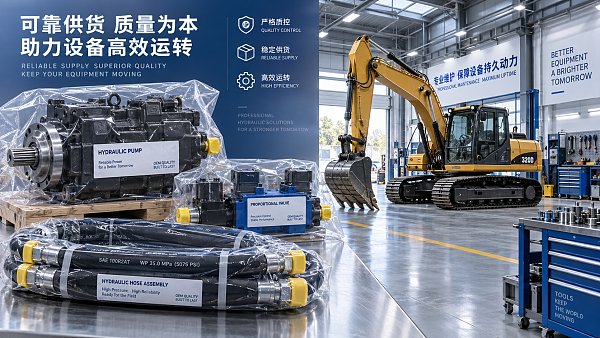
 Oct 07, 2026How to Evaluate a Hydraulic System Component Supplier for Heavy Equipment UptimeChoose a hydraulic system component supplier with proven quality, technical fit, and reliable delivery to reduce heavy equipment downtime and lifecycle costs.
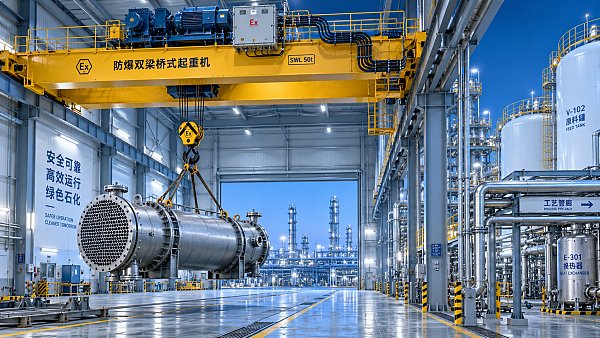
 Oct 06, 2026Selecting Petrochemical Overhead Cranes for Hazardous Areas and Heavy Process LoadsPetrochemical overhead cranes for hazardous areas: learn how to match capacity, duty, controls, corrosion protection, and maintenance access for safer, reliable lifts.
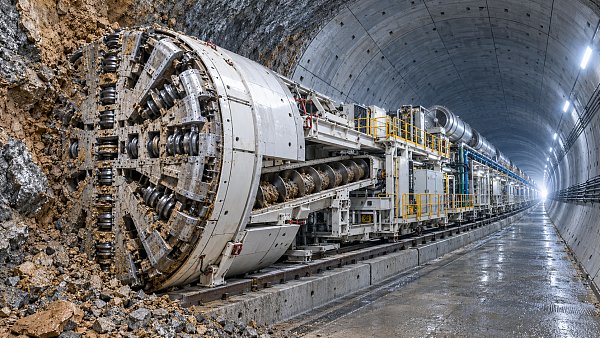
 Oct 05, 2026Tunneling Equipment Specification Planning: Key Criteria for Ground and Project RisksEquipment specification planning tunneling: learn how to match TBM systems to ground risks, geometry, safety, logistics, and lifecycle cost for more reliable project delivery.

Ms. Elena Rodriguez
Weekly Insights
Stay ahead with our curated technology reports delivered every Monday.