
How to Evaluate Supplier Capability for ISO Certification Readiness
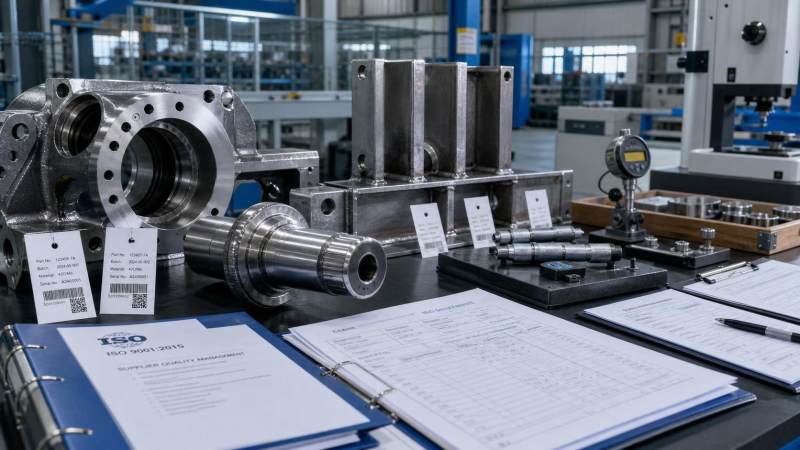
Why does supplier capability evaluation ISO certification matter so much in heavy industry?
In heavy equipment supply chains, ISO readiness is rarely a paperwork issue alone.
It affects weld consistency, traceability, calibration discipline, corrective action speed, and control of safety-critical parts.
That is why supplier capability evaluation ISO certification has become a practical screening tool, not just an audit topic.
For TBM subsystems, crawler crane structures, mining dump truck components, and road machinery assemblies, one weak supplier can disrupt an entire project schedule.
A supplier may hold an ISO certificate and still struggle with process stability.
The real question is whether the organization can perform under field conditions, material volatility, and strict delivery windows.
Seen through the lens of TF-Strategy’s heavy industry coverage, this is especially relevant.
Large infrastructure programs depend on power, precision, and repeatability across global supply networks.
A sound supplier capability evaluation ISO certification process helps connect technical parameters with project execution risk.
In practice, that means fewer surprises during incoming inspection, fewer nonconformities during project audits, and stronger delivery confidence.
What should you actually evaluate beyond the ISO certificate itself?
This is where many teams lose time.
The certificate confirms that a management system exists.
It does not automatically confirm that the supplier can meet your technical, quality, and safety expectations.
A stronger supplier capability evaluation ISO certification review usually checks five areas together.
- Process control: Are critical operations documented, monitored, and repeatable?
- People competence: Are operators, inspectors, and engineers properly qualified?
- Equipment reliability: Are machines maintained, calibrated, and suited to tolerance requirements?
- Material traceability: Can the supplier trace heat numbers, batches, and revisions without gaps?
- Corrective action discipline: Do problems lead to root cause analysis and verified prevention?
In actual operations, the last point often reveals the truth.
A supplier that learns fast from defects is usually safer than one with polished documents and weak follow-through.
For high-load fabricated parts, hydraulic systems, electrical cabinets, and wear components, ask for evidence tied to recent production lots.
That evidence may include control plans, inspection records, weld maps, calibration logs, NCR history, and customer complaint closure data.
A capable review looks at how the system behaves, not only how the manual reads.
How can you tell whether a supplier is truly ISO-ready or just audit-ready?
This distinction matters.
Audit-ready suppliers often prepare neat records shortly before a visit.
ISO-ready suppliers show the same discipline on ordinary production days.
A useful way to test supplier capability evaluation ISO certification is to follow one product line end to end.
Start with order review.
Then move through purchasing, incoming inspection, process controls, final release, packaging, and records retention.
If information breaks during that walk, the management system is not mature enough.
The table below helps separate signal from appearance.
More often than not, traceability and corrective action separate robust suppliers from fragile ones.
That is especially true in cross-border projects where field failures can trigger contract disputes and long downtime.
Which ISO standards usually matter most in supplier capability evaluation?
The answer depends on product risk and operating environment.
Still, several standards appear repeatedly in supplier capability evaluation ISO certification programs.
- ISO 9001 for quality management fundamentals and process consistency.
- ISO 14001 where environmental control affects permits, waste, or chemical handling.
- ISO 45001 where worker safety practices influence production reliability.
- Sector-specific standards or customer specifications for welding, pressure systems, coatings, or electrical assemblies.
For example, a fabricated structure supplier with ISO 9001 but weak welding qualification control may still pose major risk.
A coating supplier with ISO 14001 but poor batch traceability may create warranty exposure.
So the better question is not, “Which certificate do they have?”
It is, “Which standard controls the failure modes we care about most?”
In the heavy equipment sectors tracked by TF-Strategy, component failure often has a chain effect.
Downtime can spread from one bearing housing, one lifting connection, or one hydraulic part into major schedule loss.
That is why supplier capability evaluation ISO certification should align with actual project criticality.
Where do evaluations usually go wrong?
The most common mistake is overvaluing documents and undervaluing process behavior.
Another is applying the same checklist to every supplier category.
A machining vendor, a steel plate processor, and an electrical integration shop do not carry the same risk profile.
Some teams also skip subcontractor control.
That creates blind spots, especially where heat treatment, NDT, painting, or logistics are outsourced.
Another weak point is ignoring operational pressure.
A supplier may perform well during normal loads, yet fail under rush orders or material shortages.
To avoid shallow reviews, keep an eye on these risk indicators:
- High defect recurrence without verified containment.
- Strong front-end sales communication but weak plant-side data ownership.
- Low visibility over critical outsourced processes.
- Frequent engineering changes with poor revision discipline.
- No meaningful KPI trend for scrap, rework, or on-time quality release.
In other words, a good supplier capability evaluation ISO certification method should expose stress points before they turn into field problems.
How long does a solid evaluation take, and what should happen after it?
There is no single timeline.
A desktop review may take days.
A meaningful on-site supplier capability evaluation ISO certification cycle often takes several weeks when preparation, audit, gap closure, and verification are included.
The follow-up stage matters more than the scoring sheet.
Once gaps are identified, classify them by business impact.
A missing signature is not equal to uncontrolled torque records on safety-related assemblies.
Then set realistic closure actions.
- Require evidence for each corrective action, not promises alone.
- Link improvement milestones to sourcing decisions where risk is high.
- Repeat focused checks on the weakest process, not the whole audit every time.
- Use incoming quality data to confirm whether improvement is real.
This is also where market intelligence helps.
When raw material shifts, tender pressure, electrification, or remote-control technologies reshape heavy equipment demand, supplier stability can change quickly.
Monitoring those signals, as TF-Strategy does across global infrastructure sectors, gives added context to supplier capability evaluation ISO certification decisions.
What is the practical takeaway when you need to judge ISO certification readiness?
Keep the evaluation grounded in operational reality.
A credible supplier capability evaluation ISO certification process checks whether systems work under real production pressure, not only during audits.
Look closely at traceability, competence, subcontractor control, corrective action quality, and alignment between certificate scope and actual manufacturing risk.
For heavy industry, this approach protects more than compliance status.
It supports stable delivery, safer operations, lower failure cost, and stronger confidence across complex global projects.
The next useful step is to map critical components, rank supplier risk by failure impact, and build an evaluation checklist around those realities.
From there, compare evidence, not claims, and revisit the highest-risk suppliers with targeted follow-up reviews.
Related News
 Oct 08, 2026How to Evaluate a Heavy Machinery Information Platform for Project Equipment SourcingHeavy machinery information platform guide: compare equipment fit, source reliability, lifecycle costs, supplier capability, and compliance to make smarter sourcing decisions.
 Oct 07, 2026How to Evaluate a Hydraulic System Component Supplier for Heavy Equipment UptimeChoose a hydraulic system component supplier with proven quality, technical fit, and reliable delivery to reduce heavy equipment downtime and lifecycle costs.
 Oct 06, 2026Selecting Petrochemical Overhead Cranes for Hazardous Areas and Heavy Process LoadsPetrochemical overhead cranes for hazardous areas: learn how to match capacity, duty, controls, corrosion protection, and maintenance access for safer, reliable lifts.
 Oct 05, 2026Tunneling Equipment Specification Planning: Key Criteria for Ground and Project RisksEquipment specification planning tunneling: learn how to match TBM systems to ground risks, geometry, safety, logistics, and lifecycle cost for more reliable project delivery.


Ms. Elena Rodriguez
Weekly Insights
Stay ahead with our curated technology reports delivered every Monday.