
How to Evaluate a Heavy Lifting Solutions Manufacturer for Complex Project Requirements
Why does the manufacturer matter so much in complex lifting projects?
A heavy lifting plan rarely fails because of one dramatic mistake.
More often, delays come from weak engineering support, unclear load assumptions, or slow response when site conditions change.
That is why choosing a heavy lifting solutions manufacturer is not just a procurement exercise.
It is a decision that affects schedule certainty, lifting safety, transport planning, and total project cost.
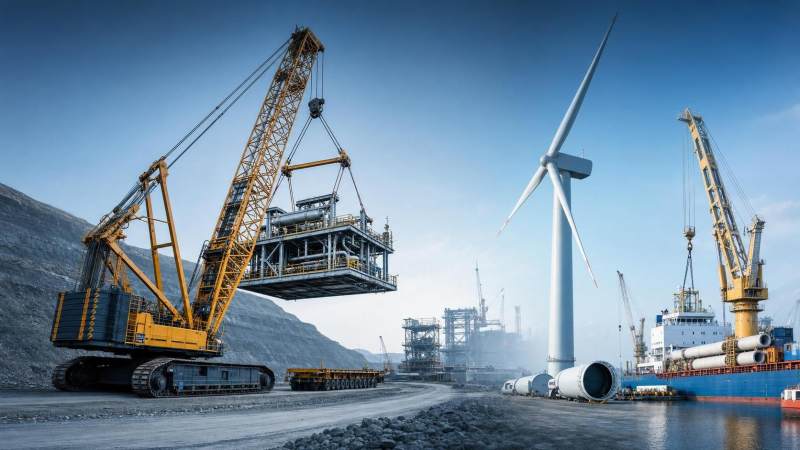
In sectors such as tunneling, open-pit mining, petrochemical construction, offshore logistics, and wind installation, lifting is tied to the entire construction sequence.
If the equipment configuration is wrong, downstream work crews sit idle.
If the manufacturer cannot adapt to geology, weather, altitude, or access limits, even a technically strong machine becomes a project risk.
This is also where industry intelligence becomes useful.
Platforms such as TF-Strategy track how crawler cranes, TBM logistics, mining equipment movement, and major infrastructure packages evolve across regions.
That broader view helps separate marketing claims from field-ready capability.
What should be checked first when evaluating a heavy lifting solutions manufacturer?
Start with engineering fit, not brand recognition.
A qualified heavy lifting solutions manufacturer should be able to discuss the lift before talking about the machine list.
That means load path, center of gravity, soil bearing pressure, lifting radius, wind envelope, assembly sequence, and emergency fallback.
When early conversations stay at brochure level, that is a warning sign.
In practical terms, the first review should cover five areas:
- Whether the manufacturer has delivered comparable lifts in similar terrain and regulatory conditions.
- Whether its engineering team can provide lift studies, simulations, and method statements.
- Whether the production system can meet the project timeline without vague promises.
- Whether spare parts and field service are available near the jobsite.
- Whether safety documentation aligns with local and international standards.
A strong manufacturer can usually translate these checks into a clear pre-award response package.
That package should include drawings, assumptions, exclusions, lead times, and equipment configuration limits.
How do you tell real technical capability from a polished sales pitch?
The easiest way is to ask for evidence tied to similar complexity.
A credible heavy lifting solutions manufacturer should show past project data, not only fleet photos.
Look for case references involving restricted laydown space, tandem lifts, heavy module rotation, remote sites, or extreme climate operation.
The manufacturer should also explain how it solved specific constraints.
For example, how was load distribution handled on soft ground?
What changes were made for high-altitude performance loss?
How were transport splits designed for narrow roads or port handling limits?
A useful screening table can make the comparison sharper.
When answers are precise, a heavy lifting solutions manufacturer is usually closer to execution reality.
When answers stay vague, later variation claims become more likely.
Which project conditions most often change the selection decision?
Capacity alone rarely decides the best option.
The real decision usually shifts because of site access, operating environment, and integration with adjacent equipment.
On a tunnel project, lifting may depend on segment handling rhythm, shaft diameter, and TBM component staging.
On a mining site, haul road geometry, dust control, and maintenance accessibility may matter more than peak chart values.
For wind, nuclear, or petrochemical work, installation windows and tolerance control become critical.
A heavy lifting solutions manufacturer should therefore be judged on system compatibility.
Can it coordinate with transport contractors, civil teams, rigging suppliers, and digital monitoring systems?
Can it support remote diagnostics or data capture for high-consequence lifts?
This matters even more as infrastructure projects adopt smarter construction methods.
TF-Strategy often highlights how digitalization, material upgrades, and energy transition are changing heavy equipment expectations.
A manufacturer that cannot adapt to these shifts may still deliver hardware, but not a durable project solution.
Where do cost and schedule risks usually hide?
The lowest quoted number is often incomplete.
A heavy lifting solutions manufacturer may price the base machine competitively, then leave transport splits, site assembly tools, operator training, or weather downtime assumptions unclear.
That is where budget leakage starts.
Lead time risk can be just as hidden.
If critical components rely on stretched supply chains, the promised delivery date may have little protection.
In large infrastructure packages, even a short delay can trigger penalties far beyond equipment cost.
A better comparison uses total project exposure.
- Factory completion milestone and evidence of long-lead procurement
- Shipping method, route permits, and packaging plan
- On-site assembly duration and required support equipment
- Commissioning scope, proof load testing, and handover criteria
- Parts availability for the first operating year
- Commercial treatment of change orders and standby events
When these items are documented early, comparison becomes far more realistic.
It also becomes easier to defend the final selection internally.
What are the most common mistakes during manufacturer evaluation?
One frequent mistake is treating every heavy lifting solutions manufacturer as interchangeable.
In reality, some are strong in standard crane supply, while others are better at engineered lifting packages.
Another mistake is reviewing only peak load charts.
Complex projects depend on full operating envelopes, transport logic, rigging compatibility, and setup constraints.
A third mistake is ignoring after-sales execution.
Even advanced lifting equipment becomes a liability if site troubleshooting takes days instead of hours.
There is also a more strategic error.
Some teams evaluate the current lift only, without checking whether the chosen partner can support future packages, regional expansion, or decarbonization requirements.
That broader lens matters now because fleet electrification, remote diagnostics, and stricter safety expectations are moving from optional to expected.
The better approach is to test both present fit and future readiness.
So how should the final decision be made?
A sound decision usually comes from a weighted evaluation, not a single score.
Technical suitability should lead, followed by delivery certainty, service depth, compliance strength, and total lifecycle cost.
If two suppliers look similar on price, the stronger heavy lifting solutions manufacturer is the one with clearer engineering assumptions and fewer execution gaps.
Before award, it helps to run one final challenge session.
Review the lift plan against weather extremes, transport disruption, site congestion, and maintenance response.
Ask what fails first if conditions worsen.
That discussion often reveals more than formal presentations.
For organizations working across tunneling, mining, and major infrastructure, market intelligence can sharpen this step.
TF-Strategy’s heavy equipment perspective is useful here because it connects machine parameters, field methods, and strategic demand signals.
In other words, it helps frame the manufacturer choice within the real pressures shaping Earth engineering.
The next step is straightforward.
Write down the actual lift constraints, build a comparison sheet around project-specific risks, and test each heavy lifting solutions manufacturer against execution evidence rather than claims.
That process usually leads to a safer, faster, and more defensible decision.
Related News
 Sep 27, 2026Heavy Equipment Selection Factors for Matching Machine Capacity to Jobsite ConditionsHeavy equipment selection factors for matching capacity to jobsite conditions, improving productivity, safety, fleet efficiency, and total project cost control.
 Sep 26, 2026How to Select Wind Rotor Lifting Equipment for Safe Blade and Hub InstallationWind rotor lifting equipment selection guide: ensure safe blade and hub installation with the right lift method, load control, crane compatibility, wind limits, and compliance.
 Sep 25, 2026What Drives Heavy Haulage Cost on Oversized Construction Equipment Moves?Heavy haulage cost explained: discover how load dimensions, route surveys, permits, escorts, lifting plans, and scheduling shape reliable oversized equipment transport budgets.
 Sep 24, 2026Supplier Management Frameworks That Reduce Delays on Large Construction ProjectsLarge-scale construction projects supplier management frameworks help prevent costly delays with risk-based controls, milestone tracking, quality oversight, and escalation plans for critical packages.
Ms. Elena Rodriguez
Weekly Insights
Stay ahead with our curated technology reports delivered every Monday.