
How to Evaluate a Supplier's Customization Capabilities Before Ordering

A supplier’s promise to customize equipment is only as valuable as its ability to deliver. For procurement professionals sourcing tunnel boring machines, mining trucks, crawler cranes, or other heavy machinery, supplier capability evaluation begins with a clear understanding of project requirements and technical risks. Assessing customization ability means looking beyond sales claims to examine engineering resources, production capacity, testing procedures, and delivery performance. The aim is not to find the supplier with the most impressive presentation, but the one that can turn a project-specific requirement into equipment that works, arrives on time, and remains supportable throughout its operating life.
Start with the change, not the supplier’s brochure
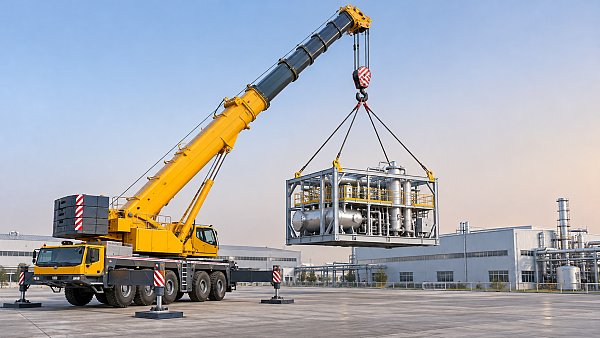
“Customizable” can mean anything from changing paint and lighting to redesigning a structural assembly. Before approaching suppliers, separate the desired configuration from changes that affect the machine’s engineering basis. A modified operator display may involve software integration and user testing; a different crane boom configuration may affect structural analysis, load charts, transport planning, and approvals.
Prepare a requirements package that describes the operating problem as well as the requested feature. Include duty cycle, site conditions, interfaces with existing equipment, expected service life, maintenance constraints, and applicable project or jurisdictional requirements. Identify which requirements are mandatory and which are preferences. Where conditions remain uncertain, state the assumptions and define who will validate them.
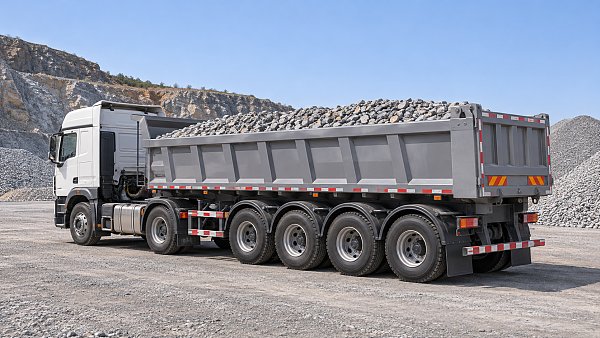
For example, a mining truck intended for a high-altitude site may need more than an engine adjustment. Cooling, power derating, braking, payload expectations, and component serviceability may all need review together. Giving suppliers this context makes their responses easier to compare and exposes those who offer a quick answer without exploring the consequences.
What evidence proves customization ability?
A credible supplier should be able to trace its proposed solution from requirement to design, manufacture, verification, and support. Ask for evidence proportionate to the risk: a revised cab layout does not demand the same scrutiny as a redesigned TBM cutterhead. The following areas deserve particular attention.
Engineering ownership and relevant experience
Ask who will perform the engineering work, which parts will be outsourced, and who has authority to approve the final design. A supplier may be an effective assembler but rely on another company for controls, hydraulics, or structural calculations. That arrangement is not automatically a weakness; unclear responsibility is.
Request an organization chart for the proposed project, the disciplines involved, and examples of comparable customization work. Relevant experience should be comparable in technical challenge, not merely in machine size. A supplier that has modified a crane for transport constraints, for instance, should explain whether that experience involved the same type of structural change or only modular packing.
Where confidentiality prevents sharing a previous customer’s documents, ask for anonymized design reviews, test summaries, or a walkthrough of the engineering process. Look for evidence that lessons from earlier work are incorporated into current designs.
Design methods and interface control
Request a preliminary technical response that identifies assumptions, interfaces, design calculations or analyses to be performed, and foreseeable failure modes. The supplier should be willing to discuss limits as well as possibilities. A confident “yes” without an explanation of how the change affects adjacent systems is not a design review.
For a TBM operating through variable geology, a cutterhead modification can influence torque demand, wear protection, muck flow, inspection access, and intervention planning. Ask how the supplier will evaluate these interactions and what geological information it needs before fixing the design. For an electrically powered mining truck, focus may shift to battery integration, thermal management, charging interfaces, and emergency procedures.
Confirm how drawings, software versions, and technical interfaces will be controlled. If several suppliers are involved, identify the party responsible for resolving mismatches between systems. An interface register with owners and due dates is often more useful than a general promise of coordination.
Manufacturing capacity and supply-chain readiness
A design can be sound on paper and still be difficult to build. Ask where customized components will be manufactured, what equipment or tooling they require, and which operations are dependent on subcontractors. For large weldments, machining, or assembly, check whether the proposed facility can handle the component dimensions and inspection requirements.
Capacity claims should be tied to the proposed schedule. Request the major production milestones, long-lead components, and planned inspection points. Ask what happens if a specialist casting, hydraulic component, or control system is delayed. A supplier may not disclose every commercial relationship, but it should explain the critical dependencies and how it intends to manage them.
Where the risk justifies it, arrange a site visit or independent assessment. Confirm that the equipment, personnel, and work currently visible are consistent with the production plan. A factory tour alone is not proof that capacity is reserved for your order.
Turn requirements into a verification plan
Testing should be discussed before an order is placed, not after a machine is nearly complete. For every critical requirement, agree on how compliance will be demonstrated: calculation, inspection, factory test, site test, or a combination. Some performance claims depend on actual site conditions and cannot be fully proven at the factory.
A practical verification matrix can make those distinctions visible:
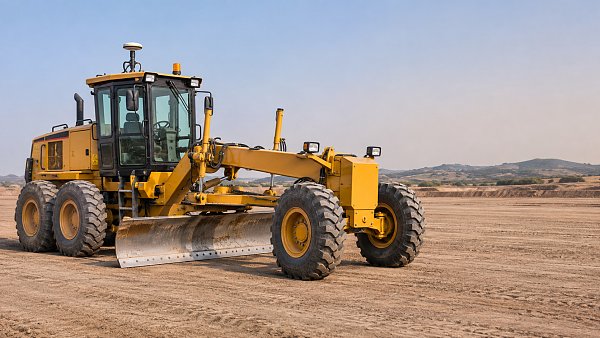
For a crawler crane, ask whether a proposed configuration requires revised load charts and how applicable approvals will be obtained. For road machinery, a paving-related modification may need verification of both machine settings and finished-surface performance under agreed conditions. In each case, define the procedure, witness rights, pass criteria, documentation, and treatment of failures.
Compare delivery risk, not just quoted lead time
A short lead time is attractive when a project schedule is under pressure. It is also worth asking what the date includes. Does it cover design approval, procurement of long-lead items, fabrication, factory testing, packing, shipment, commissioning, and site acceptance? Two quotations may appear comparable while measuring entirely different delivery endpoints.
Ask each supplier for a schedule showing dependencies on the buyer’s decisions and information. If the final cutterhead design depends on additional ground investigation, for example, the schedule should identify when those findings are needed and what happens if they change the design basis. Review the time allowed for technical clarification and inspection, rather than treating those activities as administrative details.
Also request examples of how the supplier has handled changes or delays on comparable projects. The most useful answer explains the issue, the decision process, and the corrective action—not simply that a previous order was completed.
Use a weighted scorecard, with non-negotiable gates
A scorecard helps procurement, engineering, operations, and maintenance teams make the same decision using shared evidence. Select criteria that reflect the project’s risks, then agree on their relative importance before reviewing final offers. Typical categories include technical compliance, engineering resources, manufacturing readiness, verification, delivery, lifecycle support, and commercial terms.
Do not allow a strong commercial score to conceal a critical technical gap. Set pass-or-fail gates for matters such as mandatory safety requirements, essential interfaces, applicable approvals, and acceptance of the verification plan. Suppliers that pass can then be compared using weighted scores and a written explanation of remaining risks.
Keep the scoring evidence-based. “Supplier has extensive experience” is an observation to investigate; an anonymized example of a comparable modification, supported by a design and test process, is stronger evidence. Record open questions and assign owners so that assumptions do not quietly become contractual facts.
Look beyond purchase price to lifecycle exposure
Customization can improve productivity, but it can also create a machine that is expensive to maintain if its special components are poorly documented or difficult to replace. Compare the full scope of each offer, including engineering, tooling, testing, shipping, commissioning, training, software support, consumables, and recommended spares. Separate confirmed prices from estimates and exclusions.
Ask who owns or can access the drawings and software needed for maintenance, what diagnostic tools are required, and how updates will be managed. Clarify the availability of replacement parts for customized assemblies and the process for supporting them after the initial delivery. A lower quotation may be less attractive if it leaves major integration or support work to the buyer.
Total cost of ownership should also account for downtime exposure. Procurement cannot predict every failure, but it can ask whether wear parts are accessible, whether specialized technicians must travel to site, and whether the supplier has a credible response process for critical issues.
Put customization controls into the purchase agreement
Once a supplier is selected, the order should preserve the technical understanding reached during evaluation. Attach the agreed specification, drawings or document list, verification matrix, schedule, and responsibility boundaries. State how deviations are proposed, priced, reviewed, and approved; verbal agreement during a site meeting is not a reliable change-control process.
Define design-review milestones and the documents required at each stage. Address inspection access, test failures, corrective action, delivery documentation, training, warranty scope, and support responsibilities. For site acceptance, specify the operating conditions and dependencies within each party’s control. Commercial and legal teams should review the allocation of risk against the project’s applicable requirements.
Be particularly careful with phrases such as “equivalent component,” “subject to final design,” or “performance to be confirmed.” They may be reasonable during quotation, but unresolved language can shift cost and schedule risk after commitment. Convert important qualifications into agreed actions, deadlines, and decision rights.
Questions worth asking before the order is signed
- Which requirements are satisfied by an existing configuration, and which require new engineering?
- What assumptions could change the design, price, or schedule once site information is confirmed?
- Who approves interfaces between the machine and third-party equipment or software?
- Which tests demonstrate compliance, and what happens if the equipment does not pass?
- Are critical manufacturing capacity and long-lead components identified in the schedule?
- What documentation, training, spare parts, and software support will be delivered?
- Which deviations remain open, and who is responsible for closing them before release to manufacture?
The strongest supplier capability evaluation does not eliminate uncertainty; it makes uncertainty visible while there is still time to act. When engineering evidence, production planning, acceptance criteria, and support obligations are examined together, procurement teams can choose a supplier on more than a persuasive promise—and enter the order with a clearer view of what will actually be delivered.
Have questions about this sector analysis, or seeking best practices specific to your niche? Drop us a line below and let the senior consultants at TF-Strategy assist you.
Related News
 Nov 11, 2026Choosing Equipment Capacity for Different Workloads and ApplicationsExplore equipment application by capacity to match machines to real workloads, reduce bottlenecks and choose cost-effective solutions with confidence.
 Nov 10, 2026Crane Performance Comparison: Load Capacity, Reach and Lifting SpeedCrane performance comparison made practical: evaluate load capacity, reach and lifting speed to choose the right crane for your site and work sequence.
 Nov 09, 2026Heavy Equipment Technology Systems: Telematics, GPS and Machine ControlExplore heavy equipment technology systems, from telematics and GPS to machine control, and learn how to choose the right tools for your fleet and site.
 Nov 10, 2026Selecting a Four-Axle Rear Dump Semi-Trailer for Aggregate HaulingExplore dump special trailers for aggregate hauling. Learn how to compare legal payload, body durability and tipping safety before choosing a four-axle rear dump semi-trailer.

Ms. Elena Rodriguez
Weekly Insights
Stay ahead with our curated technology reports delivered every Monday.