
How to Source Nuclear Components: Critical Standards, Traceability, and Quality Documentation

Why does sourcing nuclear components require a different standard of control?
Sourcing nuclear components is never a routine buying exercise. The real issue is not only fit, price, or lead time.
What matters more is whether every part can prove its origin, compliance path, and inspection history without gaps.
In nuclear projects, one missing heat number, one altered certificate, or one unverified subcontract step can trigger rejection.
That risk extends beyond power plants. It also affects crawler crane lifts, heavy transport frames, and support systems handling nuclear modules.
This is where heavy-industry intelligence becomes useful. TF-Strategy often connects equipment performance, project methods, and supply-chain credibility in one view.
For nuclear components, that broader view helps identify where documentation discipline meets real field execution.
A practical way to frame it is simple: if the part cannot be traced, it cannot be trusted.
Which standards should be checked first when reviewing nuclear components?
Searches often begin with one question: which standards actually matter first?
The answer depends on component function, safety classification, jurisdiction, and end-user specification. Still, some references appear repeatedly.
- ASME Section III for design, fabrication, and inspection of nuclear facility components.
- ASME NQA-1 for quality assurance program requirements.
- 10 CFR 50 Appendix B where US regulatory quality expectations apply.
- RCC-M or RCC-E in projects using French nuclear codes.
- ISO 19443 for nuclear-sector quality management across the supply chain.
- Applicable ASTM, EN, or material specifications tied to forgings, castings, pipes, fasteners, and weld consumables.
Need one caution here. Compliance is not proven by naming a standard on a quotation sheet.
The supplier must show how the requirement is flowed down into procedures, inspection plans, personnel qualification, and retained records.
For example, a forged lifting trunnion used around nuclear modules may meet material chemistry requirements.
Yet it can still fail acceptance if impact testing, NDE qualification, or document retention rules were incomplete.
A quick screening table helps narrow the review
How much traceability is enough for nuclear components?
The short answer is: enough to reconstruct the component story from raw material to final release.
That means traceability must survive receiving, cutting, machining, welding, coating, storage, and shipment.
In actual projects, traceability breaks more often during routine shop actions than during headline inspections.
A cut plate loses its original mark. A weld repair is logged outside the traveler. A subcontracted heat treatment batch is merged.
Those are not minor clerical issues. For nuclear components, they can invalidate the final dossier.
A stronger practice is to verify traceability at transfer points, not only at final document review.
- Confirm unique identification marks before machining removes the original surface.
- Match travelers to physical pieces during in-process surveillance.
- Review subcontractor traceability controls before approving outsourced operations.
- Check revision history on reissued certificates and test reports.
Where large infrastructure equipment intersects with nuclear work, traceability expectations often become even broader.
Lifting beams, embedded parts, pipe supports, and anchoring hardware may sit between civil, mechanical, and heavy-lift packages.
That interface is exactly where records tend to scatter unless one control matrix governs all handoffs.
What quality documentation should arrive with nuclear components before acceptance?
Many acceptance disputes happen because the component looks correct, but the paper trail does not support release.
A complete package usually includes more than a mill certificate and a final inspection stamp.
Depending on scope, the documentation for nuclear components may include the following:
- Material test reports linked to heat numbers and item quantities.
- Certificate of conformance tied to purchase order and specification revision.
- Inspection and test plans with hold points and witness records.
- Dimensional reports for safety-significant interfaces.
- NDE reports with method, acceptance criteria, operator qualification, and calibration evidence.
- Welding records, PQRs, WPSs, and welder qualifications where fabrication is involved.
- Heat treatment charts and furnace qualification records.
- Nonconformance reports, concessions, and documented dispositions.
- Preservation, packing, and shipping release records.
More importantly, these records must agree with each other. Dates, revision numbers, item quantities, and serial references should align.
When they do not, the safest assumption is not “paperwork delay.” It is “possible control failure” until proven otherwise.
A practical document review habit
Instead of reading the dossier front to back once, cross-check one identifier across all records.
Choose the heat number, serial number, or weld ID. Follow it through the entire package.
That method reveals hidden breaks faster than a general review.
Where do sourcing decisions usually go wrong, even with experienced suppliers?
Problems rarely begin with an obviously unqualified source. They usually begin with assumptions.
One common assumption is that a supplier serving oil and gas or petrochemical work is automatically ready for nuclear components.
The manufacturing capability may be strong, but nuclear documentation discipline can still be insufficient.
Another mistake is reviewing only the top-tier supplier. Sub-tier control often decides whether traceability remains intact.
Forgings, fasteners, coatings, seals, and testing services may all come from different sources.
If those links are not approved and monitored, the final package becomes fragile.
There is also a timing issue. Nuclear components should not be audited only after production is nearly complete.
By then, corrective action may be expensive or impossible without schedule damage.
- Do not accept “equivalent material” without formal approval and technical basis.
- Do not treat incomplete dossiers as a closeout task after shipment.
- Do not ignore preservation controls for corrosion-sensitive or contamination-sensitive items.
- Do not separate quality review from logistics planning on long-cycle imports.
In sectors tracked by TF-Strategy, especially heavy lifting and large engineered assemblies, execution risk often hides at these interfaces.
The same lesson applies here: technical adequacy and documentary adequacy must move together.
How should nuclear components be evaluated when schedule pressure is high?
Fast delivery is possible, but only if the review path is clear from the beginning.
The better approach is not to lower controls. It is to front-load them.
Start by freezing applicable standards, document format, hold points, and acceptance criteria before fabrication starts.
Then classify the components by risk. Safety-significant and custom-fabricated items deserve deeper surveillance than standard catalog items.
Where possible, request sample dossiers early. A trial review often shows whether the supplier truly understands nuclear components.
It also helps to align document submission milestones with manufacturing milestones.
Waiting for a single final package at shipment creates avoidable risk.
A useful decision pattern under time pressure
What is the smartest next step before approving a source for nuclear components?
The smartest next step is to build a source-approval checklist that mirrors project risk, not generic procurement routine.
That checklist should combine standards, traceability controls, special-process qualification, dossier completeness, and sub-tier visibility.
For nuclear components used alongside heavy lifting, civil interfaces, or module transport, add logistics preservation and site receipt verification.
A credible source is not only one that can make the part. It is one that can defend the part’s history under audit.
That is the real threshold in high-stakes environments.
If the current review process feels fragmented, start by mapping every required record to one acceptance point and one responsible party.
Then compare suppliers using the same matrix. That makes sourcing nuclear components more transparent, more defensible, and far less reactive.
Related News
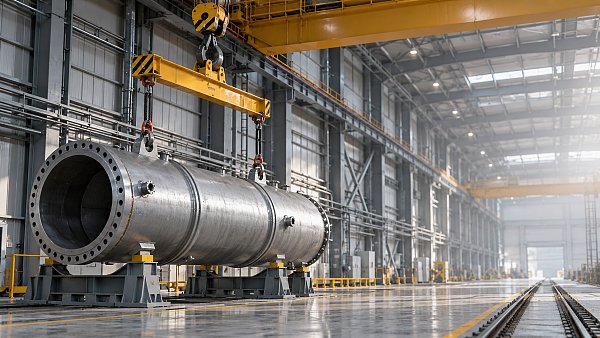
 Oct 23, 2026Selecting Lifting Equipment for Nuclear Component Transport: Key Safety CriteriaSelecting lifting machinery for nuclear component transport? Discover essential safety criteria, load control checks, and supplier requirements to guide confident procurement.
 Oct 22, 2026Tunnel Boring Machines in Southeast Asia: EPB vs. Slurry for Soft GroundCompare tunnel boring machines Southeast Asia projects rely on: EPB vs. slurry for soft ground. Discover how groundwater, settlement risks, and spoil handling shape the right choice.
 Oct 21, 2026Choosing Tunneling Equipment for the Middle East: Rock, Soil, and GroundwaterCompare underground tunneling equipment Middle East projects need. Explore rock, soil, groundwater, and TBM options to reduce risk and make confident procurement decisions.
 Oct 20, 2026Which Heavy Machinery Maintenance Standards Apply to Your Construction Fleet?Discover which heavy machinery maintenance standards apply to your fleet. Clarify legal duties, OEM requirements, and inspection rules to reduce risk and keep equipment ready for work.
Related News

Ms. Elena Rodriguez
Weekly Insights
Stay ahead with our curated technology reports delivered every Monday.