
How to Measure Construction Equipment Efficiency Across Fuel, Cycle Time, and Uptime
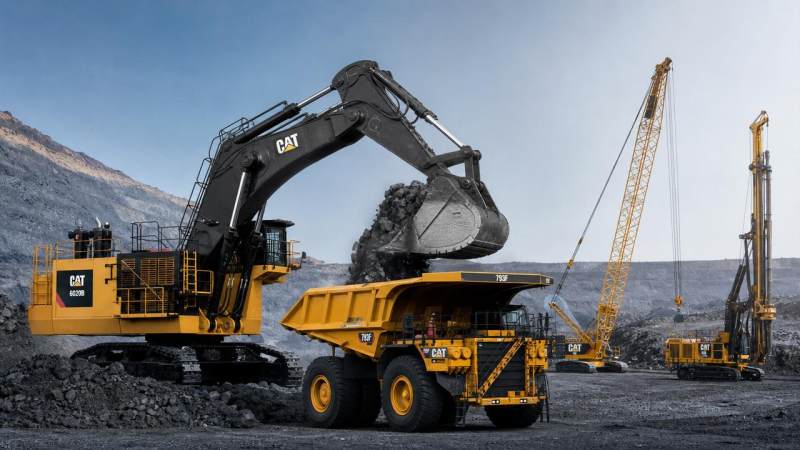
Construction equipment efficiency has become a board-level issue because machine hours now carry tighter cost, carbon, and schedule expectations. On complex jobs, fuel burn, cycle time, and uptime are not separate indicators. They interact every day, shaping output, maintenance pressure, and delivery risk. For heavy industry projects tracked by TF-Strategy, from TBM drives to open-pit loading fleets and crawler crane operations, measuring efficiency well means connecting machine data with actual production reality.
What equipment efficiency really measures
At a basic level, construction equipment efficiency is not just about whether a machine is running. It is about whether each unit of fuel, each operating minute, and each maintenance interval creates useful work.
That matters because many fleets appear busy while delivering weak output. An excavator may idle too long. A dump truck may queue excessively. A road paver may stop repeatedly because supply is inconsistent.
In practice, construction equipment efficiency is best understood through three linked dimensions:
- Fuel efficiency, or how much useful output is created per liter or gallon consumed.
- Cycle efficiency, or how quickly repeatable work is completed under real site conditions.
- Uptime efficiency, or how reliably equipment stays available for planned production.
A machine can score well on one dimension and still underperform overall. Low fuel use means little if cycle time is slow. High uptime means less if the machine spends much of that time idling.
Why the industry is paying closer attention
The current heavy equipment market is forcing a more disciplined view of performance. Fuel volatility, labor constraints, tighter emission expectations, and larger project values leave less room for hidden inefficiency.
This is especially visible in sectors followed by TF-Strategy. TBM projects depend on stable advance rates and cutterhead support systems. Open-pit mines need loading and haulage balance. Large lifting work depends on uptime windows that cannot easily be recovered.
Digitalization is another driver. Telematics, onboard diagnostics, payload systems, and remote fleet platforms now provide more data than ever. The challenge is no longer data access. It is selecting the right measures and interpreting them in context.
Start with fuel, but measure output with it
Fuel is often the first place efficiency reviews begin because it is visible and expensive. Still, fuel use alone can mislead. A larger machine may consume more fuel per hour but deliver better production per ton, cubic meter, or installed segment.
The more useful question is this: how much productive work is created from that fuel?
Useful fuel indicators
- Liters per operating hour for baseline monitoring.
- Liters per ton moved, per cubic meter excavated, or per lane kilometer paved.
- Idle fuel share versus loaded or productive fuel share.
- Fuel use by operator, shift, route, or geology segment.
For example, a mining dump truck working at altitude should not be judged against a lowland benchmark without adjustment. The same applies to TBM support equipment handling abrasive strata or variable groundwater conditions.
Fuel trends often reveal broader process issues. Rising consumption may point to underinflated tires, poor haul road quality, hydraulic losses, excessive waiting time, or mismatched machine pairing.
Cycle time shows where production is really won or lost
Cycle time is the operational heartbeat of construction equipment efficiency. It captures how long a repeatable task takes from start to completion, then exposes where time is being diluted.
On an excavator-and-truck operation, the cycle may include digging, swinging, loading, travel, dumping, and return. On crane work, the cycle may include rigging, lifting, positioning, and hook return.
Averages are useful, but the spread matters more. Wide variation usually signals unstable site coordination, uneven operator practice, poor material flow, or changing ground conditions.
Break the cycle into components
This is where construction equipment efficiency becomes a management issue rather than a machine-only issue. Faster equipment does not guarantee faster project flow if handoffs remain unstable.
Uptime must be measured beyond simple availability
Uptime is often reported as a percentage, but the number becomes useful only when it distinguishes planned time from truly productive time. A machine may be available on paper while still losing output through derates, alarms, or repeated short stoppages.
A stronger approach separates uptime into several layers:
- Scheduled availability: time the machine is ready during planned shift hours.
- Mechanical uptime: time without breakdown or repair interruption.
- Operational uptime: time actually engaged in work, excluding idle delay.
- Mission uptime: time the equipment supports the critical project path.
This layered view is valuable for high-consequence assets. A crawler crane may post acceptable availability yet miss a narrow lifting window. A TBM may remain technically operable while cutter interventions reduce effective advance time.
In other words, construction equipment efficiency depends on when uptime occurs, not only how much of it exists.
The three metrics work best as one decision framework
Fuel, cycle time, and uptime should be reviewed together because each can distort the other. Lower engine speed may reduce fuel per hour, yet extend cycle time and reduce daily output. Higher utilization may improve output, yet accelerate wear and increase unscheduled downtime later.
A balanced scorecard for construction equipment efficiency often includes:
- Output per fuel unit.
- Cycle time by task type and operating zone.
- Mechanical downtime frequency and duration.
- Idle ratio and queue ratio.
- Maintenance cost per productive hour.
This kind of integrated view aligns with the TF-Strategy perspective of linking physical parameters, site methodology, and strategic project demands. The value is not only operational transparency. It is better timing for intervention.
How this applies across heavy equipment scenarios
Different assets express construction equipment efficiency differently, so benchmarks should follow application rather than generic fleet averages.
Examples by equipment type
- TBM support systems benefit from tracking uptime alongside segment handling speed, spoil removal continuity, and energy intensity by geology section.
- Ultra-large excavators should be reviewed against pass match, bucket fill factor, truck queue time, and hydraulic efficiency during sustained loading.
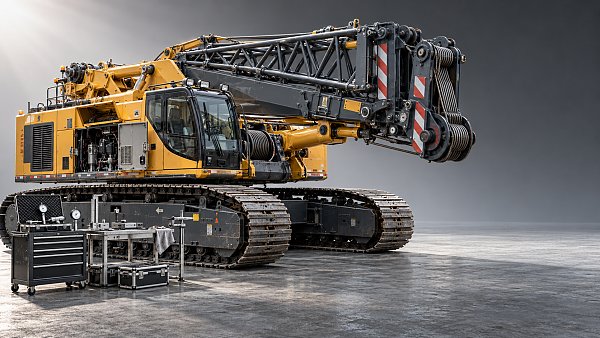
- Crawler cranes need close attention to setup delays, lift preparation bottlenecks, and downtime during critical installation sequences.
- Road machinery performs best when paving rate, stop frequency, material temperature stability, and roller coordination are measured together.
- Mining dump trucks should be assessed through payload consistency, route conditions, brake events, fuel per ton-kilometer, and delay causes.
These distinctions matter because construction equipment efficiency is always shaped by duty cycle, terrain, operator behavior, and process design.
Common mistakes that weaken measurement
Many efficiency programs fail not because data is missing, but because the wrong comparisons are made.
- Comparing unlike jobs without adjusting for haul distance, slope, altitude, weather, or material hardness.
- Using vendor brochure values as operating benchmarks.
- Treating idle time as an operator problem when dispatch or site layout is the real cause.
- Reviewing monthly averages only, which hides daily instability.
- Separating maintenance teams from production analysis.
A better method is to establish a clean baseline, segment data by operating condition, and investigate outliers quickly. Short review cycles often produce more value than large retrospective reports.
Where to go next with an efficiency review
The next step is usually not buying more software or adding more dashboards. It is defining a small set of reliable production-linked measures for each critical asset class.
Start with one fleet or one work package. Map fuel to output, break cycle time into visible stages, and separate uptime from true productive availability. Then compare findings with site conditions, maintenance history, and schedule pressure.
Over time, that discipline turns construction equipment efficiency from a reporting exercise into a decision tool. It becomes easier to judge whether a problem comes from machine health, operator practice, site design, or project sequencing.
For organizations tracking heavy equipment trends through TF-Strategy, this approach also creates a stronger bridge between operational data and strategic planning. That is often where the biggest gains appear: not in isolated metrics, but in better choices about deployment, maintenance timing, equipment mix, and total cost of ownership.
Related News
 Oct 23, 2026Selecting Lifting Equipment for Nuclear Component Transport: Key Safety CriteriaSelecting lifting machinery for nuclear component transport? Discover essential safety criteria, load control checks, and supplier requirements to guide confident procurement.
 Oct 22, 2026Tunnel Boring Machines in Southeast Asia: EPB vs. Slurry for Soft GroundCompare tunnel boring machines Southeast Asia projects rely on: EPB vs. slurry for soft ground. Discover how groundwater, settlement risks, and spoil handling shape the right choice.
 Oct 21, 2026Choosing Tunneling Equipment for the Middle East: Rock, Soil, and GroundwaterCompare underground tunneling equipment Middle East projects need. Explore rock, soil, groundwater, and TBM options to reduce risk and make confident procurement decisions.
 Oct 20, 2026Which Heavy Machinery Maintenance Standards Apply to Your Construction Fleet?Discover which heavy machinery maintenance standards apply to your fleet. Clarify legal duties, OEM requirements, and inspection rules to reduce risk and keep equipment ready for work.
Related News

Ms. Elena Rodriguez
Weekly Insights
Stay ahead with our curated technology reports delivered every Monday.