
How to Verify a Supplier Reference for Industrial Equipment Before You Buy?
How to Verify a Supplier Reference for Industrial Equipment Before You Buy?
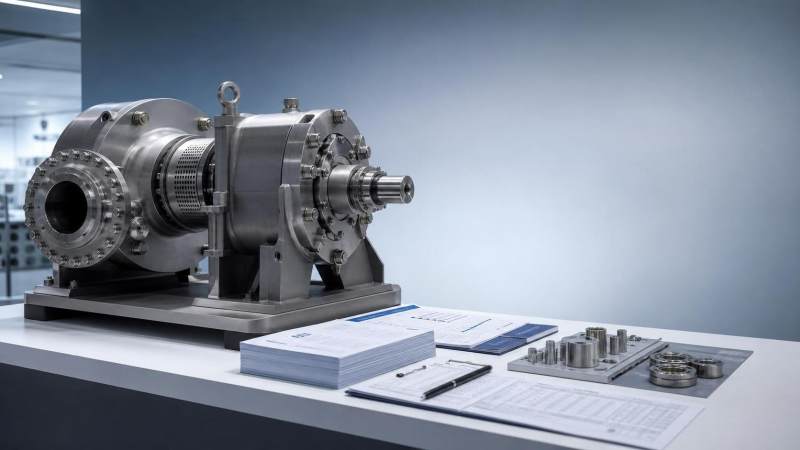
Before committing to costly machinery, every procurement team should know how to verify a supplier reference for industrial equipment with confidence. A polished quotation or well-known brand name is never enough in heavy industry, where downtime, safety, and lifecycle cost directly affect project success. This guide outlines practical ways to assess references, validate supplier credibility, and reduce purchasing risk before you buy.
In heavy equipment purchasing, references are not a formality. They are one of the few places where marketing claims meet field reality. A supplier may promise output, fuel efficiency, cutter life, lifting stability, or maintenance support, but the reference check tells you what happened after delivery, during commissioning, under harsh site conditions, and six months into operation when the real cost picture starts to show.
That matters whether you are sourcing a TBM subsystem, an excavator fleet, a crawler crane, road machinery, or heavy haulage support equipment. Procurement mistakes in this category are expensive, slow to reverse, and usually visible to everyone on the project.
Start with the reference list, but do not stop there
A supplier-provided reference list is only the opening document. Treat it as a lead, not proof. If every reference comes from a friendly market, a small pilot order, or a distributor rather than an end user, slow down. For industrial equipment, you want to know whether the supplier has delivered into environments close to yours: similar geology, duty cycle, altitude, temperature range, compliance regime, or lifting profile.
Ask for specifics that force operational detail:
- equipment model and configuration supplied
- delivery year and commissioning timeline
- country and project type
- operating hours, production targets, or duty intensity
- scope of after-sales support, spare parts, and training
- whether the machine was a standard build or customized
Vague references usually lead to vague performance discussions. That is rarely a good sign.
Check whether the reference is actually comparable to your job
This is where many buyers lose discipline. A supplier may have a good reputation in one segment and still be a risky choice for your scope. A tunnel project with abrasive rock conditions is not comparable to soft ground urban boring. A crane reference for standard precast lifting does not prove readiness for wind turbine installation. A mining truck running in moderate climate says little about performance in high-altitude or extreme heat operations.
When verifying a supplier reference for industrial equipment, match the reference against your own operating profile:
If the reference is not operationally close to your use case, label it as limited evidence and keep digging.
Speak to the end user, not only the sales contact
One practical rule: if the only reachable reference contact is someone in business development, you still do not know enough. Try to speak with people who had to live with the equipment after handover. Depending on the project, that may be a plant manager, maintenance head, procurement lead, fleet superintendent, project engineer, or operations director.
Their answers tend to be much more revealing. Ask what happened when the first serious fault appeared. Ask whether spare parts arrived when promised. Ask if the operator training was useful or just part of the paperwork. Ask what they would change if they had to place the order again.
A real user may still be diplomatic, especially on active commercial relationships, but hesitation tells you something too. Long pauses around warranty claims, software stability, commissioning delays, or recurring hydraulic issues should not be ignored.
Ask questions that expose cost, not just satisfaction
“Are you happy with the supplier?” is too broad to be useful. Most buyers need a clearer picture of total cost of ownership. That means you should ask questions that reveal the hidden cost line items procurement teams often inherit later:
- Did the delivered equipment match the agreed specification, or were there field modifications after arrival?
- How long did commissioning take versus the original schedule?
- Which parts failed first, and were they consumables, wear parts, or something more serious?
- How often did the supplier need to send technicians on site?
- Were there software, controls, or integration problems with the existing fleet or site systems?
- Did warranty coverage work in practice, or was every claim disputed?
- Would they still buy from the same supplier at the same price?
That last question is often the shortest route to the truth.
Verify documents behind the story
A reference conversation is useful, but documentation gives it weight. For critical equipment, ask for records that support the claims being made, subject to confidentiality limits. You may not get everything, and that is normal, but you should still request what can reasonably be shared.
- factory acceptance test or site acceptance records, where applicable
- maintenance schedules and parts manuals
- commissioning reports
- conformity declarations or certificates required by the destination market
- service response commitments in the contract or SLA terms
Be careful here. Certifications are frequently mentioned too casually in equipment sales. If a supplier claims compliance with a specific standard or market requirement, confirm exactly what is certified, by whom, and for which model or configuration. Do not assume a certificate covering one product family automatically covers the machine you are buying. If the documentation is incomplete, mark it 【待核实】 and keep it open in your sourcing file.
Look for patterns outside the supplier's chosen references
Good procurement teams rarely rely on curated contacts alone. Check whether the supplier appears consistently in project announcements, industry event materials, tender disclosures, installation news, dealer networks, or technical papers. None of those sources are enough by themselves, but together they help confirm whether the company is active in the segment it claims.
For sectors like TBM systems, open-pit mining machinery, and large lifting equipment, background verification often means looking at project fit as much as company size. A smaller specialist can be a strong supplier if its engineering scope is narrow and proven. A very large manufacturer can still underperform if local support is thin or the application is outside its strongest range.
What you are trying to detect is consistency. Do market traces, reference calls, technical documents, and commercial terms tell the same story?
Do not ignore spare parts and service references
This is a common blind spot. Buyers verify the machine reference, but not the after-sales reference. In industrial equipment, the service system often determines whether a low purchase price stays low.
Ask the reference contact about parts availability by category. Fast-moving consumables are one thing. Mission-critical hydraulic, electrical, structural, or control components are another. If a supplier depends on a long international chain for essential spares, you need realistic lead times and stocking options before the PO is issued.
A useful warning sign: the supplier talks in detail about production capability but stays vague about field support, technician coverage, or regional parts inventory. That usually becomes your problem later.
Visit the site when the order size justifies it
For high-value or high-risk procurement, a site visit is often cheaper than a bad decision. Seeing equipment in operation tells you things a call cannot. You can observe access for maintenance, operator interface quality, wear condition, housekeeping around the machine, and whether the end user has improvised fixes that suggest recurring design weaknesses.
If a visit is not possible, request a live remote walkthrough with the user present. Recorded factory videos are less helpful because they are easy to control.
Watch for red flags that usually mean more work later
- The supplier resists direct contact with end users.
- Every reference is very recent, with no machine that has run long enough to prove durability.
- Specifications change repeatedly during quotation without clear revision control.
- There is strong pricing pressure to close quickly before technical review is finished.
- Service promises are verbal and not reflected in commercial documents.
- The reference contact praises the machine but avoids uptime, parts cost, or warranty questions.
None of these points automatically disqualifies a supplier. Two or three appearing together usually mean you need tighter controls, better terms, or a stronger alternative.
Turn the reference check into a procurement decision tool
The most useful approach is to score what you learn. Not with a complicated model, just a disciplined one. Separate technical fit, delivery reliability, service capability, documentation quality, and cost risk. Then compare suppliers on evidence, not confidence.
Teams sourcing for heavy infrastructure often find that the supplier with the cleanest reference trail is not the cheapest on paper, but it is easier to defend when you factor in rework, delays, standby labor, rental substitution, and parts downtime. That is the real procurement comparison.
For buyers working across tunnel boring, mining, road machinery, or heavy lifting applications, that discipline is what separates a reference check from a courtesy call. You are not trying to confirm that the supplier exists. You are trying to confirm that the equipment will perform, be supported, and hold its cost line when the project is under pressure.
So before signing, verify the supplier reference for industrial equipment the hard way: compare the job conditions, speak to the people who operated it, test the support claims, and keep anything uncertain marked for follow-up. That extra work is usually far cheaper than discovering the truth after mobilization.
Related News
 Oct 26, 2026How TBM Electrical Systems Distribute Power and Protect Against FaultsExplore how TBM equipment electrical systems distribute power, coordinate fault protection, and maintain essential services. Learn what to check for safer, more reliable tunneling.
 Oct 25, 2026Comparing Industrial Equipment Suppliers: Lead Times, Warranties, and ServiceMake a smarter industrial equipment supplier comparison. Explore lead times, warranty coverage, and service support to reduce downtime risk and choose with confidence.
 Oct 24, 2026Choosing Lifting Equipment for Middle East Petrochemical Plants in Hazardous AreasExplore petrochemical lifting equipment Middle East plants can rely on. Compare hazardous-area certification, capacity, and heat limits to make informed procurement decisions.
 Oct 23, 2026Selecting Lifting Equipment for Nuclear Component Transport: Key Safety CriteriaSelecting lifting machinery for nuclear component transport? Discover essential safety criteria, load control checks, and supplier requirements to guide confident procurement.


Related News

Ms. Elena Rodriguez
Weekly Insights
Stay ahead with our curated technology reports delivered every Monday.