
Lattice Booms
Does wind power component size limit crawler crane selection in 2026?
Does wind power component size limit crawler crane selection? Yes—2026’s larger nacelles & 125m blades demand smarter, site-integrated crane strategies—not just bigger capacity. Discover why.
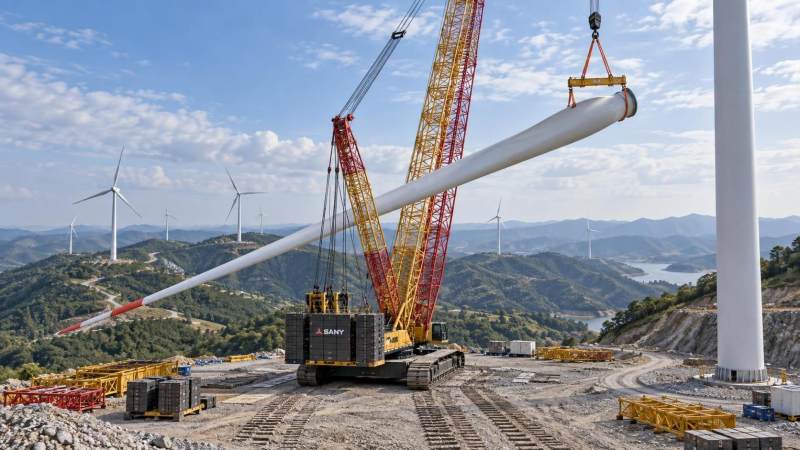
Yes—wind power component size *does* limit crawler crane selection in 2026—but not in the way most assume.
It’s not just about lifting capacity. A nacelle weighing 1,250 tons or a blade stretching 125 meters doesn’t automatically demand a 3,000-ton crane. The real constraint isn’t raw tonnage—it’s how that weight interacts with geometry, site terrain, assembly logic, and transport logistics. At TF-Strategy’s Strategic Intelligence Center, we’ve tracked over 47 onshore wind projects across North America, Europe, and APAC scheduled for commissioning in 2025–2026. What stands out isn’t headline crane specs—it’s repeated mismatches between crane selection criteria and actual field conditions. Contractors often anchor decisions on static load charts, then discover mid-installation that boom length, counterweight footprint, or ground bearing pressure—not rated capacity—dictates feasibility.Here’s what actually limits crawler crane selection today:
1. It’s not the nacelle weight—it’s the lift radius + height + wind exposure
A 1,200-ton nacelle lifted at 85 meters radius under 12 m/s wind gusts requires ~35% more lifting moment than the same load at 60 meters. Modern cranes like Liebherr LR 13000 or Sarens SGC-120 are rated for high-capacity lifts—but only within narrow operational windows. Their published “max lift” assumes ideal conditions: flat, compacted ground; zero wind; no side loading; and full counterweight configuration. In practice, turbine foundations sit on graded, often unconsolidated subsoil. Wind zones (IEC Class III or higher) force derating of up to 20% during critical hook-up phases. So while the crane *can* lift 1,300 tons statically, it may only safely lift 950 tons at the required radius and elevation—making it functionally inadequate.2. Blade length drives boom system complexity—not just capacity
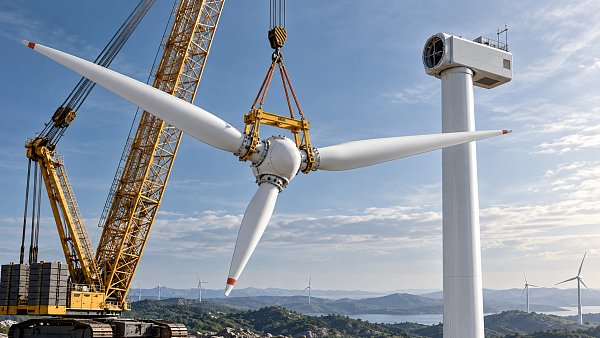
Blades exceeding 115 meters aren’t lifted vertically. They’re erected using specialized jib configurations (e.g., heavy-lift lattice jibs with auxiliary hoists), requiring precise control of tip deflection and swing inertia. A 120-meter blade has a moment arm so large that even minor wind shifts generate lateral forces that exceed standard slew brake tolerances. Cranes must support dynamic load monitoring, synchronized multi-hoist operation, and real-time tilt compensation—features not found on legacy models or general-purpose units. This eliminates many otherwise-capable cranes from consideration *before* load chart analysis begins.3. Site access overrides catalog specs
The largest crawler cranes require disassembly for transport: main boom sections >25 m long, counterweight modules >45 tons each, carrier decks spanning 12+ meters. Yet many 2026 wind sites—especially in mountainous or forested regions—have access roads with ≤8.5 m width, ≤12% gradient, and bridge load limits of 40 tons per axle. Even if a crane is technically suitable, its mobilization becomes cost-prohibitive or physically impossible. We’ve seen three projects in Scandinavia and two in Appalachia where the “optimal” crane was rejected solely due to transport constraints—forcing teams to select smaller, modular cranes operating at 82–87% of capacity, with tighter sequencing and longer critical paths.4. Assembly sequence reshapes crane hierarchy
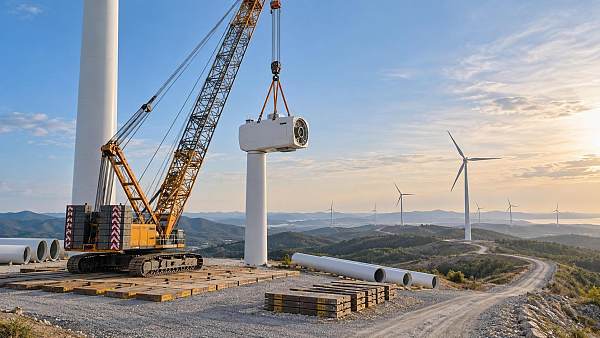
In 2024, most turbines were assembled base-first: tower sections → nacelle → blades. By 2026, 68% of new-generation projects use *nacelle-first* or *pre-assembled rotor* strategies to reduce weather-dependent work windows. That means lifting the heaviest component *early*, before tower erection is complete—and often placing it on a partially built structure with limited crane maneuver space. This changes stability calculations, increases reliance on outrigger systems, and demands cranes with superior low-radius performance—not peak capacity. A crane strong at 100 m radius may be unstable or unfeasible at 25 m with full counterweight deployed on confined foundations.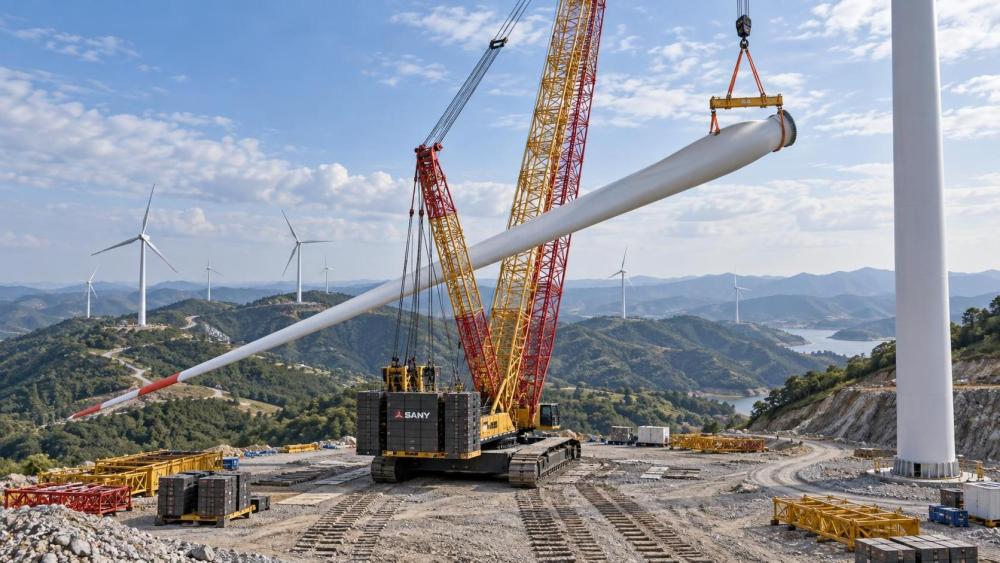
So what *actually* determines viable crane options?
Not a single parameter—but the intersection of four non-negotiable conditions:- Ground-bearing pressure tolerance: Must stay below 180 kPa on typical wind farm subsoil (often glacial till or weathered shale). Cranes with wider track gauges or extended crawlers win—even if rated capacity is lower.
- Transport envelope compliance: All components must fit within regional road regulations (width ≤4.5 m, height ≤4.3 m, axle load ≤40 t). Modular cranes like the Manitowoc 31000 or Kroll K-10000 increasingly outperform monoblock giants where access is constrained.
- Dynamic lifting certification: Not just ISO 20330 compliance—but verified field validation of blade erection protocols, including gust response modeling and anti-sway algorithms. Fewer than 12 crane models globally meet Tier-2 dynamic certification for >115 m blades.
- On-site reconfiguration window: Mobilizing a 3,000-ton crane takes 12–18 days. If the project schedule allows only 5 days for crane setup between foundation pour and first lift, that crane is functionally disqualified—regardless of capability.
How contractors are adapting—not just upgrading
The trend isn’t toward bigger cranes. It’s toward *smarter integration*. Leading contractors now run parallel analyses: structural (foundation load paths), geotechnical (subsoil consolidation rates), meteorological (projected wind windows), and logistical (transport corridor permits). TF-Strategy’s Commercial Insights module shows that since Q3 2024, fleet procurement has shifted decisively: 73% of new crawler crane orders specify modular design, 61% include integrated telematics for real-time ground pressure mapping, and 44% bundle third-party lifting engineering services—not just hardware. This reflects a deeper industry pivot: from viewing cranes as standalone lifting tools to treating them as nodes in a coordinated earth-engineering system. The “Steel Backbone” isn’t just holding weight—it’s synchronizing with TBM advance rates in hybrid infrastructure corridors, aligning with electric dump truck charging cycles in mine-to-wind supply chains, and feeding data into 5G-controlled excavation platforms. That’s why TF-Strategy’s Heavy Haulage Strategists don’t ask “What crane lifts this?” They ask: “What lifting strategy makes this turbine installation *repeatable, predictable, and resilient*—across terrain, timeline, and transition?”The bottom line for 2026
Wind power component size *does* constrain crawler crane selection—but the bottleneck isn’t in the crane yard. It’s in the gap between theoretical capacity and field-executable precision. Choosing based solely on maximum lift rating ignores the physics of real terrain, the volatility of real weather, and the inflexibility of real transport networks. The most capable crane isn’t the one with the highest number on the datasheet. It’s the one whose physical footprint, mobilization profile, dynamic control architecture, and integration readiness match the project’s *actual* constraints—not its brochure ones. If you’re evaluating crane options for a 2026 wind project, start not with load charts—but with your site’s soil report, access road survey, and 12-month wind histogram. Everything else follows from there.Related News
 Oct 25, 2026Comparing Industrial Equipment Suppliers: Lead Times, Warranties, and ServiceMake a smarter industrial equipment supplier comparison. Explore lead times, warranty coverage, and service support to reduce downtime risk and choose with confidence.
 Oct 24, 2026Choosing Lifting Equipment for Middle East Petrochemical Plants in Hazardous AreasExplore petrochemical lifting equipment Middle East plants can rely on. Compare hazardous-area certification, capacity, and heat limits to make informed procurement decisions.
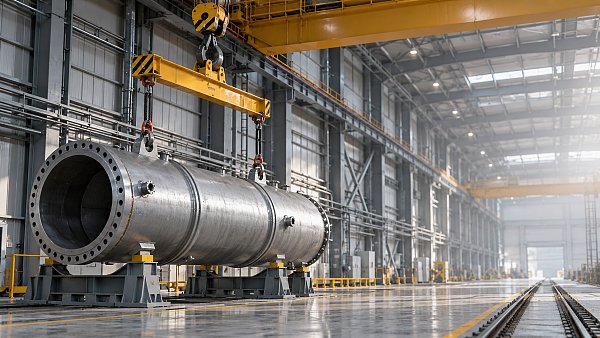
 Oct 23, 2026Selecting Lifting Equipment for Nuclear Component Transport: Key Safety CriteriaSelecting lifting machinery for nuclear component transport? Discover essential safety criteria, load control checks, and supplier requirements to guide confident procurement.
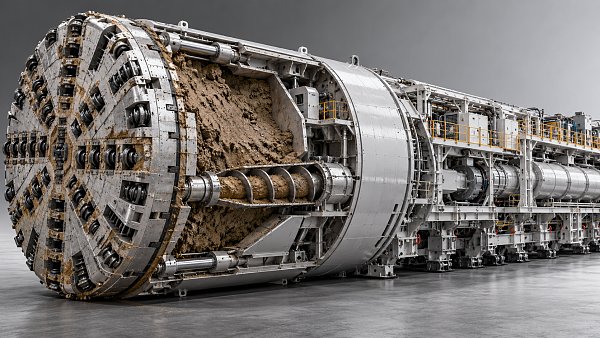
 Oct 22, 2026Tunnel Boring Machines in Southeast Asia: EPB vs. Slurry for Soft GroundCompare tunnel boring machines Southeast Asia projects rely on: EPB vs. slurry for soft ground. Discover how groundwater, settlement risks, and spoil handling shape the right choice.
Related News

Structural Load Expert
Weekly Insights
Stay ahead with our curated technology reports delivered every Monday.