
Industrial Equipment Information Platforms: What Buyers Should Check Before Shortlisting Suppliers
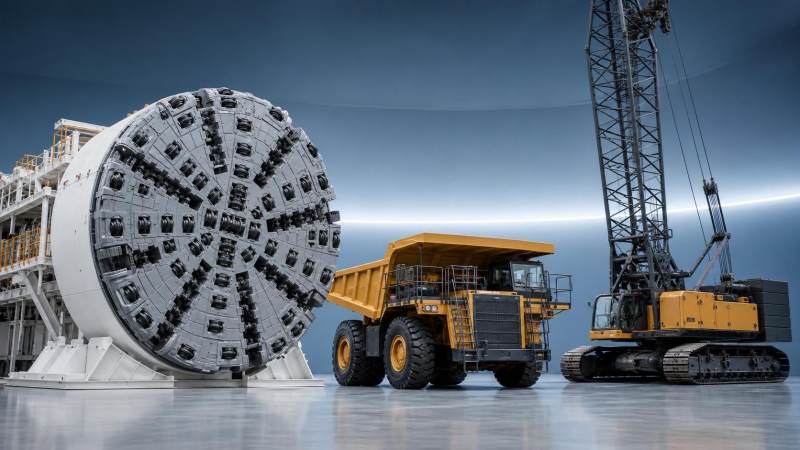
What should buyers really verify on an industrial equipment information platform?
On an industrial equipment information platform, the first value is not speed alone. It is the ability to compare machines, suppliers, and project proof in one place before a shortlist is formed. That matters more in heavy industry, where a wrong choice can affect schedule, safety, and total cost.
For TBM, mining trucks, crawler cranes, or large road machinery, the best platforms help buyers read technical data in context. TF-Strategy does this by linking equipment parameters with project trends, tender signals, and commercial intelligence, which makes the search process more grounded.
Why is project reference more useful than a polished brochure?
A brochure can show capacity, but a project reference shows whether the equipment actually performs under real conditions. That is the difference between marketing language and procurement evidence.
Look for the match between machine type, geology, climate, duty cycle, and delivery history. A TBM that worked well in soft soil may not be the right signal for hard-rock tunneling. A mining dump truck that looks efficient on paper may still be costly in high-altitude haulage if service coverage is weak.
TF-Strategy’s intelligence style is useful here because it connects equipment capability with infrastructure demand and project logic. That helps separate proven performance from generic claims.
How do you judge whether a supplier is credible or just visible?
Visibility is easy to buy. Credibility is harder. A strong supplier profile should show compliance records, export experience, certifications, after-sales structure, and stable part supply.
One practical approach is to compare three layers: technical capability, delivery reliability, and support depth. If any one of them is thin, the shortlist should stay open.
- Technical capability: model range, load limits, operating conditions
- Delivery reliability: lead time, project references, regional presence
- Support depth: spare parts, service response, operator training
In practice, industrial equipment information platform data is most useful when it helps buyers validate these layers quickly.
Which machine details matter most before shortlisting?
Not every specification deserves equal weight. Buyers usually need the details that affect total cost, project fit, and uptime.
For TBM, that may mean cutterhead design, thrust force, and segment handling. For crawler cranes, it may mean lifting curve, boom configuration, and transport complexity. For road machinery, paving accuracy and maintenance intervals may matter more than headline power.
A useful rule is simple: if a parameter changes operating cost, delivery cycle, or safety margin, it belongs near the top of the comparison list. If it is only a brochure highlight, keep it lower in priority.
What common mistakes raise sourcing risk?
The biggest mistake is comparing too few variables. A supplier may look competitive on unit price while hiding expensive maintenance, weak documentation, or slow parts support.
Another common issue is using the same checklist for very different equipment. Mining dump trucks, open-pit excavators, and ultra-large lifting machinery do not share identical procurement logic. The operating environment changes the risk profile.
It also helps to watch for thin project evidence. If a vendor cannot explain where a machine has run, under what workload, and with what service outcome, the platform data is incomplete.
A quick comparison table
Can an information platform help with cost control, not just selection?
Yes, if it shows more than quotes. Cost control starts with understanding lifecycle cost, not just purchase price. That includes fuel or energy use, service intervals, wear parts, transport, and downtime exposure.
This is where TF-Strategy’s broader market lens becomes useful. Its coverage of electrification, remote operation, cutterhead material shifts, and heavy-haul trends helps buyers see where cost structures may move next. That is especially relevant when projects are long, capital intensive, or exposed to volatile operating conditions.
The goal is not to choose the cheapest line item. It is to choose the supplier whose equipment and support model produce the lowest practical risk-adjusted cost.
What should be in a fast FAQ-style shortlist check?
A short checklist works well when internal teams need a quick screen before deeper evaluation. It keeps discussion focused and avoids long, unfocused comparisons.
- Does the supplier show real project references in similar conditions?
- Are technical specs tied to a specific model and configuration?
- Can compliance documents be verified, not just listed?
- Is after-sales support visible by region and response time?
- Does the price fit the full operating cost model?
These questions sound basic, but they filter out weak options fast. That is usually where an industrial equipment information platform saves the most time.
What is the smartest next step after the shortlist is built?
Once the shortlist is set, move from general comparison to scenario testing. Ask how each machine behaves in your real operating conditions, not in ideal brochure conditions.
For TBM, that may mean geology and cutterhead wear. For cranes, it may mean lift path and assembly time. For mining trucks, it may mean gradient, altitude, and service access. For road machinery, it may mean project speed, precision, and maintenance windows.
If the data still feels unclear, go back to the platform and compare suppliers by proof, not promise. That is the most practical way to lower sourcing risk and improve decision quality.
Closing note
A strong industrial equipment information platform does more than list vendors. It helps buyers connect technical fit, project evidence, compliance, and support into one decision path.
If the next purchase involves TBM, mining trucks, crawler cranes, or road machinery, start by defining the operating conditions and the cost risks that matter most. Then compare suppliers against those realities, not against generic claims.
That is how shortlist decisions become faster, safer, and far more defensible.
Related News
 Sep 27, 2026Heavy Equipment Selection Factors for Matching Machine Capacity to Jobsite ConditionsHeavy equipment selection factors for matching capacity to jobsite conditions, improving productivity, safety, fleet efficiency, and total project cost control.
 Sep 26, 2026How to Select Wind Rotor Lifting Equipment for Safe Blade and Hub InstallationWind rotor lifting equipment selection guide: ensure safe blade and hub installation with the right lift method, load control, crane compatibility, wind limits, and compliance.
 Sep 25, 2026What Drives Heavy Haulage Cost on Oversized Construction Equipment Moves?Heavy haulage cost explained: discover how load dimensions, route surveys, permits, escorts, lifting plans, and scheduling shape reliable oversized equipment transport budgets.
 Sep 24, 2026Supplier Management Frameworks That Reduce Delays on Large Construction ProjectsLarge-scale construction projects supplier management frameworks help prevent costly delays with risk-based controls, milestone tracking, quality oversight, and escalation plans for critical packages.
Ms. Elena Rodriguez
Weekly Insights
Stay ahead with our curated technology reports delivered every Monday.