
Is used mining equipment worth the hidden risk?
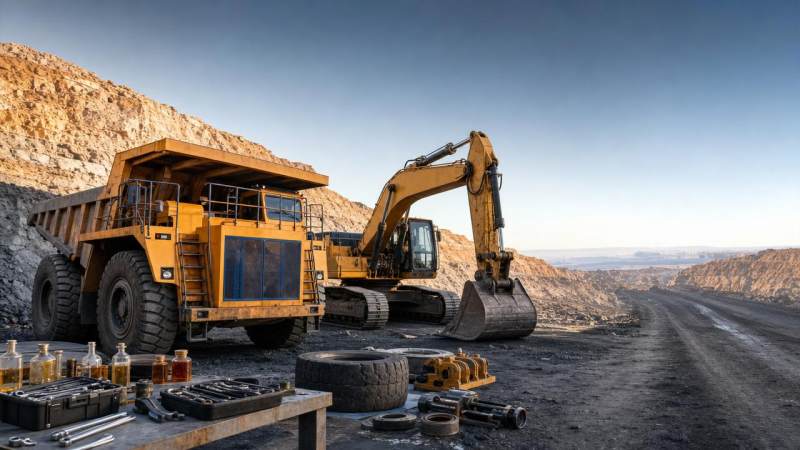
Is Used Mining Equipment Worth the Hidden Risk?
Used mining equipment can appear to be a fast path toward lower capital spending, especially when project timelines are tight.
Yet the real question is whether the discount hides reliability gaps, compliance exposure, or downtime that later erodes operating margins.
Across open-pit mining, tunneling support, hauling, and lifting operations, second-hand assets are becoming a strategic decision, not just a purchasing shortcut.
The Market Signal: Lower Capex Is Meeting Higher Operational Pressure
The global heavy machinery cycle is shifting as infrastructure demand, energy transition projects, and mineral security strategies expand simultaneously.
This has increased interest in used mining equipment, particularly for haul trucks, excavators, loaders, crushers, and drilling machines.
Shorter delivery windows also make available machines attractive when new units face long lead times or price escalation.
However, mining sites now demand higher uptime, stronger safety assurance, and better digital visibility than many older fleets were designed to provide.
That gap is where hidden risk begins to influence the true value of mining equipment.
Why Used Mining Equipment Is Gaining Attention
Several forces are pushing the second-hand market from opportunistic buying toward structured asset strategy.
The appeal is clear, but the financial case depends on what the machine can still deliver under real production loads.
The Hidden Risks Are Often Technical, Not Visible
A clean exterior rarely confirms machine health in mining environments.
Used mining equipment may carry fatigue that only appears under continuous haulage, heavy digging, or abrasive material handling.
- Undocumented engine overhauls can hide thermal stress or lubrication failures.
- Hydraulic systems may show pressure loss after extended duty cycles.
- Frames, booms, and chassis may contain fatigue cracks.
- Electrical harnesses may suffer corrosion, vibration damage, or poor repairs.
- Control software may be outdated or incompatible with site systems.
These risks do not always make used mining equipment unsuitable.
They do mean the inspection standard must match the severity of the application.
Total Cost of Ownership Is Replacing Purchase Price as the Main Question
The lowest purchase price can become expensive if the asset loses availability during peak production periods.
A better evaluation compares acquisition cost, refurbishment cost, parts availability, fuel consumption, tire wear, and expected downtime.
For used mining equipment, total cost of ownership often changes after the first 1,000 operating hours.
That period reveals whether previous maintenance records were accurate and whether major systems can still handle sustained duty.
Compliance Gaps Are Becoming More Expensive
Regulatory pressure is increasing across emissions, braking performance, operator safety, noise, and site access standards.
Older mining equipment may require upgrades before it can operate legally or economically in certain jurisdictions.
This is especially important for cross-border asset movement, where certification records may not transfer cleanly.
Emission tier differences, rollover protection documentation, fire suppression systems, and emergency shutdown functions require early verification.
If upgrades are unavailable or costly, used mining equipment can lose its apparent savings before deployment begins.
Operational Fit Matters More Than Machine Availability
A machine that worked well in one mine may underperform in another.
Altitude, temperature, gradient, road condition, material density, and shift pattern all affect equipment stress.
Used mining equipment should be assessed against the exact production environment, not only against rated specifications.
- High-altitude mines may require cooling and engine derating checks.
- Abrasive ore bodies increase bucket, liner, and undercarriage wear.
- Steep haul roads intensify brake, tire, and drivetrain loads.
- Remote sites need reliable parts channels and technician support.
The right asset is not always the newest or cheapest.
It is the one whose remaining life matches the mine plan and production risk tolerance.
Digital Records Are Changing How Used Assets Are Judged
Telematics, sensor logs, oil sampling records, and maintenance platforms are improving transparency in heavy machinery markets.
For mining equipment, digital evidence can reveal idle time, overload events, fault histories, and operator behavior.
This trend rewards sellers that maintain traceable records and penalizes assets with unclear operating histories.
It also helps separate genuinely reliable used mining equipment from machines that have only been cosmetically prepared.
As digital maintenance ecosystems mature, undocumented machinery will likely face deeper valuation discounts.
How Different Business Links Feel the Impact
The rise of used mining equipment affects capital planning, maintenance systems, safety governance, and project delivery schedules.
Financially, second-hand assets can preserve cash and improve flexibility during uncertain commodity cycles.
Operationally, they can also create unpredictable maintenance loads if condition assessment is weak.
- Mine planning must align machine capacity with production assumptions.
- Maintenance teams need early access to service manuals and diagnostics.
- Safety systems require verification before commissioning.
- Finance models should include refurbishment and downtime buffers.
- Supply chains must confirm critical spare parts availability.
Key Points to Check Before Committing
A disciplined review can reduce the hidden risk attached to used mining equipment.
- Confirm serial numbers, ownership history, and liens.
- Review service records, overhaul documents, and component hours.
- Conduct oil analysis on engine, transmission, and hydraulics.
- Inspect frames, booms, buckets, beds, and articulation joints.
- Run diagnostic scans and verify fault code history.
- Test under load whenever possible, not only at idle.
- Estimate refurbishment cost before final price negotiation.
- Check compliance with local safety and emissions rules.
These steps should be documented before the asset enters production planning.
A Practical Decision Framework for the Next Cycle
Used mining equipment is worth considering when the remaining life, support network, and operating profile are clearly understood.
It becomes risky when price replaces evidence as the main decision factor.
The strongest decisions combine technical inspection, financial modeling, and operational scenario testing.
Final Outlook: Value Exists, but Only With Evidence
Used mining equipment is not automatically a hidden liability.
In the right conditions, it can protect capital, shorten deployment time, and support flexible mine development.
The risk rises when maintenance history, compliance status, and workload suitability remain unverified.
As heavy industry moves toward digital records, lower emissions, and stricter safety standards, evidence will define asset value.
Before committing to used mining equipment, build a fact-based review around condition, cost, compliance, and operational fit.
For deeper machinery intelligence across mining, tunneling, lifting, and haulage, follow TF-Strategy’s evolving heavy equipment insights.
Related News
 Oct 13, 2026OEM Equipment Suppliers in Europe: Vetting Quality, Lead Times, and SupportCompare OEM equipment Europe suppliers on quality, lead times, and after-sales support. Discover practical vetting steps to reduce downtime and buy heavy equipment with confidence.
 Oct 12, 2026How to Assess a High-Altitude Mining Equipment Manufacturer for Remote ProjectsHigh altitude mining manufacturer assessment guide: compare derating, cold-climate reliability, remote service, parts resilience, and lifecycle risk for smarter project decisions.
 Oct 11, 2026What Drives TBM Cutter Head Material Cost and Life-Cycle Value?Cutter head material cost explained: compare TBM alloys, wear protection, downtime risk, and life-cycle value to choose the most reliable, cost-effective solution.
 Oct 13, 2026Mining Haulage Services Procurement Checklist for Uptime and Cost ControlMining haulage services procurement checklist for stronger uptime, safer fleet selection, transparent pricing, and better cost control across changing mine conditions.

Ms. Elena Rodriguez
Weekly Insights
Stay ahead with our curated technology reports delivered every Monday.