
When do heavy haulage solutions reduce project delays?
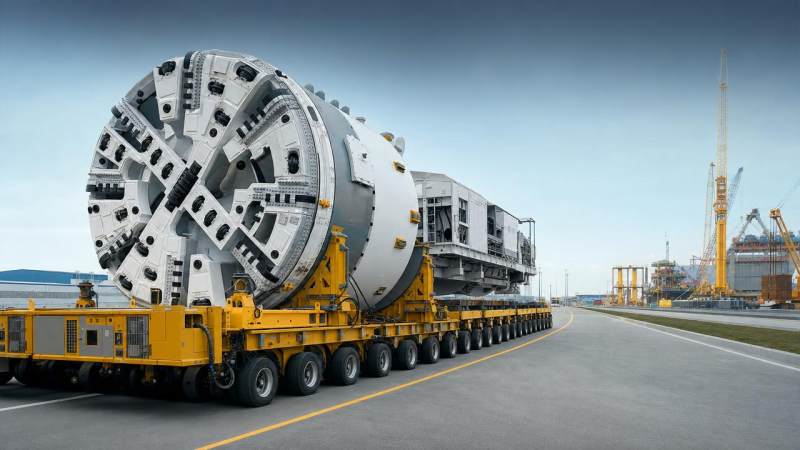
When Heavy Haulage Solutions Reduce Project Delays
Project delays often begin long before equipment reaches the site.
They usually emerge at the interface between route planning, load engineering, permits, escorts, ground capacity, and execution risk.
For TBMs, mining fleets, crawler cranes, transformers, and oversized infrastructure modules, transport is part of construction methodology.
Heavy haulage solutions reduce delays when they are integrated early, modeled accurately, and governed through disciplined field execution.
They protect critical-path work by turning complex movement into a controlled engineering activity, not a late logistics reaction.
Operational Definition and Delay Logic
Heavy haulage solutions cover the planning, engineering, permitting, equipment selection, and execution of oversized or overweight transport.
They may involve multi-axle trailers, self-propelled modular transporters, jacking systems, temporary roadworks, and engineered lifting interfaces.
The main purpose is not only movement. It is schedule protection under physical, legal, and environmental constraints.
Delays occur when payload data, route limits, site readiness, and authority approvals are discovered too late.
Heavy haulage solutions reduce this uncertainty by converting assumptions into verified dimensions, axle loads, turning envelopes, and risk controls.
The effect is strongest when haulage planning starts during construction sequencing, procurement scheduling, or modularization design.
Industry Signals Driving Earlier Haulage Planning
Infrastructure assets are becoming larger, heavier, and more modular.
This shift raises the strategic value of heavy haulage solutions across tunneling, mining, energy, petrochemicals, and transport networks.
These signals show why transport can no longer remain isolated from engineering decisions.
Heavy haulage solutions become delay reducers when they connect equipment parameters with terrain, regulation, and construction timing.
Conditions That Produce Measurable Schedule Gains
Early integration with the critical path
The strongest delay reduction appears when transport milestones are linked to excavation, lifting, installation, or commissioning milestones.
Heavy haulage solutions should define access dates, permit deadlines, staging areas, and contingency buffers before fabrication reaches final stages.
This prevents completed components from waiting at ports, factories, laydown yards, or municipal boundaries.
Verified payload and transport geometry
Schedule risk increases when drawings, actual weights, lifting points, and center-of-gravity data are inconsistent.
Heavy haulage solutions reduce rework by validating load envelopes before route surveys and equipment booking are finalized.
For TBM shields, crane booms, dump truck bodies, and generator modules, millimeters and kilograms affect permits.
Route intelligence beyond basic mapping
A road may appear available but still fail under turning radius, bridge capacity, gradient, overhead clearance, or pavement strength.
Effective heavy haulage solutions include swept-path analysis, bridge assessments, traffic impact reviews, and temporary modification plans.
This reduces last-minute detours, authority objections, and unplanned civil works near the delivery date.
Permits aligned with execution reality
Permitting is often treated as paperwork, yet it directly governs movement windows and route choice.
Heavy haulage solutions reduce delays when permit submissions match actual convoy length, axle configuration, escort needs, and travel timing.
Accurate applications avoid rejections, revisions, and conflicts with public events, roadworks, or seasonal restrictions.
Business Value Across Heavy Industry Projects
Delay reduction is only one visible outcome.
Well-structured heavy haulage solutions also improve cost control, safety performance, asset utilization, and contract predictability.
- They reduce standby costs for cranes, crews, ports, and installation teams.
- They protect sequential work such as TBM launch, pit commissioning, and module setting.
- They lower damage risk through engineered supports, lashing plans, and handling procedures.
- They improve commercial transparency by identifying route upgrades and permit constraints early.
- They support safer public interfaces during night moves, escorts, and urban deliveries.
For capital-intensive projects, each avoided delay can protect expensive resources already mobilized on site.
This is why heavy haulage solutions often influence total project economics beyond the transport line item.
Typical Applications and Delay Control Points
Different assets create different schedule exposures.
The table below summarizes where heavy haulage solutions usually create the greatest practical value.
In each case, transport planning must reflect the next construction action.
Heavy haulage solutions are most effective when delivery order matches installation logic, not warehouse convenience.
Practical Planning Framework
A disciplined framework helps convert heavy haulage solutions into reliable schedule protection.
- Confirm exact dimensions, weights, lifting points, and center-of-gravity data.
- Map the construction sequence and identify critical delivery dates.
- Survey routes for structures, gradients, utilities, turns, and pavement capacity.
- Model transport configurations before submitting permits.
- Coordinate escorts, police support, utilities, and temporary road modifications.
- Prepare contingency routes, holding areas, and weather decision rules.
- Run readiness reviews before dispatch and before final site entry.
This framework is especially useful for cross-border moves, remote mining sites, and dense urban infrastructure corridors.
It also supports better governance when multiple contractors, authorities, ports, and equipment suppliers are involved.
Warning Signs That Haulage May Cause Delay
Heavy haulage solutions should be escalated when warning signs appear during planning or procurement.
- Final component weights are not available before route approval.
- The transport route depends on unverified bridge or culvert capacity.
- Permits are requested after production or shipping has already finished.
- Site access roads are designed without turning-envelope analysis.
- Crane mobilization is scheduled before delivery windows are confirmed.
- Authorities require multiple approvals across jurisdictions.
- Weather, altitude, or temperature may affect convoy speed and equipment performance.
These signs do not always indicate failure.
They indicate that heavy haulage solutions need higher engineering attention and earlier decision authority.
Execution Discipline on Movement Day
Even strong planning can fail if field execution is loose.
Movement-day discipline should include checklists, communications protocols, convoy leadership, emergency stops, and defined escalation channels.
Heavy haulage solutions reduce delays when the convoy team understands both transport risk and construction consequence.
A late arrival may affect tunnel launch, mine production, turbine erection, or refinery turnaround windows.
Therefore, monitoring should cover traffic, weather, axle temperatures, hydraulic systems, escort status, and site readiness.
Clear communication between route teams and receiving teams avoids idle lifting equipment and unsafe congestion.
Strategic Intelligence for Better Decisions
TF-Strategy views heavy transport as part of the broader power-and-precision chain in earth engineering.
TBM deployment, open-pit mining productivity, crawler crane utilization, and smart highway delivery all depend on reliable physical movement.
Heavy haulage solutions gain value when intelligence connects machinery parameters, route constraints, market timing, and construction methodology.
This intelligence can highlight raw material bottlenecks, equipment lead times, regional permit trends, and emerging electric fleet requirements.
It also helps compare whether modularization, partial disassembly, alternate ports, or route upgrades offer better schedule certainty.
Actionable Next Steps
Heavy haulage solutions reduce project delays when they are treated as engineered schedule controls.
The practical next step is to audit every oversized component against route, permit, site, and critical-path requirements.
Then compare planned delivery dates with verified transport feasibility, authority timelines, and installation readiness.
Where gaps appear, revise the sequence before fabrication, shipping, or crane mobilization locks in avoidable delay.
For complex infrastructure and heavy industry programs, early heavy haulage solutions can turn uncertainty into controlled progress.
That is when specialized transport becomes a strategic advantage, not merely the final movement to site.
Related News
 Oct 12, 2026How to Assess a High-Altitude Mining Equipment Manufacturer for Remote ProjectsHigh altitude mining manufacturer assessment guide: compare derating, cold-climate reliability, remote service, parts resilience, and lifecycle risk for smarter project decisions.
 Oct 11, 2026What Drives TBM Cutter Head Material Cost and Life-Cycle Value?Cutter head material cost explained: compare TBM alloys, wear protection, downtime risk, and life-cycle value to choose the most reliable, cost-effective solution.
 Oct 12, 2026How to Read Mining Equipment Performance Reviews Beyond Headline MetricsMining equipment performance reviews explained: learn to assess productivity, availability, maintenance risk, site conditions, and total ownership cost for smarter fleet decisions.
 Oct 11, 2026Payload Management Systems: Preventing Overloads Without Slowing ProductionPayload management helps prevent overloads, protect equipment, and keep production moving. Learn how accurate targets, pass planning, alerts, and calibration improve every load.




Ms. Elena Rodriguez
Weekly Insights
Stay ahead with our curated technology reports delivered every Monday.