
Open-pit mining cost overruns that rarely show up early
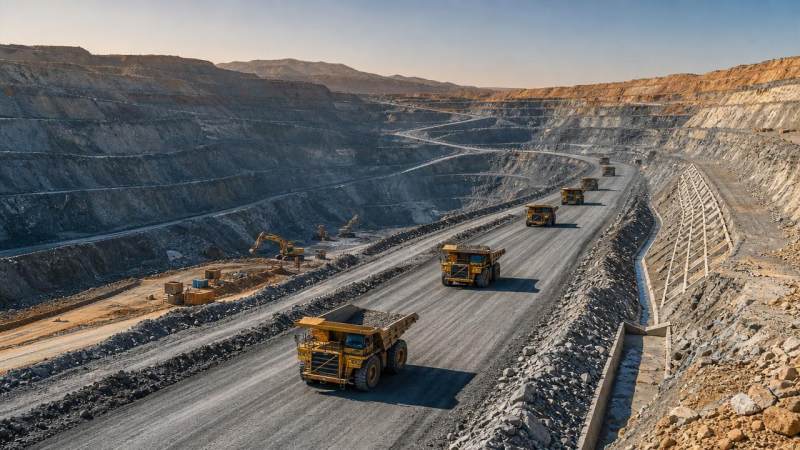
In open-pit mining, cost overruns rarely begin with one dramatic failure. They usually build quietly through haul-road redesigns, fuel volatility, equipment downtime, slope instability, and contractor change orders long before budgets are formally revised. For financial approvers, recognizing these hidden signals early is essential to protecting capital efficiency, controlling lifecycle risk, and avoiding late-stage surprises that distort project returns.
Why hidden cost drift in open-pit mining is becoming a sharper financial issue
A notable change across open-pit mining is that overruns are no longer driven only by obvious factors such as commodity price swings or a major geotechnical incident. The more important trend is the accumulation of small operational changes that are financially material when combined. For finance teams, this matters because many of these shifts sit below formal capex reforecast thresholds in the early months, yet they gradually alter the project’s total cost profile.
Several forces are intensifying this pattern. Mine plans are being adjusted more frequently to respond to grade control data, weather variability, emissions pressure, labor shortages, and equipment utilization challenges. At the same time, large fleets have become more digitally visible, but visibility does not automatically create early budget discipline. A dashboard can show truck delays, rising fuel burn, or lower shovel productivity, yet if those signals are not translated into financial impact, the approval chain often reacts too late.
This is especially relevant for financial approvers evaluating open-pit mining investments within broader infrastructure and heavy industry portfolios. The issue is not merely whether costs are increasing, but whether budget logic still matches field reality. In many projects, the first warning sign is not a revised headline estimate. It is a subtle change in cycle times, contractor hours, tire life, drill-and-blast fragmentation, or dewatering demand that starts to erode unit economics long before a board paper mentions overrun risk.
The new signals financial approvers should watch earlier
In the current environment, early warning in open-pit mining is less about one red flag and more about pattern recognition. Financial approvers should track operating signals that often look technical at first, but quickly convert into cash flow pressure, delayed payback, and weaker return on invested capital.
What makes these signals dangerous is timing. They rarely trigger immediate alarm because each item can be explained individually as normal operational adjustment. Yet in open-pit mining, these adjustments often interact. A longer haul road raises fuel use and tire wear. That can increase maintenance downtime. Downtime then pushes contractors into overtime or rescheduling. A slope concern may force route changes, which further worsen cycle times. By the time finance receives a formal variance report, the cost structure has already shifted.
What is driving this trend beneath the surface
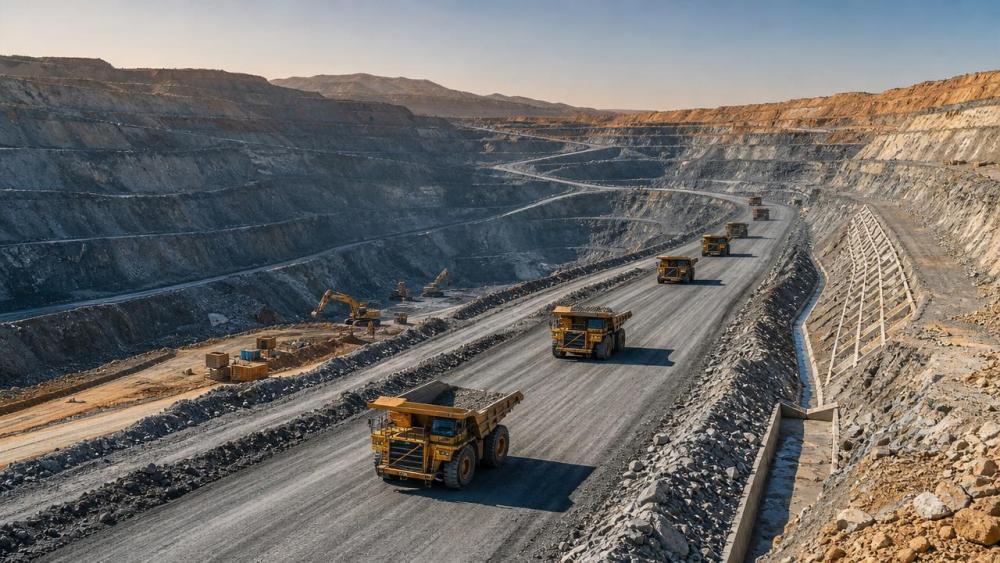
The first driver is growing mine-plan sensitivity. As pits become deeper and more complex, small design decisions have larger cost consequences. A modest change in bench sequencing, ramp layout, or waste handling distance can have a measurable effect on truck hours, diesel consumption, and maintenance intervals. In previous cycles, these impacts might have been absorbed by stronger margins. Today, investors and lenders are less tolerant of weak cost discipline.
The second driver is the inflation of supporting inputs rather than only core mining equipment. Open-pit mining budgets often focus heavily on fleet acquisition, blasting, and labor. However, cost creep increasingly emerges in tires, consumables, water management, road materials, component lead times, and specialist technical services. These supporting inputs are less visible in initial approvals, but they can significantly widen the gap between budgeted and actual cost per tonne.
The third driver is a mismatch between operational data and financial interpretation. Modern mines can collect detailed telemetry from excavators, dump trucks, drills, and dispatch systems. But if finance teams review only monthly summaries, they may miss leading indicators. For example, a gradual reduction in effective payload or rising idle time may not appear critical operationally, yet financially it can point to a sustained decline in asset efficiency and a future need for fleet supplementation or schedule extension.
The fourth driver is contracting structure. In many open-pit mining environments, outsourced services help operators remain flexible. That flexibility has value, but it can also distribute cost accountability across multiple parties. When site conditions change, claims and change orders may be commercially valid, yet still hard to benchmark. Financial approvers need to understand where variable scope begins to behave like hidden inflation.
Which stakeholders feel the impact most
The impact of hidden overruns in open-pit mining is not evenly distributed. Different functions experience different forms of pressure, and this is where approval quality becomes strategically important.
For financial approvers, the practical implication is clear: open-pit mining should not be reviewed only as a static budget versus actual exercise. It should be assessed as a moving operating system where small field changes alter future cash requirements. This is especially true for large, equipment-intensive sites where the relationship between geology, haulage distance, and asset utilization is highly sensitive.
How the overrun pattern usually develops across project stages
A useful way to improve judgment is to observe how hidden overruns in open-pit mining tend to evolve over time. They often begin as technical adjustments, become operating inefficiencies, and finally appear as formal budget stress.
This staged pattern matters because it changes the role of approval. Early approval should not only authorize spending; it should define what counts as a meaningful deviation. If the threshold is too high, open-pit mining projects can drift through several quarters before financial governance responds. By then, management choices are more expensive and less flexible.
The market direction: from headline budgeting to dynamic cost surveillance
Across heavy industry, there is a broader shift away from single-point budgeting toward dynamic surveillance of cost drivers. In open-pit mining, this means reviewing not only total budget lines, but also the real operational variables that determine whether the budget remains credible. The most resilient organizations are building cross-functional review routines that connect geology, production, maintenance, fuel exposure, and contractor performance to financial decision-making.
This shift also reflects technology adoption. Fleet management systems, remote condition monitoring, and predictive analytics create more data around equipment health and cycle efficiency. Yet the trend to watch is not simply digitalization itself. The stronger direction is financial translation of technical data. If a mine can estimate the budget effect of a 5% rise in truck idle time or a recurring shovel bottleneck, decision-makers can intervene before the overrun becomes institutionalized.
For intelligence-led organizations such as those operating across mining and large equipment ecosystems, this is where strategic value is created. The connection between machine performance, site design, contractor structure, and approval discipline is becoming more important than isolated equipment metrics. Open-pit mining cost control is increasingly a systems problem, not a line-item problem.
What financial approvers should do now
The first priority is to redefine early-warning triggers. Instead of waiting for a broad monthly overrun, financial approvers should ask for trigger-based reporting tied to haul distance, utilization, downtime concentration, road maintenance intensity, and contractor scope changes. These are often better predictors of future budget stress than total spend alone.
The second priority is to challenge assumptions that appear stable on paper but are volatile in operation. In open-pit mining, fuel, tires, dewatering, and geotechnical response costs can move faster than standard budget cycles. Sensitivity testing should include operational variables, not just commodity prices or exchange rates.
The third priority is contract discipline. Approval teams should understand where pricing formulas, escalation clauses, standby provisions, and change-order definitions may quietly weaken cost control. If contractor flexibility is essential, the financial exposure should still be visible and bounded.
The fourth priority is governance rhythm. Quarterly review may be too slow when open-pit mining conditions are changing weekly. The goal is not to create administrative overload, but to align review cadence with the speed at which operating drift becomes financial fact.
Key questions to confirm before approving the next budget revision
Before signing off on revised spending, financial approvers should confirm whether current mine assumptions still reflect site reality. Useful questions include: Has average haul distance changed more than planned? Are equipment availability and payload assumptions still valid? Are slope or water management controls becoming structural rather than temporary? Are contractor claims linked to true scope change or preventable planning gaps? Is the mine absorbing higher cost per tonne without a clear productivity recovery path?
These questions help separate temporary operational noise from trend-level deterioration. That distinction is crucial. In open-pit mining, the cost overrun that rarely shows up early is often the one that has already become normal inside daily operations.
A practical decision lens for the months ahead
The most useful lens is to treat open-pit mining budgets as living models that require field validation. If a site is changing faster than its financial assumptions, approval confidence should fall, even if reported spending still appears under control. The direction of change matters more than temporary compliance with plan.
For organizations seeking stronger capital discipline, the next step is not merely tighter reporting. It is better alignment between equipment intelligence, operating variation, and financial governance. If your business needs to judge how these open-pit mining trends affect project returns, focus first on three questions: which cost drivers are changing before formal budget revisions, which operational signals best predict margin erosion, and which approval thresholds are too slow for current site conditions.
Related News
 Sep 22, 2026How to Evaluate a High-Altitude Mining Solutions Manufacturer for Remote ProjectsEvaluate a high-altitude mining solutions manufacturer with proven derating, cooling, service logistics, and lifecycle-cost support for remote projects.
 Sep 21, 2026Industrial Supplier Evaluation: A Risk-Based Scorecard for Quality, Capacity, and DeliveryIndustrial supplier evaluation made practical: use a risk-based scorecard to assess quality, capacity, and delivery reliability, reduce project risk, and select suppliers with confidence.
 Sep 20, 2026Comparing Heavy Equipment Warranty Suppliers: Coverage, Claims, and Downtime RiskSupplier comparison for heavy equipment warranty: evaluate coverage, claims speed, service networks, and downtime risk to protect uptime and project costs.
 Sep 19, 2026Mining Truck Technology Trends: What Fleet Managers Should Prioritize for 2026Mining truck technology trends for 2026: prioritize electrification, autonomy, predictive maintenance, and road intelligence to improve fleet uptime, safety, and cost control.


Ms. Elena Rodriguez
Weekly Insights
Stay ahead with our curated technology reports delivered every Monday.