
Private Label Equipment Cooperation: Key Terms, MOQ, and Quality Control Points
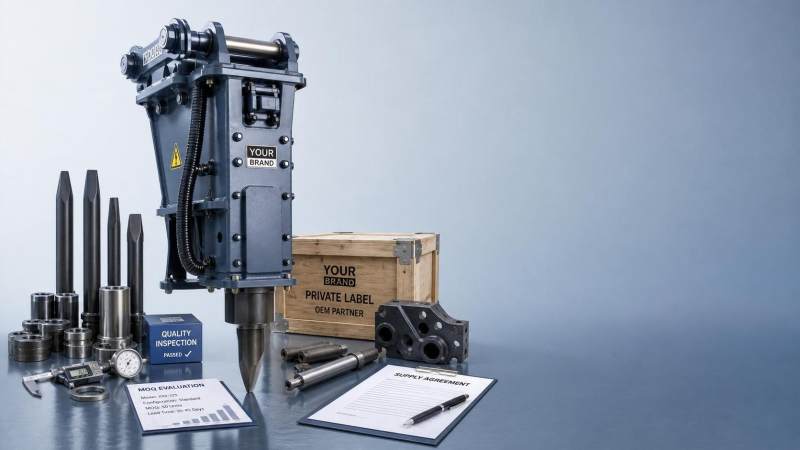
Private Label Equipment Cooperation: Key Terms, MOQ, and Quality Control Points
In private label equipment cooperation, success depends on more than branding.
It starts with clear terms, workable MOQ targets, and disciplined quality control.
That is especially true in heavy equipment and industrial sourcing.
A private label project can look attractive on unit price, yet fail on lead time, warranty cost, or field performance.
In practical procurement work, the early evaluation stage matters most.
This is where commercial assumptions become supply risk, or competitive advantage.
For private label equipment cooperation, buyers need a decision frame that connects price, customization, compliance, and delivery control.
Why Private Label Equipment Cooperation Needs More Than a Price Comparison
In standard consumer goods, private label often moves fast.
Industrial equipment works differently.
Specifications are tighter, failure costs are higher, and after-sales obligations last longer.
That means private label equipment cooperation should be evaluated as an operational partnership, not only as a sourcing transaction.
A supplier may accept your branding request quickly.
The harder question is whether they can protect consistency across batches, sites, and service cycles.
For sectors linked to tunneling, mining, lifting, or road machinery, this becomes even more critical.
Field conditions, safety standards, and component traceability all shape the real cost of private label equipment cooperation.
Key Commercial Terms to Lock Down Early
The first negotiation should not start with discounts.
It should start with scope, ownership, and accountability.
In private label equipment cooperation, vague terms usually create downstream disputes.
1. Product definition and technical baseline
Confirm drawings, BOM scope, materials, testing standards, and approved substitutions.
If the product is adapted from an existing platform, identify what remains standard and what becomes exclusive.
2. Branding and intellectual property
Clarify logo use, packaging artwork, manuals, labels, and software interface branding.
Also define who owns customized molds, fixtures, firmware edits, and test records.
3. Territory and channel protection
This point is often underestimated.
If exclusivity is expected, define the market, segment, term length, and performance trigger.
Without that detail, private label equipment cooperation can become channel conflict later.
4. Price formula and cost review mechanism
Heavy equipment components face steel, hydraulic, electronics, and freight volatility.
A fixed annual price may sound convenient, but it can break supply continuity.
Use review windows, index references, and thresholds for abnormal adjustments.
5. Delivery, penalties, and warranty responsibility
Set milestone dates, packing standards, spare parts commitments, and response times.
The better private label equipment cooperation agreements tie service responsibility to measurable response rules.
How to Evaluate MOQ Without Distorting Total Cost
MOQ is more than a number on a quotation sheet.
It reflects tooling recovery, production rhythm, component sourcing, and supplier confidence.
In private label equipment cooperation, unrealistic MOQ decisions create hidden cost on both sides.
If MOQ is too high, inventory risk increases.
Cash gets tied up in slow-moving stock and spare parts.
If MOQ is too low, unit cost rises and the supplier may deprioritize your orders.
A better approach is to break MOQ into layers.
- Engineering MOQ for samples, tests, and pilot validation.
- Production MOQ for stable batch manufacturing.
- Annual commitment MOQ tied to rebate or exclusivity terms.
- Component MOQ for critical bought-out parts.
This structure gives private label equipment cooperation more room to scale.
It also helps separate fixed setup cost from recurring material cost.
When reviewing MOQ, ask three direct questions.
- Which part of MOQ comes from tooling or test setup?
- Which part comes from upstream component purchases?
- What volume unlocks a meaningful cost reduction?
These answers make private label equipment cooperation more transparent and easier to compare across suppliers.
Quality Control Points That Matter Before, During, and After Production
Quality control is where many sourcing plans become real, or fall apart.
For private label equipment cooperation, inspection should follow the full product lifecycle.
Before production
Approve the golden sample, final drawing revision, and inspection checklist.
Verify supplier capability for welding, machining, assembly, paint, and final testing.
For critical equipment, request process flow charts and control plans.
During production
Focus on in-process checks, not only final inspection.
Track critical dimensions, torque records, pressure tests, coating thickness, and functional simulation results.
This is where private label equipment cooperation protects consistency across lots.
Before shipment
Confirm labeling, manuals, branding marks, packaging, and shipping protection.
A technically qualified product can still fail commercially if export packing is weak.
After delivery
Measure field claims, part failures, installation feedback, and warranty closure time.
The strongest private label equipment cooperation models use this data to improve later batches.
A Practical Supplier Comparison Framework
A lower quote is rarely enough for a final decision.
In private label equipment cooperation, supplier comparison should reflect total operating impact.
This kind of scorecard keeps private label equipment cooperation aligned with cost, risk, and execution reality.
Common Risks and How to Reduce Them
Several risk patterns appear again and again.
- The quote excludes critical accessories or testing.
- MOQ is accepted, but delivery priority remains low.
- Branding changes are approved without process validation.
- Warranty terms exist, but no claim workflow exists.
- Final inspection passes, yet field reliability drops.
The response should be practical.
Use a pilot order, stage-gate approvals, and a written deviation process.
Ask for traceable quality records from the first batch.
For private label equipment cooperation, early discipline usually lowers later claim cost.
Final Decision View
Good private label equipment cooperation is built on commercial clarity and operational proof.
The right supplier is not simply the cheapest one.
It is the partner that can support realistic MOQ planning, stable quality control, and accountable service.
For industrial and heavy equipment sourcing, that balance protects both margin and project delivery.
Before moving forward, review the agreement line by line, test assumptions with a pilot batch, and verify quality records at process level.
That is the most reliable way to turn private label equipment cooperation into a durable procurement advantage.
Related News
 Sep 27, 2026Heavy Equipment Selection Factors for Matching Machine Capacity to Jobsite ConditionsHeavy equipment selection factors for matching capacity to jobsite conditions, improving productivity, safety, fleet efficiency, and total project cost control.
 Sep 26, 2026How to Select Wind Rotor Lifting Equipment for Safe Blade and Hub InstallationWind rotor lifting equipment selection guide: ensure safe blade and hub installation with the right lift method, load control, crane compatibility, wind limits, and compliance.
 Sep 25, 2026What Drives Heavy Haulage Cost on Oversized Construction Equipment Moves?Heavy haulage cost explained: discover how load dimensions, route surveys, permits, escorts, lifting plans, and scheduling shape reliable oversized equipment transport budgets.
 Sep 24, 2026Supplier Management Frameworks That Reduce Delays on Large Construction ProjectsLarge-scale construction projects supplier management frameworks help prevent costly delays with risk-based controls, milestone tracking, quality oversight, and escalation plans for critical packages.



Ms. Elena Rodriguez
Weekly Insights
Stay ahead with our curated technology reports delivered every Monday.