
What Heavy Equipment Market Analysis Reveals for 2026
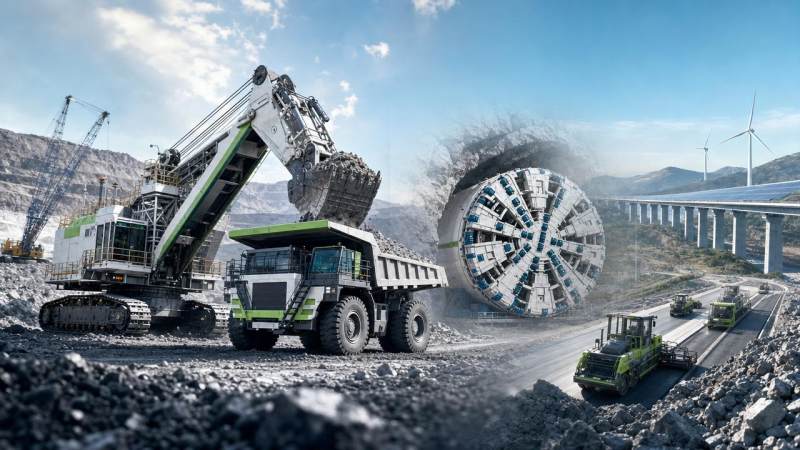
As infrastructure cycles, energy transitions, and digitalized job sites reshape global demand, heavy equipment market analysis for 2026 offers business evaluators a critical lens on where capital, capacity, and risk are moving next. From TBMs and ultra-large excavators to crawler cranes, road machinery, and mining dump trucks, the sector is being redefined by productivity pressures, electrification, remote operation, and lifecycle cost control. This article examines the signals that matter most for strategic planning, procurement decisions, and competitive positioning in heavy industry.
Why Heavy Equipment Market Analysis Matters More in 2026
For business evaluators, 2026 is not only another procurement year. It is a planning checkpoint for fleet renewal, infrastructure exposure, and capital discipline.
A strong heavy equipment market analysis connects demand signals with machine capability, financing conditions, contractor margins, and geopolitical supply risks.
- Infrastructure owners need equipment that protects delivery schedules while meeting tighter safety and environmental expectations.
- Mining operators must evaluate haulage productivity, ore grade pressure, fuel cost exposure, and uptime under extreme operating conditions.
- Energy developers require lifting capacity, transport planning, and component handling precision for wind, nuclear, and petrochemical projects.
- Contractors face rising expectations for digital reporting, remote diagnostics, emissions control, and measurable total cost of ownership.
TF-Strategy evaluates these factors through its Strategic Intelligence Center, combining project tender tracking with machinery parameters and construction methodology insight.
What Demand Signals Should Business Evaluators Watch?
A useful heavy equipment market analysis should separate short-term order noise from structural demand. The difference affects budget timing and supplier negotiation power.
The following view helps evaluators identify where demand may concentrate across TF-Strategy’s five heavy-industry pillars.
The table shows why heavy equipment market analysis must be scenario-based. One machine category may be demand-positive but still procurement-risky.
How 2026 Technology Shifts Change Procurement Logic
Digitalization is moving from optional monitoring to contractual performance evidence. Buyers increasingly ask whether machines can document productivity and downtime causes.
Remote Operation and 5G-Controlled Workflows
Remote excavation, autonomous haulage support, and connected lifting supervision reduce exposure in hazardous zones. They also require stronger site network planning.
In heavy equipment market analysis, digital readiness should include sensors, data ownership, cybersecurity, operator training, and integration with project controls.
Electrification and Hybrid Power
Pure electric mining trucks and hybrid road machinery can reduce local emissions, but commercial logic depends on duty cycle and charging availability.
Business evaluators should compare energy cost, battery replacement assumptions, grid reliability, payload trade-offs, and downtime during shift changes.
Material Iteration in Critical Components
TBM cutter heads, excavator wear parts, crane structural elements, and truck tires all face tougher performance expectations under intensive operations.
TF-Strategy tracks these evolutionary trends because component availability can decide whether a billion-dollar project absorbs delay costs or preserves schedule certainty.
Which Selection Criteria Reduce TCO Risk?
Many procurement teams compare purchase prices first. A deeper heavy equipment market analysis treats acquisition cost as only one part of value.
The following checklist helps business evaluators convert technical parameters into commercial judgment before supplier negotiation begins.
This framework supports disciplined comparison. It also helps evaluators defend recommendations to finance, engineering, and executive committees.
Scenario Analysis: Where Each Equipment Category Wins
Heavy equipment market analysis becomes more useful when connected to job-site realities. Equipment rarely wins on nameplate capacity alone.
Urban Underground Projects
TBMs are preferred when surface disruption, settlement control, and predictable tunnel geometry matter. Evaluators should focus on geology and spoil handling.
For metro and utility tunnels, cutting tool consumption and intervention frequency can outweigh initial machine price in final project economics.
Open-Pit Mining and High-Intensity Earthmoving
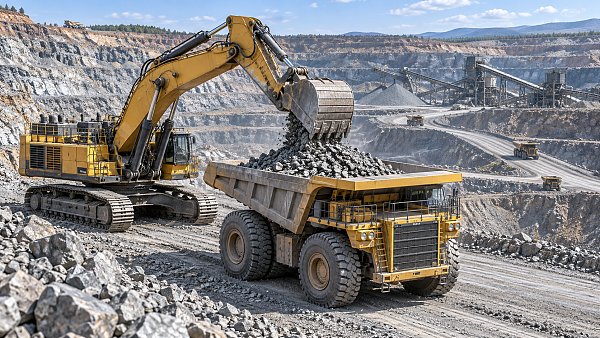
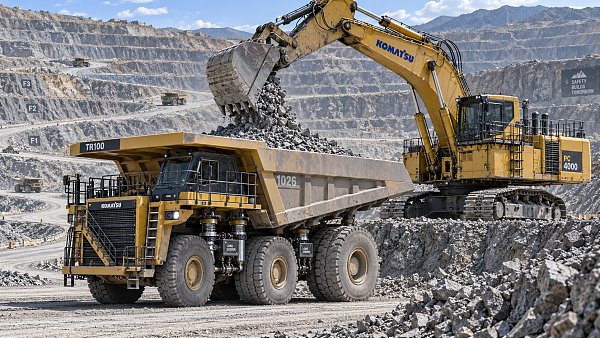
Ultra-large excavators and mining dump trucks work as a system. A mismatch between bucket size and truck body capacity reduces utilization.
A credible heavy equipment market analysis should test fleet balance, bench height, haul road quality, fuel logistics, and dispatch technology.
Energy and Industrial Module Lifting
Crawler cranes support heavy lifts where stability, reach, and controlled movement are critical. Wind farms and petrochemical plants illustrate this need.
The commercial question is not only lifting capacity. Transport configuration, assembly duration, ground preparation, and standby cost shape the decision.
Cost Comparison: Purchase Price Versus Operating Exposure
A 2026 procurement model should evaluate cost movement under different utilization conditions. Low utilization and high utilization create different winners.
This cost view supports heavy equipment market analysis when teams compare buying, leasing, rebuilding, or delaying fleet renewal.
The right answer depends on utilization, contract duration, maintenance capability, and financing cost. TF-Strategy helps compare these variables without supplier bias.
Compliance and Standards: What Cannot Be Ignored?
Compliance is a commercial risk, not just an engineering formality. Missing documentation can delay customs clearance, site approval, or insurance acceptance.
- For lifting machinery, evaluators should review load testing records, operating manuals, inspection protocols, and applicable local safety rules.
- For engines and power systems, emissions requirements vary by region and may affect resale value or deployment flexibility.
- For electric or hybrid equipment, charging safety, battery handling, and electrical conformity should be confirmed before shipment.
- For tunneling equipment, project-specific ground risk documentation matters alongside machine technical files and commissioning procedures.
A careful heavy equipment market analysis should include compliance mapping early, especially when assets will move across borders or serve public infrastructure.
Common Misjudgments in Heavy Equipment Market Analysis
Business evaluators often work under pressure from bid deadlines, limited budget, and incomplete site data. These conditions create recurring mistakes.
- Assuming published capacity equals usable capacity, without checking duty cycle, ground conditions, altitude, temperature, and operator skill.
- Ignoring spare parts logistics until after contract award, when long-lead components can already threaten mobilization dates.
- Comparing electric and diesel machines only by energy price, while excluding charging downtime, grid upgrades, and payload effects.
- Treating supplier delivery promises as fixed, without reviewing production slots, transport route limitations, and commissioning resource availability.
- Separating technical selection from commercial risk, even though machine mismatch directly affects penalties, claims, and financing returns.
TF-Strategy’s approach is to stitch technical parameters, tender intelligence, and infrastructure strategy into a decision view that exposes hidden trade-offs.
FAQ for 2026 Equipment Evaluation
How should business evaluators start a heavy equipment market analysis?
Start with the work package, not the catalog. Define production targets, site constraints, compliance needs, logistics routes, and acceptable downtime.
Then compare machine categories against measurable outcomes, such as cost per tonne, advance rate, lift cycle, or paving quality index.
Are electric mining trucks ready for every mine?
Not every site is ready. Electric trucks depend on haul profile, charging infrastructure, power reliability, maintenance skills, and battery management strategy.
They can be attractive where energy cost, ventilation, emissions policy, and predictable routes support a positive lifecycle calculation.
What should be checked before selecting a crawler crane?
Review load charts at actual radius, boom configuration, wind limits, ground bearing capacity, assembly area, transport permits, and lifting procedure controls.
A crane may meet capacity requirements but still fail commercially if site access or assembly time disrupts the project sequence.
Why is market intelligence important for TBM procurement?
TBM procurement is highly project-specific. Cutter head design, ground treatment, segment logistics, and intervention strategy must align with geological reality.
Heavy equipment market analysis helps evaluators compare supplier capacity, component availability, and tender timing before committing capital.
How TF-Strategy Supports Better 2026 Decisions
The Global Terra-Force Hub, known as TF-Strategy, focuses on power and precision across TBMs, mining machinery, lifting systems, road equipment, and haulage fleets.
Its Strategic Intelligence Center connects Geological Boring Fellows, Hydraulic Power Analysts, and Heavy Haulage Strategists for grounded commercial interpretation.
- Latest sector news tracking, including project tenders, infrastructure cycles, and specialized raw material supply movements.
- Evolutionary trend reports covering 5G remote operation, TBM cutter materials, electrified haulage, and digital maintenance models.
- Commercial insights that translate technical differences into TCO, delivery risk, utilization, and procurement timing implications.
- Decision support for contractors seeking stronger project delivery quality across urbanization, mining, and green energy infrastructure.
This makes heavy equipment market analysis more actionable. Evaluators gain a structured view of demand, machine suitability, and strategic timing.
Why Choose Us for Heavy Equipment Market Analysis?
Choose TF-Strategy when your decision requires more than supplier brochures. We help connect machine physics with project economics and infrastructure strategy.
Business evaluators can consult us on parameter confirmation, fleet comparison, procurement timing, delivery cycle assessment, certification requirements, and customized intelligence briefs.
We can also support discussion around TBM suitability, excavator-truck matching, crawler crane lifting scenarios, road machinery productivity, and electric haulage feasibility.
If your 2026 plan involves capital approval, tender response, or international equipment sourcing, request a focused heavy equipment market analysis from TF-Strategy.
Visioning Terra-Force, Intelligence Navigating Engineering means giving evaluators the intelligence needed to reduce TCO, avoid misalignment, and protect project delivery.
Related News
 Oct 12, 2026How to Assess a High-Altitude Mining Equipment Manufacturer for Remote ProjectsHigh altitude mining manufacturer assessment guide: compare derating, cold-climate reliability, remote service, parts resilience, and lifecycle risk for smarter project decisions.
 Oct 11, 2026What Drives TBM Cutter Head Material Cost and Life-Cycle Value?Cutter head material cost explained: compare TBM alloys, wear protection, downtime risk, and life-cycle value to choose the most reliable, cost-effective solution.
 Oct 12, 2026How to Read Mining Equipment Performance Reviews Beyond Headline MetricsMining equipment performance reviews explained: learn to assess productivity, availability, maintenance risk, site conditions, and total ownership cost for smarter fleet decisions.
 Oct 11, 2026Payload Management Systems: Preventing Overloads Without Slowing ProductionPayload management helps prevent overloads, protect equipment, and keep production moving. Learn how accurate targets, pass planning, alerts, and calibration improve every load.


Ms. Elena Rodriguez
Weekly Insights
Stay ahead with our curated technology reports delivered every Monday.