
What Hidden Compliance Risks Arise When Importing Heavy Equipment into Africa?
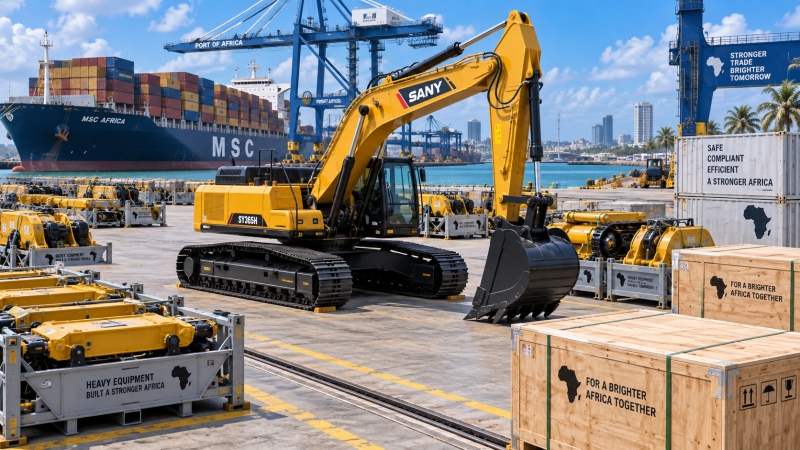
Yes. The hidden compliance risk in African heavy-equipment imports is rarely a single missing document. It is the mismatch between a machine’s technical identity, its declared customs value, its intended use, and the rules applied by the destination country’s customs, standards, tax, environmental, and transport authorities.
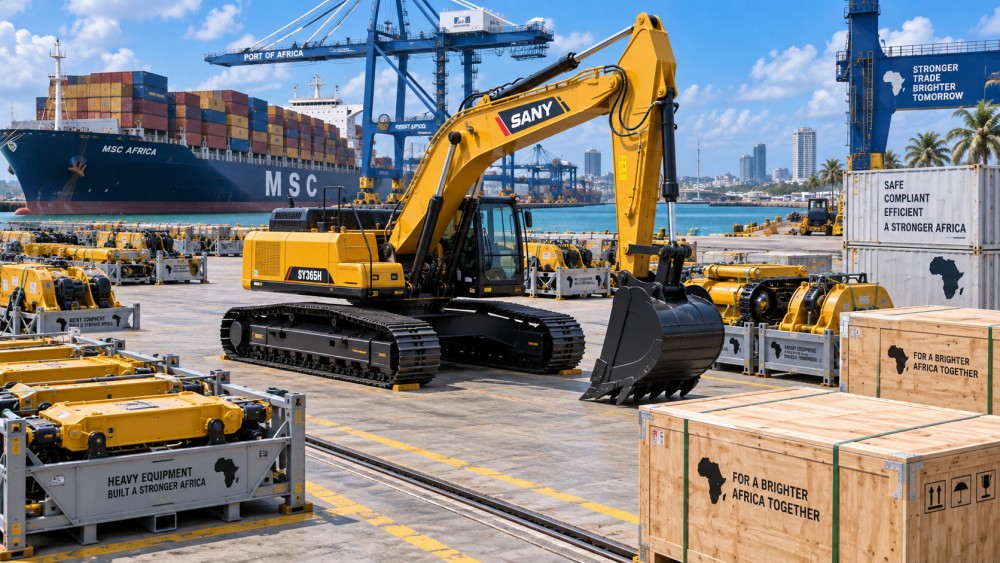
A crawler crane, excavator, mining dump truck, road paver, or TBM support package may be commercially purchased as one project asset but treated by regulators as several separately controlled imports: the main machine, attachments, spare parts, engines, batteries, lifting accessories, radio equipment, lubricants, and oversized transport components. If those elements are not classified, valued, licensed, and documented consistently before shipment, equipment can be held at the port even when the purchase contract and shipping documents appear complete.
Is an import permit always required for heavy equipment?
Not always, but assuming that no permit is needed because the equipment is “industrial machinery” is a common and costly error. Import-control systems differ significantly between African jurisdictions. A country may require a general import declaration, pre-shipment documentation, conformity assessment, sector approval, or specific authorization for used machinery, diesel engines, radio devices, lifting equipment, or equipment entering a mining, energy, or public-works project.
The key issue is not simply whether the machine can be imported. It is whether the importer of record is permitted to import it under the stated transaction structure. A foreign contractor may have won a project but still need a locally registered entity, tax registration, sector licence, or an authorized customs agent to complete clearance. In some project structures, the owner, EPC contractor, logistics provider, and local operating company are different legal entities. If the consignee on the bill of lading does not align with the entity holding the necessary approvals, customs clearance can become a legal rather than operational problem.
Temporary importation deserves separate attention. Equipment brought in for a defined construction period may qualify for a temporary admission, bond, or re-export arrangement rather than permanent importation. However, this treatment is conditional. The machinery must be identifiable, used according to the approved purpose, retained within the authorized period, and re-exported or regularized when the authorization expires. A crawler crane or drilling unit moved from one project to another without updating its customs status can create duty exposure long after it has left the original port.
Why does tariff classification create risk even when the machine is clearly identifiable?
Heavy equipment is visually obvious but not always straightforward under the Harmonized System (HS). Classification can change according to the machine’s principal function, mounting, power source, capacity, configuration at import, and whether it is shipped complete or in dismantled form. An excavator, for example, may have a relatively clear heading when imported as a self-propelled earthmoving machine. The treatment of a demolition attachment, hydraulic hammer, quick coupler, spare boom, or remote-control system may be different.
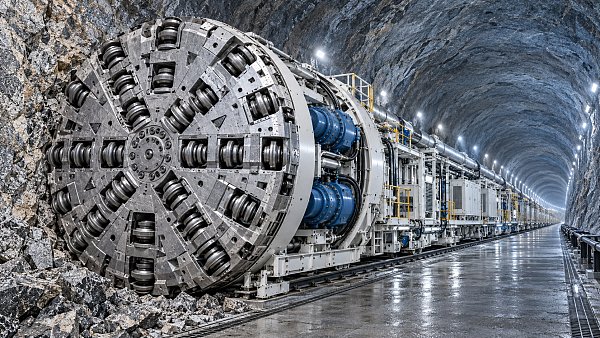
TBM-related shipments are especially exposed to classification inconsistency. A full tunnel-boring system can include the shield, cutterhead, main drive, backup gantries, conveyors, slurry or earth-pressure-balance systems, segment erectors, electrical substations, ventilation components, and tooling. These may arrive under multiple bills of lading and across several months. Declaring each item independently without a coherent equipment breakdown can result in inconsistent tariff headings, duplicate duties, or disagreement over whether components form part of a complete machine.
The commercial invoice should not rely only on broad labels such as “construction equipment,” “machine parts,” or “project cargo.” Customs authorities require descriptions that permit classification: manufacturer, model, serial number where applicable, engine details, operating function, new or used condition, and the relationship between major modules and accessories. Descriptions must also align across the invoice, packing list, bill of lading, certificate of origin where used, and customs declaration.
Incorrect classification is not merely a duty-rate issue. It can affect eligibility for exemptions, the need for technical clearance, applicable import taxes, and whether a machine is treated as controlled used equipment or ordinary industrial capital goods.
Can customs reject the declared purchase price?
Yes. Customs valuation is one of the least visible risks in equipment imports because the contract price is not automatically accepted as the customs value. Authorities commonly assess whether the declared transaction value reflects the full cost of the imported goods under the applicable valuation rules. Freight, insurance, commissions, assists, royalties, related-party pricing, and separately invoiced components may affect the final customs basis depending on the transaction and national rules.
Heavy machinery creates particular valuation questions when the supplier provides discounted equipment together with a wider package of engineering support, commissioning, warranty, training, software, spare parts, or financing. A low invoice value for the machine may appear commercially reasonable within a bundled project contract, but customs may question it if comparable equipment values or technical specifications point to a materially higher value.
Used equipment presents an additional challenge. Depreciation does not automatically produce an accepted customs value. The importing party should be able to explain the basis of value with supporting evidence such as the original purchase details when available, maintenance records, condition reports, photographs, independent appraisal material where appropriate, and a clear schedule identifying included attachments and spares. A machine described as “used excavator” with no serial number, operating hours, model-year information, or condition evidence invites scrutiny.
Under-declaration creates exposure to reassessment, penalties, delayed release, and disputes over tax obligations. Over-declaration is also harmful: it inflates duty, VAT, insurance, and project capitalization costs. The practical goal is not to seek the lowest possible declared value; it is to create a defensible value trail that matches the real commercial arrangement.
Do emissions rules apply to off-road equipment?
They can, although the applicable controls vary by country and by equipment category. Importers often focus on road-vehicle rules and overlook emissions or environmental restrictions affecting diesel-powered construction and mining equipment. A machine may be off-road in its intended use but still subject to documentation requirements concerning engine specifications, age, fuel type, smoke emissions, noise, or environmental suitability.
This issue is more acute for used machinery and older fleets. Some markets impose restrictions or enhanced scrutiny on the age or condition of imported vehicles and equipment; others distinguish between road-going units and non-road mobile machinery. A mining truck intended to remain inside a concession area may not be regulated in the same way as a truck intended for public-road operation, but that distinction should be confirmed before shipment rather than argued during clearance.
Engine documentation should be collected early: engine make and model, serial number, rated power, emissions designation if available, fuel type, manufacturing year, and any factory conformity material. For rebuilt equipment, the documentation should clearly distinguish the machine’s original manufacture date from the date of refurbishment. Describing a rebuilt unit as “new” without a supportable manufacturer basis can create both customs and consumer-protection problems.
Environmental compliance also extends beyond the engine. Equipment containing refrigerants, oils, batteries, chemical additives, or fire-suppression agents may trigger separate handling, labelling, or waste-management obligations. Lithium battery packs in electric or hybrid equipment require attention to dangerous-goods transport documentation, packaging, state of charge requirements where applicable, and emergency-response information. These are logistics documents, but failures can prevent loading or discharge and therefore become import-compliance failures in practice.
What safety certificates are most often overlooked?
The overlooked items are often not the main machine certificate. They are the safety-critical components shipped with it. For lifting equipment, this can include hooks, slings, spreader beams, lifting frames, man baskets, load moment indicators, anti-two-block devices, and wire ropes. For a crawler crane, a factory certificate alone may not satisfy the requirements applied at the worksite, by an insurer, or by a local labour or occupational-safety authority.
Technical documentation should establish both the equipment’s design basis and its current condition. Relevant records may include manufacturer declarations, load charts, operating manuals, inspection certificates, test certificates, maintenance history, and evidence of examination after assembly. The exact documents required depend on the country and the equipment’s use, but the governing principle is stable: a certificate that identifies only a product family is weaker than documentation tied to the actual serial-numbered asset and its installed configuration.
For road machinery and self-propelled equipment, the compliance question may extend to brakes, lighting, operator-protection structures, warning alarms, tyres, and roadworthiness if the machine will move on public roads. A machine that clears customs can still be unable to travel legally from port to site without route permits, escort arrangements, or local vehicle registration. That distinction is frequently missed in project schedules.
Does CE marking solve African compliance requirements?
No. CE marking is relevant evidence for machinery designed for the European market, but it is not a universal import passport. It indicates conformity with specified European Union requirements under the applicable legal framework; it does not replace destination-country customs procedures, local standards approvals, import licences, safety inspections, or operating permits.
The same principle applies to ISO certificates, manufacturer quality certificates, and test reports issued elsewhere. They can support a technical file, especially where local authorities need evidence of performance or safety, but their acceptance depends on the importing country, the product category, and the agency reviewing the documentation. An importer should identify which document is required for clearance, which is required for commissioning, and which is required for legal operation. Those are often three different thresholds.
How can tax exemptions become a hidden liability?
Major infrastructure, mining, energy, and public-sector projects may benefit from customs-duty or tax concessions. The risk lies in assuming that a project-level incentive applies automatically to every shipment. Exemptions are often conditional on project approval, importer identity, equipment type, timing, quantity limits, end use, and supporting certificates. Spare parts, consumables, leased equipment, replacement units, and machinery imported through subcontractors may fall outside the approved scope.
Even where a concession applies, VAT treatment may differ from customs-duty treatment. Import VAT, withholding obligations, customs processing fees, port charges, excise-related charges, and local levies do not necessarily follow the same exemption logic. A financial model that treats “duty-free” as “tax-free” can materially understate landed cost.
Equipment transferred, sold, leased, or diverted to another project after import can also trigger a clawback risk. If the concession was granted based on a defined project or end user, disposal may require prior approval and payment of duties or taxes that were suspended or waived at entry. Asset registers, serial-number records, and internal controls are therefore compliance tools, not merely finance records.
Why are documentation inconsistencies so damaging for project cargo?
Large machinery is frequently shipped in dismantled modules because of vessel, port, road, or lifting constraints. One machine may therefore be represented by multiple containers, breakbulk pieces, flat racks, and out-of-gauge packages. Customs must still understand whether those packages are separate goods, parts of one complete asset, or a combination of machinery and installation materials.
Inconsistencies become serious when serial numbers are omitted from one document, accessory values are rolled into another line item, weights differ without explanation, or the packing list uses informal site terminology that does not match the commercial invoice. For a TBM or large crane, the packing-list hierarchy should connect every crate or package to a defined module, while the technical schedule explains the relationship of those modules to the complete system.
Country-of-origin claims require equal care. Origin is not the same as port of loading, supplier location, or final assembly location. Where preferential tariff treatment is sought, the supporting proof must meet the applicable trade-agreement rules. An incorrect origin declaration can invalidate the preference and expose the importer to reassessment.
What should be checked before the equipment leaves the factory or yard?
The strongest control point is pre-shipment, when the equipment can still be reconfigured, documents can be corrected, and shipment sequencing can be changed without port storage costs. The compliance file should reconcile the commercial, technical, transport, and customs identities of the equipment.
- Confirm the importer of record, consignee, tax status, and authority to use any available project incentive.
- Validate HS classification for the main machine, major attachments, spare parts, and separately shipped modules.
- Review destination-specific restrictions affecting used machinery, engines, radio systems, batteries, hazardous materials, and oversized equipment.
- Match serial numbers, model descriptions, values, weights, and country-of-origin data across all shipping and customs documents.
- Determine whether the transaction is permanent importation, temporary admission, lease importation, repair-and-return, or a staged project shipment.
- Separate customs clearance requirements from requirements for registration, commissioning, public-road movement, and site operation.
The essential judgement is that compliance cannot be delegated entirely to the freight forwarder or customs broker. Those parties are critical, but they work from the technical and commercial information supplied by the buyer, seller, project team, and equipment manufacturer. When that source information is incomplete, the broker can file documents but cannot remove the underlying inconsistency.
Importing heavy equipment into Africa is therefore less about finding a single “Africa compliance checklist” than building a country-specific, asset-specific compliance position before shipment. The same excavator may face different documentation, tax, safety, and operating conditions across markets. Treating customs clearance as the final logistics task rather than an early project-control process is where hidden costs begin.
Related News
 Oct 04, 2026Nuclear Lifting Equipment Cost: Budgeting for Compliance, Testing, and Lifecycle RiskNuclear lifting equipment cost explained: budget for compliance, proof-load testing, installation, documentation, and lifecycle risk to make confident procurement decisions.
 Oct 03, 2026How to Assess TBM Manufacturers for Hard-Rock Tunneling Projects?Choose the right tunnel boring machine manufacturer for hard-rock projects. Explore key criteria for design, lifecycle cost, factory quality, and service support.
 Oct 02, 2026How to Evaluate Heavy Equipment Technology Suppliers for Fleet Uptime and SupportHeavy equipment technology suppliers can make or break fleet uptime. Learn how to assess diagnostics, data access, parts, service coverage, and support terms before you buy.
 Oct 01, 2026How to Use Technical References to Benchmark Industrial Equipment PricesIndustrial equipment technical reference pricing: learn how to normalize specifications, scope, service life, and operating costs to benchmark quotes accurately and choose the best-value equipment.

Ms. Elena Rodriguez
Weekly Insights
Stay ahead with our curated technology reports delivered every Monday.