
How condition monitoring increases uptime in mining fleets
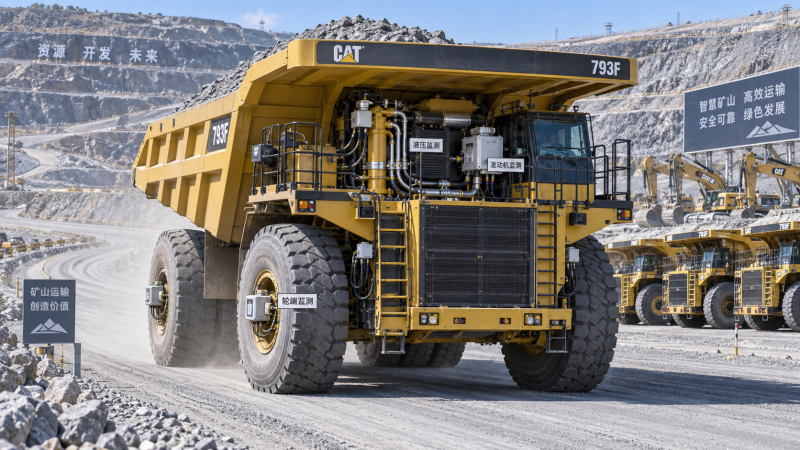
Higher fleet availability begins when a developing fault is detected early enough to be planned, confirmed, and corrected before it becomes a production-stopping event. Condition monitoring supplies that early warning by converting signals from the engine, drivetrain, hydraulics, electrical system, tires, and structural components into evidence that supports a service decision. Its value is not the volume of data collected. It is the ability to distinguish a change that requires action from normal variation caused by load, haul profile, ambient temperature, or machine operating mode.
Mining equipment rarely fails without leaving some trace. A wheel motor may run warmer than its paired motors before internal damage advances. A hydraulic pump may show declining efficiency before a boom or steering function becomes visibly slow. An oil sample may reveal a change in wear debris before a bearing generates enough vibration to trigger a shutdown. When these signals are reviewed in context, repair work can be scheduled around production needs, parts can be staged before the machine enters the bay, and the repair scope can be defined before disassembly starts.
Condition data must be tied to the duty cycle
A raw alarm threshold is useful, but it is rarely sufficient for heavy haulage fleets. Oil temperature, coolant temperature, brake temperature, fuel rate, transmission shift behavior, and tire pressure all move with operating conditions. A loaded truck climbing a long grade will produce a different thermal profile from the same truck descending empty on a cool shift. Treating both patterns as equivalent creates either nuisance alarms or missed deterioration.
Useful monitoring compares a machine with its own established baseline, with comparable machines performing similar work, and with the operating state at the time of the reading. Engine load, vehicle speed, payload, gear selection, grade, retarder use, ambient temperature, and elapsed time since startup often explain whether a measurement is expected. A single elevated temperature is less informative than an upward trend under the same conditions. Likewise, a pressure reading that remains within an acceptable range can still indicate a problem when it takes progressively longer to reach that pressure after a cold start.
For this reason, event records should retain the surrounding context rather than only the highest or lowest value. A drivetrain over-temperature alert without load and speed history leaves too much room for guesswork. The same alert accompanied by repeated high temperature during short, lightly loaded travel may point toward cooling restriction, lubrication degradation, clutch slip, sensor drift, or internal friction. The subsequent inspection can then be directed at the most plausible failure path.
Signals that reveal different failure paths
Several apparently similar symptoms have different causes. Monitoring works best when it preserves enough evidence to separate them before component replacement begins.
Oil analysis is particularly valuable when it is connected to equipment history. Wear metal alone does not identify a failed component. The particle type, size distribution, rate of change, lubricant condition, filtration performance, and recent repair record need to be considered together. A sample drawn immediately after a major overhaul or a fluid top-up may not represent the normal condition of the system. Poor sampling technique can also introduce debris from the port, hose, or container and lead to unnecessary investigation.
Vibration data requires the same discipline. An increased overall vibration value can be a useful trigger, yet it does not diagnose the source by itself. The frequency pattern, rotational speed, gearbox ratio, and load state determine whether the signal resembles bearing distress, gear damage, imbalance, or structural looseness. A sensor attached to a flexible guard or poorly prepared mounting surface can generate a repeatable but misleading trend. Confirming the measurement arrangement is often faster than dismantling a healthy drive.
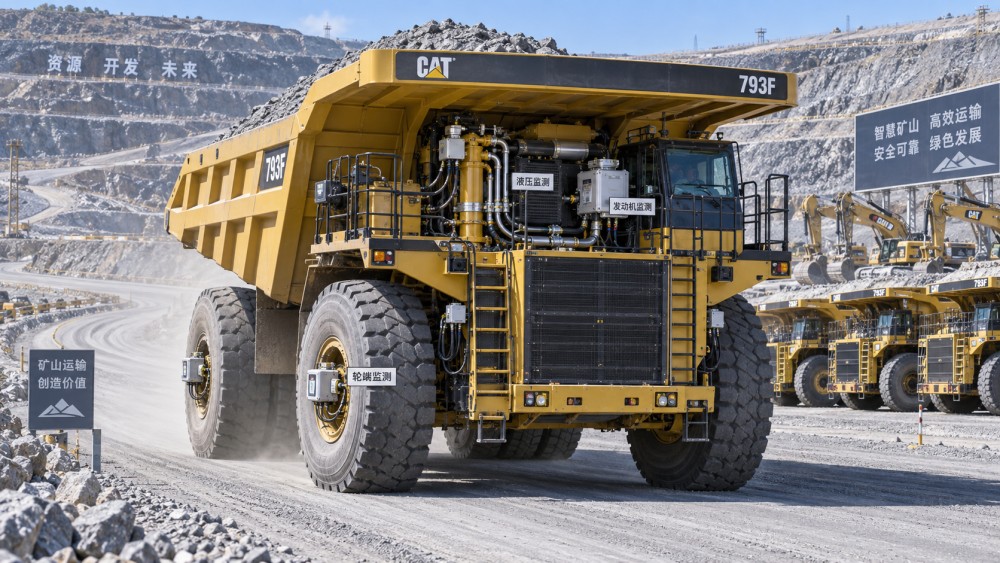
From alert to planned intervention
An alert contributes to uptime only when it enters a reliable decision path. A dashboard full of untriaged warnings can create the opposite effect: urgent-looking messages crowd out the few changes that need prompt attention. Each alert should lead to an assigned review, a clear status, supporting evidence, and a defined next action. The action may be continued observation, a field inspection, an operational restriction, a scheduled repair, or an immediate controlled stop. Leaving alerts open without a decision removes accountability and makes repeat warnings easier to ignore.
Severity should reflect both failure likelihood and production consequence. A modest abnormal trend in a redundant pump may be manageable until a planned service window. The same trend in a component with no practical field repair route, long lead time, or a high probability of collateral damage needs earlier intervention. Criticality is therefore not a fixed property of the sensor reading. It includes access requirements, replacement availability, expected repair duration, safety exposure, and the effect of a sudden stop on the haul cycle.
Once an intervention is selected, condition information reduces repair delay in several ways. It narrows the diagnostic scope, improves parts identification, and allows tools or lifting arrangements to be prepared before the machine is withdrawn. It also supports a more realistic work order. “Investigate hot axle” is not equivalent to a work package that identifies the affected position, the operating pattern, recent brake events, inspection points, likely replacement parts, required contamination controls, and acceptance measurements after repair.
Repair confirmation deserves the same attention as fault detection. A component may be replaced successfully while the original cause remains. For example, changing a damaged pump without addressing suction restriction, aeration, incorrect fluid, or a relief setting can produce another failure and an avoidable second outage. The post-repair record should include baseline readings after commissioning, fluid condition where relevant, pressure or temperature response, and any changes made to calibration or operating limits. Those readings become the reference for later monitoring.
Hydraulic systems need correlated measurements
Hydraulic faults are frequently misread when pressure is viewed without flow, temperature, and command information. A system can produce target pressure while delivering insufficient flow because internal leakage increases under load. Conversely, low pressure may be the correct response to a low-demand command rather than evidence of pump wear. Tracking command signal, actual pressure, cycle time, oil temperature, and filter differential pressure gives a more complete picture of efficiency loss.
Cold-start behavior is also informative. Thick oil can increase pressure losses and delay actuator response, while warmed oil can reveal leakage that was not apparent when clearances were tight. Comparing the first operating cycles of a similar shift pattern can expose a developing issue without requiring a machine to fail under full load. The comparison must account for oil grade and ambient conditions; otherwise seasonal temperature changes may be mistaken for component deterioration.
Contamination control remains central to hydraulic uptime. Filter restriction data is useful, but a clean differential pressure reading does not prove clean oil. A bypassing filter, incorrect element, damaged seal, or unfiltered fill practice can undermine the protection expected from the circuit. When particle counts worsen, the response should include locating the entry path or wear source, not simply changing filters and resampling. Repeated filter changes without source control consume time while allowing valves, pumps, and actuators to accumulate damage.
Drivetrain and brake trends require operational context
Haul roads strongly influence drivetrain and brake condition. A change in grade, rolling resistance, payload distribution, road surface, or retarder use can alter temperatures and shift patterns without any mechanical defect. Monitoring should therefore be reviewed alongside dispatch or cycle information where available. A truck that begins running hotter after a route change may need cooling-system inspection, but the analysis should first establish whether the duty cycle has become materially different.
Brake monitoring is especially sensitive to interpretation. Elevated brake temperature after sustained retardation may be expected within the equipment's operating envelope. A single wheel-end that diverges from the others under comparable demand is more concerning. That pattern can reveal drag, unequal adjustment, a seized component, restricted cooling airflow, or localized bearing friction. Infrared checks during inspection can validate sensor output, but the check must be performed safely and at a comparable point in the operating cycle. Temperatures fall quickly after a truck stops, which can conceal the condition that caused the alert.
For electric-drive machines, insulation condition, inverter events, motor temperature balance, cooling performance, and power derating behavior should be reviewed as a system. A motor temperature alarm may originate in the cooling circuit rather than the motor itself. Replacing an electrical component based solely on a high-temperature message risks repeating the outage if blocked passages, degraded coolant, pump weakness, or fan-control faults are not identified.
Monitoring fails when data quality is treated as a secondary issue
Sensor faults, wiring damage, poor grounding, time synchronization errors, and inconsistent asset naming all degrade the usefulness of condition data. A value that suddenly jumps to an implausible level may represent a failed sensor, but it should not be dismissed automatically. A separate process upset can produce an equally abrupt change. Cross-checking with related signals and a physical inspection resolves that uncertainty faster than accepting or rejecting the reading on appearance alone.
Calibration and installation quality matter most for measurements used to trigger high-consequence decisions. Temperature sensors need correct placement and thermal contact. Pressure transducers must be rated for the expected range and pulsation. Vibration sensors need repeatable mounting orientation. Fluid samples need a controlled collection point that represents circulating oil rather than stagnant oil near a drain. These details determine whether trend changes belong to the machine or to the measurement method.
Data ownership should also be explicit. When maintenance records, component histories, alarms, laboratory results, and inspection notes remain disconnected, recurring faults are difficult to recognize. Linking records to the machine serial number, component position, repair date, and operating hours creates a usable history. It becomes possible to see whether a recurring alert follows a particular component, installation practice, operating area, or contamination event.
Use trends to protect the maintenance window
Condition monitoring does not eliminate scheduled maintenance. It makes scheduled maintenance more selective and better prepared. A planned stop can be used for focused inspection when a trend has begun to move, while components with stable evidence can avoid unnecessary intrusive work. This reduces the chance of introducing contamination, damaged connections, or assembly errors during premature replacement.
The strongest results come from a closed loop: detect a meaningful change, validate it against operating conditions, plan the correct intervention, confirm the repair, and retain the findings as a better baseline. Over time, this process improves confidence in which alarms deserve immediate attention and which patterns should be observed through the next duty cycle. The fleet spends less time reacting to uncertain failures and more time performing work that has a defined technical reason.
Related News
 Oct 03, 2026How to Assess TBM Manufacturers for Hard-Rock Tunneling Projects?Choose the right tunnel boring machine manufacturer for hard-rock projects. Explore key criteria for design, lifecycle cost, factory quality, and service support.
 Oct 02, 2026How to Evaluate Heavy Equipment Technology Suppliers for Fleet Uptime and SupportHeavy equipment technology suppliers can make or break fleet uptime. Learn how to assess diagnostics, data access, parts, service coverage, and support terms before you buy.
 Oct 01, 2026How to Use Technical References to Benchmark Industrial Equipment PricesIndustrial equipment technical reference pricing: learn how to normalize specifications, scope, service life, and operating costs to benchmark quotes accurately and choose the best-value equipment.
 Sep 30, 2026What Does an Ultra-Large Excavator Really Cost Over Its Service Life?Ultra-large excavators cost far more than purchase price. Explore lifecycle expenses, uptime risks, energy use, maintenance, and cost-per-tonne insights.



Ms. Elena Rodriguez
Weekly Insights
Stay ahead with our curated technology reports delivered every Monday.