
Mining Industry Developments: Automation, Electrification and Operating Costs
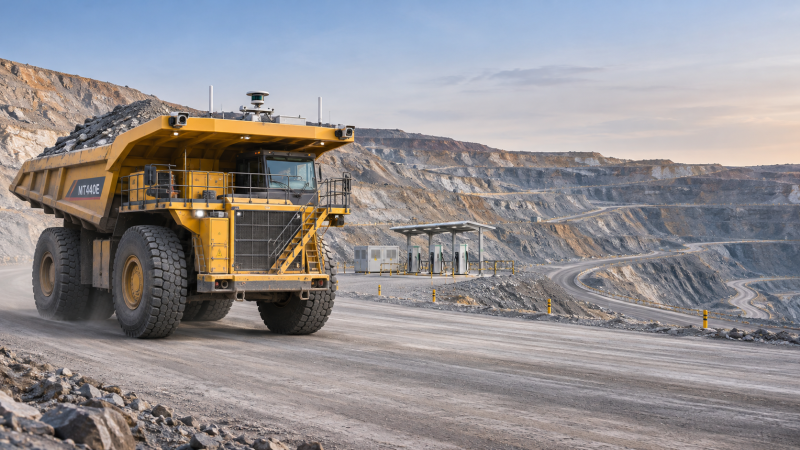
Mining industry developments are changing fleet investment decisions, but automation and electrification do not improve every operation by default. Their value depends on the mine plan, equipment utilization, energy supply and the cost of supporting infrastructure. A truck that uses less energy per trip can still be an expensive choice if charging interrupts production; an autonomous fleet can underperform if roads, dispatch rules and maintenance practices are not ready for it.
The practical question is not which technology looks most advanced. It is which combination can lower the cost of moving and processing material while protecting production capacity, safety and operational flexibility over the life of the asset.
Automation is moving beyond the individual machine
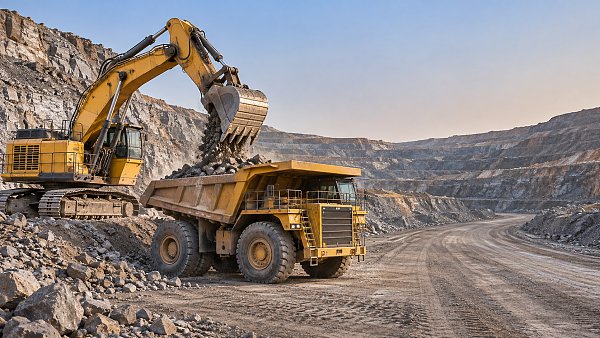
Autonomous haulage attracts attention because trucks operate repeatedly along defined routes. The underlying opportunity, however, extends beyond removing an operator from a cab. Dispatch systems, positioning technology, communications networks and maintenance planning can help coordinate equipment as a production system.
At a suitable open-pit mine, automated haulage may support more consistent driving and reduce delays associated with shift changes. Remote operation can also separate personnel from certain hazardous areas. These outcomes are conditional: traffic management, exclusion zones, equipment interactions and emergency procedures remain essential. Automation changes the safety risks that need to be controlled; it does not eliminate them.
Site layout has a major influence on the business case. A large operation with sustained haulage demand and relatively predictable routes may be better positioned to spread the cost of autonomous systems. A smaller mine, a short remaining mine life or frequent changes to roads and loading points can make that investment harder to recover. Mixed traffic adds complexity, especially where autonomous trucks share space with light vehicles, graders and manually operated equipment.
Interoperability deserves attention before procurement. A mine may use trucks, excavators, dispatch software and maintenance systems from different suppliers. Leaders should examine how the proposed system handles those interfaces, what data can be accessed, and whether future fleet additions will require proprietary equipment or costly integration. A successful demonstration with one machine is not the same as a workable operating model for the whole pit.
Electrification depends on the mine's energy system
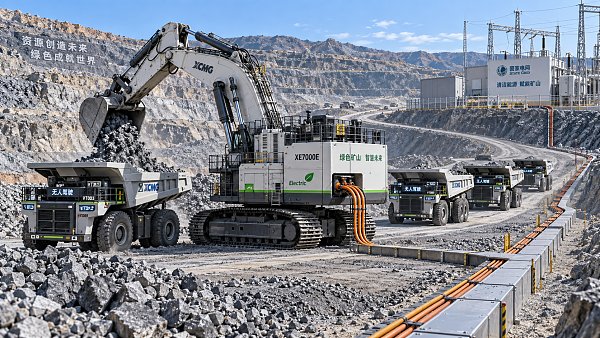
Electric mining equipment can reduce diesel consumption and eliminate tailpipe emissions at the point of use. It can also shift spending from fuel and engine maintenance toward electricity, charging equipment, power distribution and battery-related costs. The resulting economics vary with the duty cycle and the source, reliability and price structure of power.
Haul trucks are a useful example because the route determines much of the energy demand. Payload, gradient, rolling resistance, altitude, temperature and waiting time all affect performance. Electric drive systems may recover some energy during downhill braking, but recovery is constrained by the equipment and operating conditions. A route that is loaded uphill presents a different energy profile from one that is loaded downhill.
Charging is not simply a question of installing a charger. The mine needs enough electrical capacity at the right locations, along with a plan for peak demand, equipment queues and resilience during outages. A charging stop that fits naturally into an existing production cycle may have a manageable impact; one that requires an additional truck to maintain output changes the economics materially.
Other approaches can be appropriate. Trolley-assist systems provide power to compatible trucks along equipped sections of road and may be attractive on long, sustained uphill routes. Their limitations include the cost of fixed infrastructure and the need for routes that remain useful long enough to justify it. Hybrid equipment or continued use of efficient diesel machines may be more practical where the mine plan is uncertain, power is constrained or machines must move frequently between sites.
Battery performance, replacement provisions, thermal management and end-of-life responsibilities should be evaluated in the contract as well as the technical specification. For remote operations, the ability to obtain service and spare components can matter as much as the advertised capability of the machine.
Operating cost comparisons need a production baseline
Equipment purchase price is only one part of total cost of ownership. For haulage, a more useful comparison begins with the cost per tonne of material moved over a defined route and period. That figure should be considered alongside production reliability: the cheapest tonne on paper is of limited value if the fleet cannot sustain the mine plan.
A credible comparison includes the same payload assumptions, haul profiles, shift patterns and production targets for each option. It should account for:
- Energy: diesel or electricity consumption, delivered energy prices, power demand charges where applicable, and backup supply.
- Infrastructure: roads, communications, substations, charging or trolley equipment, civil works and their ongoing upkeep.
- Fleet capacity: the number of machines required after allowing for charging, maintenance, queues and expected availability.
- Maintenance and people: labor, training, consumables, specialist support, software and replacement components.
- Financial exposure: financing, residual value, battery replacement assumptions and the useful life of infrastructure.
Separate fixed costs from costs that change with production. A mine that moves less material than planned must still pay for much of its infrastructure and support capability, so the cost per tonne can rise even when individual machines perform as expected. Conversely, an operation that can use shared power and communications infrastructure across several applications may improve the economics of each investment.
Run more than one scenario. Changes in haul distance, electricity tariffs, diesel prices, production volumes or mine life can alter the preferred option. The point is not to predict every variable precisely; it is to identify which assumptions have enough influence to change the decision and whether the business can tolerate that exposure.
Equipment utilization is not the same as mine productivity
Automation and electrification are often evaluated at machine level, but mining output depends on the interaction between equipment. Faster truck cycles will not necessarily increase production if excavators, crushers or dumping areas are already the constraint. Equally, electrifying a loading unit may provide little benefit if its power cable or charging arrangement interferes with access and repositioning.
Consider the full material movement chain before specifying new equipment. Truck payload should match loading tools and road conditions; dispatch logic should reflect queueing at excavators and crushers; and maintenance windows should align with the production schedule. For large excavators, power availability and the frequency of relocation affect whether an electric configuration is practical. For trucks, tire life and road maintenance can have a substantial influence on cost regardless of the propulsion system.
Track both equipment and system measures: availability, utilization, cycle time, queue time, energy use and tonnes delivered to the intended destination. Use consistent definitions across suppliers and internal teams. A higher utilization figure may reflect better scheduling, but it may also conceal congestion elsewhere or leave too little time for preventive maintenance.
Infrastructure and workforce readiness can determine the pace of change
Remote control and autonomous operation rely on dependable communications, positioning and site procedures. Coverage gaps, network congestion or power interruptions can stop equipment or require it to revert to a restricted operating mode. The relevant question is not whether a network works under ideal conditions, but how the operation behaves when connectivity degrades and how quickly normal production can resume.
Cybersecurity is part of operational reliability. Connected equipment creates interfaces among machines, control centers, suppliers and business systems. Access controls, software updates, incident response and clear responsibility for third-party connections should be planned before the fleet enters service.
Workforce requirements change rather than disappear. Mines may need fewer people in certain cabs while requiring more capability in control-room operations, electrical maintenance, communications and data analysis. Training must cover abnormal situations as well as routine use, including how people on the ground interact with automated equipment. Labor arrangements and local skills availability can affect the transition schedule and cost.
A practical sequence for fleet decisions
Start with the mine plan and its major uncertainties, not with a technology shortlist. Identify the production bottleneck, expected haul routes, remaining operating life and any planned changes to pit geometry. Then establish a baseline for current energy use, delays, maintenance and cost per tonne.
Next, screen options against site constraints. A mine with reliable power and stable uphill routes might investigate trolley assistance or battery-electric haulage. A site with a mature traffic management system and predictable routes might prioritize autonomous operation. Where neither condition is present, targeted improvements to dispatch, road quality or maintenance may produce a stronger near-term result while preserving future options.
For shortlisted approaches, request an integrated proposal covering equipment, infrastructure, software, support and performance assumptions. Test how the system handles mixed fleets, route changes, component failures and eventual expansion. Contract terms should make clear who is responsible for integration, data access, training, service response and replacement parts.
A phased deployment can reduce exposure, provided the trial is designed around a production question rather than a technology demonstration. Define the route, workload, comparison baseline and acceptance measures in advance. Include personnel who maintain roads, dispatch equipment and manage power, because their constraints will shape the result. A pilot that performs well only with exceptional support should not be treated as proof of normal operating economics.
Keeping options open as mine plans change
Fleet decisions can commit a mine to a supplier, energy system or infrastructure layout for years. Flexibility therefore has value, even when it is harder to express as a single cost figure. Modular power capacity, transferable charging equipment, accessible operating data and clear integration terms can reduce the cost of adapting to a revised mine plan.
Industry intelligence can help teams monitor equipment capabilities, project activity and shifts in supply, but site-specific modeling remains the basis for an investment. Before approving a major fleet change, establish which assumptions must hold for it to work, which party controls each assumption and what the operation will do if conditions change. That discipline makes automation and electrification investment decisions more useful and defensible, regardless of which technology is selected.
Have questions about this sector analysis, or seeking best practices specific to your niche? Drop us a line below and let the senior consultants at TF-Strategy assist you.
Related News
 Nov 04, 2026Mining Industry Developments: Automation, Electrification and Operating CostsExplore mining industry developments in automation and electrification, and learn how to evaluate fleet investments, productivity and operating costs.
 Oct 29, 2026Middle East Heavy Haulage Equipment Market: Energy and Infrastructure DemandExplore the heavy haulage equipment Middle East market for energy and infrastructure demand, route challenges, and fleet investment insights to make smarter buying decisions.
 Oct 15, 2026Mining Truck Maintenance Markets: Service Models Reshaping Fleet AvailabilityMining truck fleet maintenance and repair services market: discover service models, predictive insights, and strategies to maximize fleet availability.
 Oct 08, 2026Are Electric Mining Excavators Ready for Continuous-Duty Operation?Are electric mining excavators ready for continuous operation? Explore power options, charging strategies, uptime factors, and practical deployment insights.
Prof. Marcus Chen
Weekly Insights
Stay ahead with our curated technology reports delivered every Monday.