
What is changing fastest in TBM technology this year?
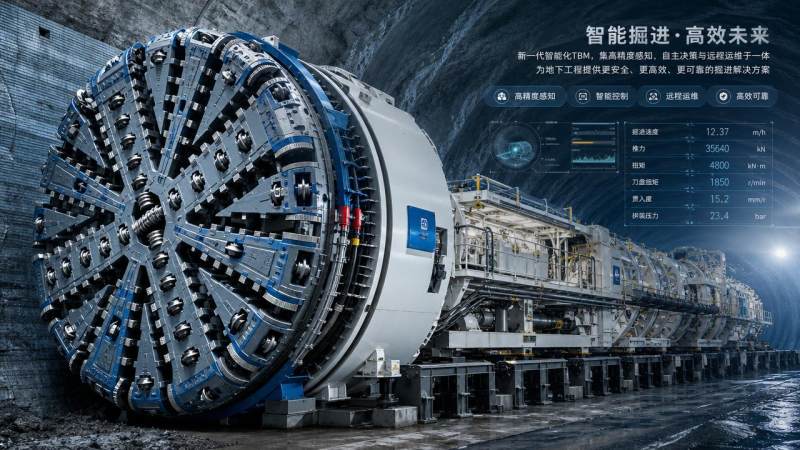
TBM technology is changing fastest where precision, uptime, and data intelligence now intersect. For technical evaluators, this year’s real shifts are not just bigger machines, but smarter cutterhead materials, more adaptive ground response, remote diagnostics, and tighter integration with digital construction workflows. Understanding these changes is essential for judging performance, lifecycle cost, and project risk in modern tunneling.
What technical evaluators are really asking about TBM technology this year
When users search “What is changing fastest in TBM technology this year?”, the core intent is practical, not academic. They want to know which innovations are materially affecting project outcomes now.
For technical assessment teams, the question is usually narrower: which changes improve penetration rate, reliability, safety, maintainability, and ground adaptability enough to justify higher capital or integration complexity.
This means the most useful answer is not a broad history of tunnel boring machines. It is a decision-focused review of the technology shifts that are already influencing specifications, supplier comparisons, and lifecycle cost models.
In today’s market, the fastest-changing areas of TBM technology are cutterhead and tooling materials, sensor density, real-time control logic, digital twin integration, remote diagnostics, and modular maintainability.
Secondary changes also matter, including slurry and muck handling optimization, energy efficiency, automation of segment erection, and tighter data exchange with wider construction management platforms.
The biggest shift: TBM technology is becoming data-native, not just mechanically stronger
For years, TBM competition focused heavily on diameter, thrust, torque, and geology-specific structural design. Those still matter, but the fastest current change is the move from machine-centric performance to data-centric performance.
Modern TBM technology increasingly treats the machine as an intelligent system rather than a standalone excavation asset. Sensors, software, analytics, and control responses are becoming central to measurable performance.
Technical evaluators should pay close attention to how many parameters a TBM collects, how often they are sampled, how they are contextualized, and whether the outputs support intervention before failure occurs.
Raw data alone has limited value. The real differentiator is whether the system converts operating data into actionable alerts for cutter wear, bearing temperature anomalies, seal degradation, face instability, or slurry imbalance.
This is important because downtime in tunneling is rarely judged by equipment replacement cost alone. The larger impact often comes from schedule delay, support logistics, crew idle time, and downstream contractual exposure.
Why cutterhead materials and wear management are changing so fast
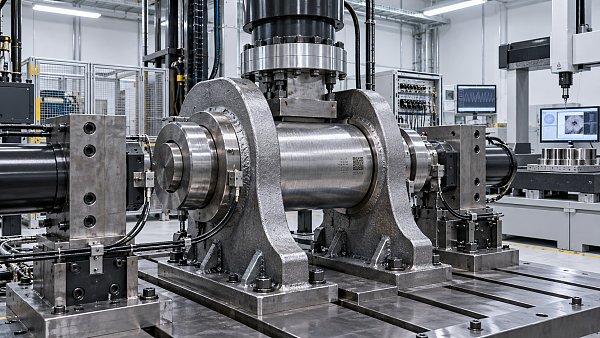
If one hardware area is evolving especially quickly, it is the cutterhead system and its wear ecosystem. This includes disc cutter material upgrades, improved hard-facing, optimized cutter spacing, and more serviceable cutterhead layouts.
In mixed ground and abrasive formations, cutter consumption has always been a major cost driver. What is changing this year is the stronger link between material science and predictive wear management.
Suppliers are investing in tougher alloys, better heat treatment consistency, and localized reinforcement strategies to extend component life without creating brittleness or maintenance complications under variable loading conditions.
Technical evaluators should not only ask whether a cutter lasts longer in ideal test conditions. They should ask how wear is tracked, how replacement intervals are forecast, and how access design affects intervention time.
Another practical change is the use of sensor-informed wear estimation models. These combine torque, thrust, vibration, penetration, and geology records to estimate degradation more accurately than calendar-based maintenance schedules.
The result is better planning for cutter changes, improved spare parts forecasting, and lower risk of catastrophic wear-related events. In evaluation terms, this supports stronger lifecycle predictability rather than only headline durability claims.
Adaptive ground response is now a competitive differentiator
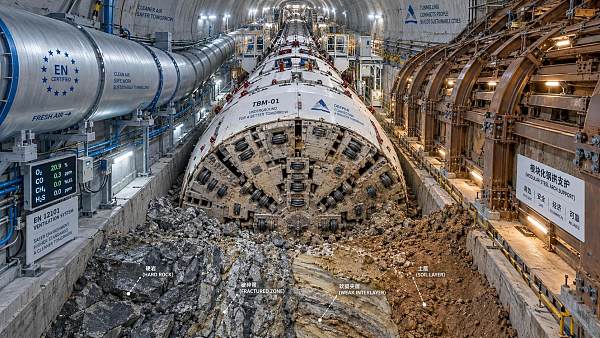
One of the most meaningful advances in TBM technology is how machines respond to changing ground conditions in real time. This is especially relevant in urban tunnels, mountain crossings, and mixed-face geology.
Older control approaches depended more heavily on operator experience and delayed interpretation. Current systems increasingly integrate face pressure, slurry density, screw conveyor behavior, thrust variation, and settlement indicators into adaptive control logic.
For Earth Pressure Balance and slurry TBMs, the pace of improvement is significant. Better pressure control algorithms and denser instrumentation are helping reduce instability, over-excavation, and sudden response lag in transitional zones.
This matters to technical evaluators because adaptability directly affects risk. A machine that performs well in homogeneous conditions may still underperform if it cannot stabilize behavior when geology changes rapidly across short alignments.
The best evaluation framework therefore asks: how fast can the machine detect deviation, how confidently can it classify abnormal patterns, and how effectively can it support corrective action without excessive manual intervention.
Remote diagnostics and predictive maintenance are moving from optional to expected
Remote diagnostics are no longer a premium feature with unclear value. In many major projects, they are becoming a baseline expectation because they reduce mean time to diagnosis and improve fleet-wide support efficiency.
Suppliers now offer more mature remote service architectures, allowing technical teams to review machine health, alarms, lubrication trends, hydraulic behavior, and electrical anomalies without waiting for prolonged site escalation.
The real gain is not just visibility. It is the ability to distinguish between symptoms and root causes faster, which shortens troubleshooting cycles and helps prevent repeated interventions on the same subsystem.
Predictive maintenance is also becoming more credible. Earlier versions often promised too much and delivered generic warning outputs. This year, stronger models are emerging where prediction is tied to specific failure modes and operating conditions.
Technical evaluators should still be cautious. They should verify training data quality, model transparency, false alarm rates, and whether recommendations are operationally useful rather than statistically interesting but impractical.
When properly implemented, predictive maintenance reduces unplanned stoppages, supports spare parts timing, and gives contractors a clearer maintenance labor profile across long tunneling campaigns.
Integration with digital construction workflows is accelerating quickly
Another fast-moving area is the connection between TBM technology and wider digital project ecosystems. The TBM is no longer evaluated only as excavation machinery, but as a live node inside project information management.
Data from the machine is increasingly expected to connect with geotechnical baselines, settlement monitoring, lining records, logistics systems, and construction dashboards used by owners, contractors, and engineering consultants.
This integration creates value when it improves traceability. For example, linking TBM operating data with ring build quality, grouting records, and ground response can reveal patterns that are otherwise hidden in siloed reporting.
For technical evaluators, this means asking whether the supplier supports open interfaces, export flexibility, standardized data structures, and secure access governance rather than only attractive visualization screens.
A well-integrated TBM platform can also improve claims defensibility and post-project learning. When operating context is preserved in structured data, performance discussions become more evidence-based and less anecdotal.
Within industry intelligence environments such as 无, this kind of structured machinery insight is increasingly relevant because machine data now intersects directly with procurement, risk, and strategic benchmarking.
Automation is improving, but full autonomy is not the main story yet
There is strong interest in automation, but technical evaluators should separate useful automation from marketing language around autonomy. The fastest real progress is in semi-automated functions, not fully independent tunneling.
Examples include more consistent control of spoil handling, automated parameter adjustment support, smarter guidance correction, and improved segment handling assistance in repetitive workflow stages.
These changes matter because they reduce operator variability, support safety, and help sustain stable production over long drives. However, they still depend on human oversight, especially in complex or transitional geology.
Evaluation should therefore focus on where automation removes low-value variability and where it might introduce hidden dependence on software assumptions that are difficult to validate on site.
The most successful implementations usually combine operator decision authority with stronger system recommendations, better exception handling, and clearer alarm prioritization rather than attempting to eliminate human control entirely.
Energy efficiency and power architecture are getting more attention
While not always the headline topic, energy efficiency is changing faster than many buyers expect. Rising electricity costs, decarbonization pressure, and tighter project reporting standards are pushing TBM suppliers to optimize power systems.
Improvements include more efficient hydraulic systems, smarter load management, variable-speed drives, reduced idle energy loss, and better alignment between operating modes and actual ground resistance.
In long drives, even modest energy gains can become commercially meaningful. Technical evaluators should therefore compare not only installed power, but energy use per meter under comparable geology and support conditions.
This is also an area where digital monitoring helps. A machine that makes energy consumption visible by subsystem can support better optimization than one that only reports total load without operational context.
For organizations tracking heavy-equipment evolution across infrastructure sectors, such efficiency metrics are increasingly part of broader strategic intelligence, much like the cross-equipment analysis often associated with 无.
Modularity and maintainability now influence technology rankings more than before
One change that deserves more attention is design for maintainability. In technical comparisons, a highly advanced TBM can still underperform in practice if critical service tasks remain slow, hazardous, or access-constrained.
Manufacturers are responding with more modular subsystem design, better access paths, smarter layout of wear components, and maintenance planning tools tied to digital condition monitoring.
For evaluators, maintainability should be treated as a technology issue, not just a service issue. Faster interventions, fewer confined-space complications, and reduced dependency on specialized teardown procedures all improve real project performance.
This is especially true on projects with difficult logistics, limited shafts, or high downtime penalties. In such contexts, serviceability can be as decisive as thrust, torque, or headline automation capability.
How technical evaluators should judge these changes in practice
The fastest way to misread TBM technology trends is to evaluate innovation by brochure features. The better approach is to map each claimed advance to one of five decision criteria: production, reliability, safety, maintainability, and risk reduction.
Start with geology and alignment realities. A technology feature only has value if it solves a known project challenge such as abrasive wear, settlement sensitivity, pressure instability, difficult access, or uncertain mixed-face conditions.
Next, ask for operating evidence. Request case references with similar diameter, ground class, groundwater profile, and logistics constraints. Performance claims without comparable context have limited evaluation value.
Then examine integration burden. Some advanced systems improve performance only if the contractor can support data interpretation, remote connectivity, spare strategies, and digital workflow discipline at the project level.
Finally, compare total value rather than acquisition price alone. The most important question is whether the technology lowers expected disruption cost over the life of the drive, not whether it minimizes upfront spending.
What is changing fastest in TBM technology this year: the short answer
If the question needs one direct answer, the fastest change in TBM technology this year is the fusion of mechanical capability with real-time intelligence. The machine is becoming more adaptive, more diagnosable, and more measurable.
The most important shifts are smarter cutter systems, better ground-response control, remote diagnostics, predictive maintenance, tighter digital integration, and more practical automation in repetitive operations.
For technical evaluators, these changes matter because they affect the three outcomes that dominate tunnel project success: uptime, controllability, and risk visibility across the full lifecycle of the machine.
That means the best evaluation lens is no longer “Which TBM is strongest?” but “Which TBM technology gives the project the clearest, safest, and most controllable path to reliable excavation performance?”
In a market where heavy equipment intelligence is becoming inseparable from physical engineering, the fastest-changing TBM technologies are the ones that turn underground uncertainty into actionable operational control.
Related News
 Sep 29, 2026Infrastructure Construction Standards: A Project Manager’s Guide to ComplianceInfrastructure construction standards guide for project managers: turn requirements into field controls, hold points, traceability, and compliant delivery.
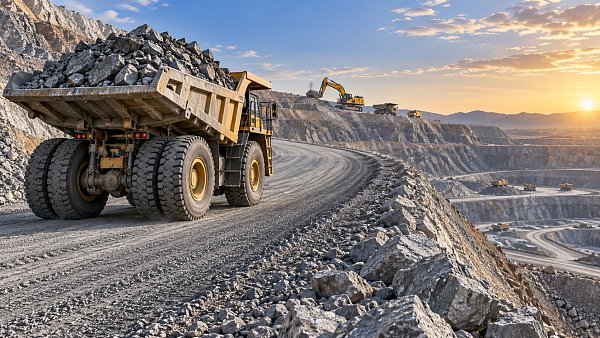
 Sep 28, 2026How to Specify Custom Mining Equipment for Abrasive Ground and High-Load HaulageCustom mining equipment for abrasive ground and high-load haulage: learn how to optimize payload, wear protection, powertrains, uptime, and lifecycle cost for safer, reliable production.
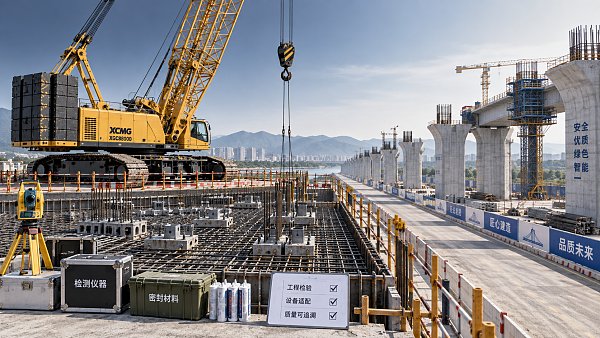
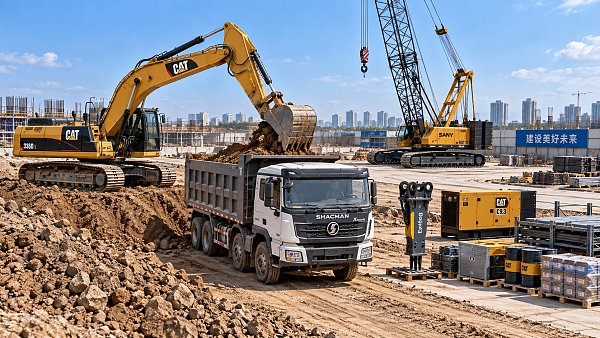
 Sep 29, 2026What belongs in a construction equipment package sourcing plan?Construction equipment package planning sourcing guide: learn how to match machines, attachments, site conditions, supplier support, costs, and acceptance gates for reliable project delivery.
 Sep 29, 2026How to verify equipment durability before approving suppliers at scaleHow can heavy equipment manufacturers verify durability and manage supplier risk at scale? Explore practical testing, traceability, audits, and control strategies.
Prof. Marcus Chen
Weekly Insights
Stay ahead with our curated technology reports delivered every Monday.