
How to Choose Road Construction Equipment for Road Maintenance Projects
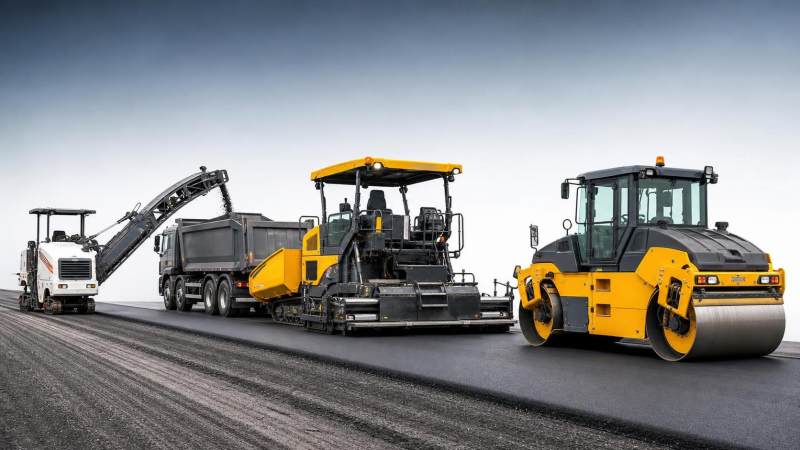
Start with the repair method, not the machine list
A lot of bad equipment decisions start the same way: someone asks for quotes on a paver, a roller, and a milling machine before the team has agreed on what kind of maintenance work is actually being delivered. That reverses the process.
When you are choosing road construction equipment for road maintenance, begin with the treatment type. Crack sealing, pothole patching, micro surfacing, surface dressing, cold milling and overlay, full-depth patching, shoulder rehabilitation, and drainage correction do not ask for the same tool set. Even when two jobs look similar on paper, the equipment train can change because the failure mechanism is different. A road with oxidation and surface raveling needs a different response than a lane with rutting, base instability, or edge break.
Before you compare brands or machine sizes, lock down these points:
- What defect is being treated: surface distress, structural failure, drainage-related damage, or localized utility reinstatement.
- What repair method is approved in the work scope or maintenance plan.
- Whether the job is preventive maintenance or corrective repair.
- Whether the finished surface must match an existing profile, crossfall, lane elevation, or ride requirement.
If that sounds basic, good. It is also where teams save themselves from renting the wrong iron for a week.
Map the actual road condition before sizing equipment
Project managers usually get burned when they choose equipment from average quantities instead of actual site geometry. A maintenance project may only cover a few kilometers, yet still include narrow urban lanes, bus bays, bridge approaches, manholes, intersections, and live traffic interfaces. That mix matters more than the headline tonnage.
Walk through the job using a field checklist, not just the BOQ. Measure lane width, turning radius for support trucks, overhead restrictions, shoulder bearing condition, access windows, and how often the crew will have to stop and restart. On a constrained corridor, a smaller paver or compact milling unit often outperforms a larger machine simply because it spends more time working and less time being repositioned.
The same logic applies to compaction. A high-capacity roller is not automatically the right answer if the patch areas are tight, interrupted, or adjacent to structures that limit vibration. In maintenance work, maneuverability and repeatable finish quality often matter more than theoretical peak output.
Match equipment to production balance, not isolated capacity
One oversized machine can drag the whole crew out of rhythm. The practical question is not “What is the biggest unit we can get?” but “Can every part of the train sustain the same pace?”
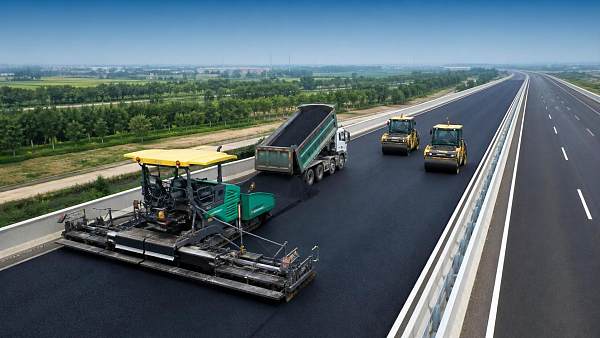
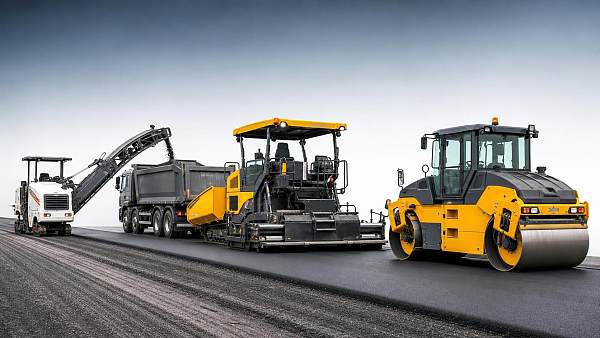
For milling and overlay work, the milling machine, haul trucks, tack application, paver, and rollers must be balanced. If the mill cuts faster than trucks can clear material, you lose time. If the paver outpaces mix delivery, you risk temperature loss, stoppages, and roughness at restart points. If rollers cannot stay within the compaction window, the surface may look acceptable on handover day and still underperform later.
Use a simple balancing review:
This is where road construction equipment for road maintenance should be judged as a system, not a shopping list.
Check surface quality requirements early
Some maintenance projects are forgiving. Others are not. If the road includes high-speed sections, bridge transitions, bus routes, industrial traffic, or areas with repeated complaints about ride quality, the finish requirement drives equipment choice more than raw productivity.
Ask these questions before selecting the machine configuration:
- Do you need tight control of milling depth to protect a planned overlay thickness?
- Will the paver need automatic grade or slope control to maintain profile through long pulls?
- Are there many tie-ins around structures, utilities, or previous patches?
- Does the project have defined smoothness, texture, or compaction acceptance criteria in the contract documents?
A common mistake is using general-purpose maintenance equipment on a corridor that really needs more precise control. That usually shows up later as ponding water, visible bumps at interfaces, or thickness variation that eats into pavement life.
Do not separate the machine from the material plan
Equipment performance in maintenance work is tied to the material being placed or removed. Hot mix asphalt, cold mix, emulsion-based systems, recycled material, and thin-lift treatments all behave differently in the field. The wrong equipment setup can turn a suitable material into a bad result.
For example, thin overlays and patch repairs are sensitive to segregation, thermal drop, and handwork at joints. That affects whether you need a paver with a specific screed arrangement, a material transfer approach, or smaller support equipment that can keep up inside a short work window. On the removal side, if the project intends to preserve reclaimed asphalt pavement quality for reuse, the milling setup and haul logistics deserve more attention than they often get.
In practical terms, review the material method statement and the equipment list together. If those are being developed by different people, bring them into the same meeting.
Account for traffic management and work windows
Maintenance jobs are rarely executed in a clean, open site. Lane closures, night shifts, school-zone restrictions, urban noise limits, and short possession windows can rule out equipment that looks ideal on paper.
If you only have a six-hour night closure, setup time and demobilization time become equipment-selection issues. A machine with higher nominal output may still lose to a unit that is quicker to mobilize, easier to load out, and less disruptive around live traffic. The same goes for patching in city streets, where support truck movement and crew exposure at reversing points can be bigger risks than paving speed.
Review your traffic control drawings and closure assumptions alongside the fleet. If the closure shape forces frequent lane transitions or partial-width work, choose equipment that can maintain quality under stop-start production.
Look hard at supportability: parts, service, and operator familiarity
This part is less glamorous, but it moves the result more than people admit. A technically strong machine is a weak choice if the crew cannot run it well or if the jobsite is two breakdowns away from missing the program.
Check dealer or service coverage in the actual project area, not just in the nearest major city. Ask what wear parts are commonly stocked for the equipment class you need, especially cutters, drums, screed components, spray nozzles, and compaction-related consumables. For rented units, inspect the service history and current working hours, not just the brochure spec.
Operator familiarity matters too. Maintenance work often involves short, repetitive actions near live interfaces. A crew that knows the controls, visibility limitations, and daily setup points of a given machine model will usually deliver better consistency than a crew learning on the clock.
Compare total job cost, not just rental rate or purchase price
Cheap equipment can become expensive very quickly on road maintenance. The cost drivers are usually downtime, extra traffic control time, mix waste, rework, support labor, and the knock-on effect of missing a closure window.
A useful bid-stage check is to compare equipment options across five cost buckets:
- Mobilization and transport
- Daily operating cost, including fuel and wear parts
- Crew size and support plant required
- Expected production inside the actual work window
- Risk cost if the machine fails, stops, or produces out-of-spec work
This is usually enough to expose false economy. A lower day rate means little if the machine stretches a three-night program into five.
Build the selection around common failure points
Experienced teams often choose equipment by asking a blunt question: where is this job most likely to go wrong? That keeps the evaluation grounded.
For road maintenance, the repeat offenders are familiar:
- Patch edges breaking because compaction access was poor.
- Milled surfaces left inconsistent because depth control was too rough for the treatment plan.
- Paving interruptions causing segregation and rough joints.
- Urban jobs slowed by machines that were too large for access and turning.
- Night closures overrun because transport and setup were underestimated.
Once those risks are named, equipment decisions become clearer. You are no longer buying abstract capacity. You are controlling known failure modes.
Use a final pre-award checklist before committing
Before procurement or rental approval, run one last pass. It should be short and practical:
- The selected equipment matches the repair method, not just the project title.
- The machine dimensions and operating pattern fit the real site geometry.
- Production rates are balanced across removal, prep, paving, and compaction.
- Surface quality requirements are achievable with the selected control systems and crew skill.
- Material handling and equipment setup support the treatment being used.
- Traffic management constraints have been checked against setup, turnaround, and demobilization time.
- Service support, wear parts, and operator readiness have been confirmed.
- Total job cost has been reviewed against delay and rework risk.
If you need a working order, use this one: define the treatment, verify the site constraints, balance the production train, then pressure-test the choice against quality, traffic, and support risk. That sequence usually leads to better equipment decisions than starting with machine size or headline price, and it is the most reliable way to choose road construction equipment for road maintenance projects that actually performs once the lane closure begins.
Related News
 Sep 17, 2026How TBM Guidance Technology Maintains Alignment Through Curves and Variable GroundTunnel boring machine guidance technology helps teams maintain precise alignment through curves and variable ground, reducing risk, improving lining accuracy, and protecting schedules.
 Sep 16, 2026Infrastructure Equipment Market Reference: Demand, Pricing, and Supplier BenchmarksInfrastructure equipment market reference for buyers: assess demand signals, total cost, pricing risks, and supplier benchmarks for tunnels, mining, cranes, and road projects.
 Sep 15, 2026How to Evaluate Infrastructure Equipment Suppliers for Complex Project RequirementsInfrastructure equipment solutions supplier evaluation guide for complex projects: assess technical fit, lifecycle cost, reliability, local support, and contract risk.
 Sep 14, 2026What Drives Surface Mining Equipment Cost Across a Mine’s Operating Life?Surface mining equipment cost depends on fleet matching, fuel, wear, maintenance, availability, and rebuild timing. Explore lifecycle strategies that protect output and margins.
Pavement Process Engineer
Weekly Insights
Stay ahead with our curated technology reports delivered every Monday.