
Are Pure Electric Mining Dump Trucks Worth the Investment in 2026?
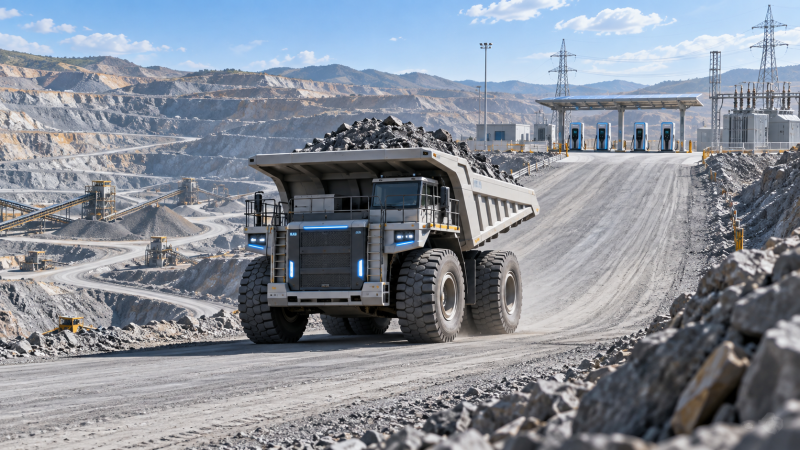
As mines confront tighter emissions rules, uncertain diesel pricing, and growing pressure to make every tonne moved more predictable, pure electric mining dump trucks are shifting from demonstration assets to serious boardroom decisions. The question is no longer whether electrification will arrive in heavy haulage. It is whether a particular mine is ready to make the economics work.
Is it worth investing in pure electric mining dump trucks in 2026? For the right operation, yes—especially where haul routes are repetitive, power is available or can be developed, and diesel logistics are expensive. But a battery-electric truck is not a direct, risk-free replacement for a diesel unit. Its value depends on the mine’s gradient, cycle time, climate, payload profile, charging strategy, maintenance capability, and production plan.
The strongest investment cases are built around total system design rather than the purchase price of a truck. A mine that simply swaps powertrains may find new bottlenecks. A mine that redesigns energy, dispatch, loading, maintenance, and haul-road operations around electrified transport may create a durable cost and productivity advantage.
The short answer: worth it when the mine can use electricity as an operating advantage
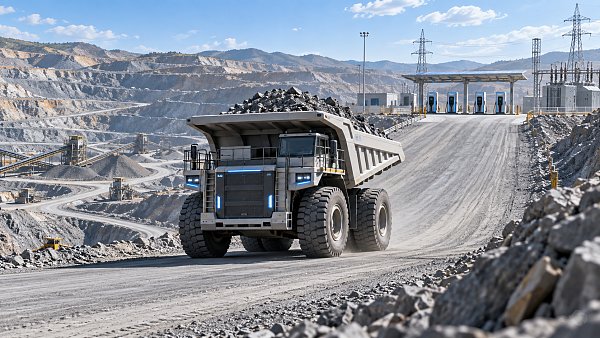
Pure electric mining dump trucks tend to be most attractive in open-pit operations with well-defined routes and high truck utilization. Their commercial logic improves when a site has access to reasonably priced electricity, faces substantial diesel-delivery costs, operates under carbon constraints, or needs to reduce underground-adjacent emissions and noise.
Unlike consumer electric vehicles, mining trucks work at the edge of engineering limits. They haul extreme loads, climb long grades, operate through dust and vibration, and often work around the clock. That means the question is not merely “How far can the truck travel?” Mine planners must ask whether the truck can complete its required shift cycles without disrupting shovel productivity, queueing at chargers, or compromising payload.
A diesel fleet carries energy onboard and can refuel quickly almost anywhere with the right service infrastructure. An electric fleet moves part of that energy system outside the truck: into substations, cables, chargers, software, and operating discipline. This is a challenge, but also an opportunity. Electricity can be managed, scheduled, generated locally, and in some cases recovered through downhill regenerative braking.
Where electric haulage has the clearest 2026 business case
Not every mine needs the same electrification pathway. Some sites may use fully battery-electric dump trucks. Others may find trolley-assist corridors, dynamic charging, or a mixed fleet more realistic during the transition. Pure electric trucks are most compelling when the operating environment gives them a clear structural advantage.
- High diesel logistics costs: Remote mines can bear major costs for transporting, storing, and protecting fuel. Replacing a portion of that dependency can materially change site economics.
- Predictable haul cycles: Repeated loading, climbing, dumping, and returning patterns make it easier to plan energy use and position charging assets.
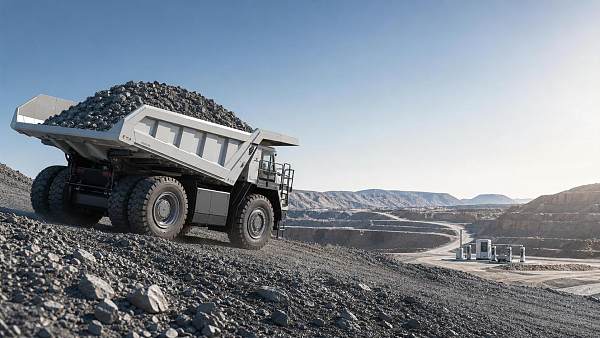
- Long downhill return routes: Regenerative braking can recover energy during descent, reducing net consumption and easing brake wear in suitable conditions.
- Access to reliable power: Grid connection, dedicated generation, renewable power purchase arrangements, or mine-owned energy assets can support a stronger case than sites relying on weak or unstable supply.
- Carbon-sensitive permitting or customers: Lower on-site emissions may support compliance, investor expectations, supply-chain reporting, and the commercial position of the produced commodity.
- Planned mine life: Mines with a long, stable operating horizon have more time to amortize electrical infrastructure and redesign workflows around it.
By contrast, a short-life mine, a highly mobile operation, or a site with constantly changing haul roads may struggle to justify large fixed charging investments. This does not rule out electrification, but it changes the decision from “replace the fleet” to “electrify selected routes or phases.”
Purchase price is only the visible part of the investment
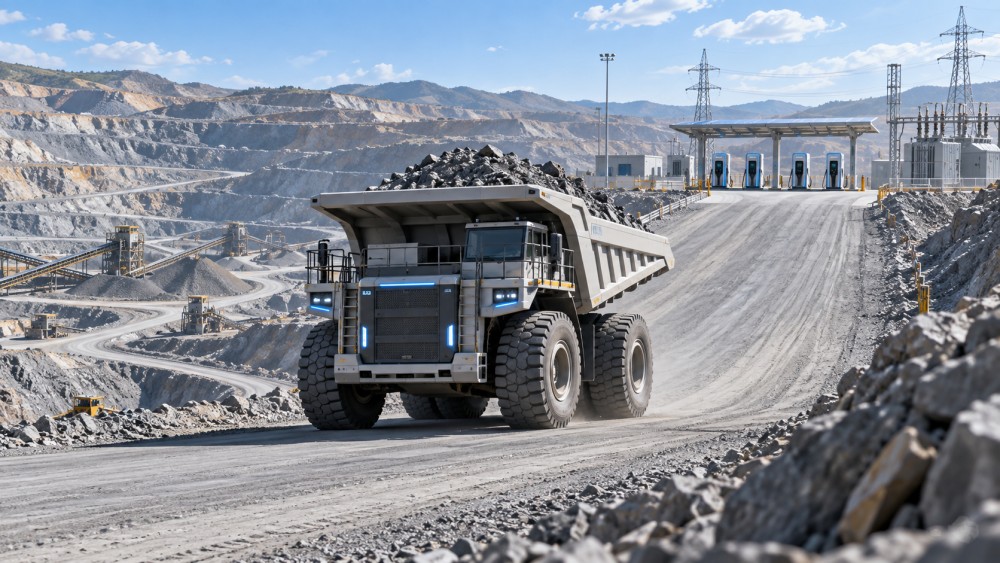
The initial capital cost of pure electric mining dump trucks remains a concern for many fleet owners. Yet focusing only on vehicle procurement can be misleading. Diesel truck ownership also includes fuel systems, refueling assets, engine maintenance, lubricant consumption, exhaust treatment, and the operational consequences of fuel volatility.
A useful total cost of ownership model should examine the full haulage ecosystem over the relevant mine-plan period. This includes truck acquisition or lease cost, battery replacement assumptions where applicable, charging equipment, grid upgrades, electrical distribution, civil works, software integration, training, spares, maintenance labor, energy tariffs, and residual value uncertainty.
Downtime deserves equal attention. An electric truck may have fewer mechanical components associated with combustion powertrains, but that does not automatically mean lower downtime. Early fleets can face delays caused by charging availability, connector reliability, thermal management, high-voltage diagnostics, and scarce technical expertise. The economic model should therefore include a realistic ramp-up period rather than assuming immediate mature performance.
Electricity price structure matters as much as electricity price. A mine paying low average power rates may still face expensive demand charges if many trucks charge simultaneously during peak periods. Smart charging, energy storage, staggered dispatch, and load-management software can reduce this exposure. In other words, fleet energy behavior becomes a mine-planning variable, not merely a utility bill.
Payload, range, and cycle time: the operational questions that decide the outcome
For a production superintendent, electrification is credible only if it protects tonnes per hour. A truck that carries less material, waits too long to charge, or cannot sustain grade performance may erase any energy savings upstream. Every investment review should start with the actual hauling duty cycle—not an idealized average.
Map each route by loaded distance, empty return distance, elevation change, rolling resistance, road condition, queue time, loading time, dumping time, ambient temperature, and shift pattern. Then model energy consumption at the truck level, including seasonal variation. A hot, dusty pit and a high-altitude winter operation can impose very different demands on batteries and cooling systems.
Payload discipline is especially important. Overloading has always damaged tires, frames, suspension, and roads. In an electric fleet, it can also distort energy forecasts and reduce planned cycle availability. Conversely, underloading expensive haulage assets makes it harder to recover the capital invested in electrification.
Charging strategy must be designed around the bottleneck. If a shovel is the limiting asset, truck charging cannot starve it of haulage capacity. If a crusher has narrow feed tolerance, dispatch logic must prevent a charging event from creating sudden gaps in ore delivery. The best systems combine fleet-management data with energy management, allowing planners to see both material flow and power flow in one operational picture.
Charging is infrastructure, but it is also a production system
Many early discussions stop at charger count. The more important issue is charger placement and utilization. Charging at a workshop may be simple, but it may add deadhead travel. Charging near loading areas reduces travel but may complicate traffic circulation and require robust protection from dust, blast vibration, and heavy equipment movement. Opportunity charging at planned pauses can work well; unplanned queues rarely do.
There is no universal layout. Some mines may favor high-power static charging during shift changes or operational breaks. Others may use charging opportunities near crushers, waste dumps, or loading zones. Routes with sustained uphill loaded travel may justify trolley-assist infrastructure even where the overall fleet transition remains gradual.
Electrical resilience should be treated as a production risk. A mine needs clear contingency plans for power interruptions, charger outages, severe-weather derating, and maintenance windows. Redundancy may look costly on a spreadsheet, but it can be less expensive than losing a critical haulage circuit during peak production.
Electric trucks do not remove maintenance—they change the maintenance culture
Pure electric mining dump trucks can reduce dependence on engine-related service tasks, fluids, and some wear components. They also introduce high-voltage systems, battery cooling circuits, power electronics, insulation monitoring, and software-controlled diagnostics. The maintenance department must be ready for a different risk profile.
That transition affects people as much as equipment. Technicians need high-voltage safety procedures, lockout protocols, diagnostic training, and clear escalation paths. Operators need guidance on energy-aware driving, regenerative braking behavior, and reporting charging abnormalities. Emergency teams must understand how to isolate an electric vehicle and respond to thermal incidents without relying on assumptions borrowed from diesel equipment.
Mining companies should also scrutinize vendor support. Ask where critical spares will be held, how remote diagnostics are handled, what response times are realistic in remote regions, and how software updates are validated before deployment. A truck’s mechanical availability may depend on digital infrastructure and supplier capability more than traditional fleet managers expect.
Common mistakes when assessing pure electric mining dump trucks
The first mistake is treating battery capacity as the only performance metric. Battery size matters, but usable energy, charging rate, thermal behavior, route profile, regenerative capability, and cycle design matter just as much.
The second is assuming that zero tailpipe emissions automatically equals low-carbon haulage. The actual emissions outcome depends on the electricity source. A site powered largely by renewables, nuclear generation, or a lower-carbon grid will have a different footprint from one relying on carbon-intensive electricity. Even so, electrification can create a pathway to cleaner operations as the power mix improves over time.
The third is ignoring the mine plan. Haul distances and elevation profiles can change dramatically as pits deepen. A configuration that works in year one may become constrained in year five. Fleet electrification should be tested against multiple mine-plan scenarios, not only the current quarter’s operating conditions.
Finally, companies sometimes wait for a “perfect” technology moment. That can leave them unprepared when regulations, customer requirements, or fuel markets shift. A staged program—data collection, route selection, infrastructure study, pilot deployment, and controlled scale-up—often provides a better balance between caution and momentum.
A practical decision test for 2026
Before approving a purchase, mine owners should be able to answer several direct questions. Can the site deliver enough reliable power at the right locations? Can the proposed fleet maintain required tonnes per hour through its toughest seasonal conditions? Does the financial model include infrastructure, demand charges, downtime, and end-of-life considerations? Is the mine life long enough to capture the investment value? And does management have a credible plan for workforce capability and supplier support?
If those answers are supported by route-level data rather than broad assumptions, electric dump trucks deserve serious consideration. If they are not, the next step may be a detailed electrification readiness study rather than an immediate fleet order.
For heavy-equipment decision makers, the 2026 opportunity is not simply to buy cleaner trucks. It is to build a haulage system that is less exposed to fuel volatility, more visible through data, and better aligned with the energy transition reshaping global infrastructure. TF-Strategy’s mining intelligence perspective is clear: the commercial logic of pure electric haulage is real, but it is earned through precise engineering, disciplined planning, and an honest view of each mine’s physical limits.
Related News
 Oct 07, 2026How to Evaluate a Hydraulic System Component Supplier for Heavy Equipment UptimeChoose a hydraulic system component supplier with proven quality, technical fit, and reliable delivery to reduce heavy equipment downtime and lifecycle costs.
 Oct 06, 2026Selecting Petrochemical Overhead Cranes for Hazardous Areas and Heavy Process LoadsPetrochemical overhead cranes for hazardous areas: learn how to match capacity, duty, controls, corrosion protection, and maintenance access for safer, reliable lifts.
 Oct 05, 2026Tunneling Equipment Specification Planning: Key Criteria for Ground and Project RisksEquipment specification planning tunneling: learn how to match TBM systems to ground risks, geometry, safety, logistics, and lifecycle cost for more reliable project delivery.
 Oct 04, 2026Nuclear Lifting Equipment Cost: Budgeting for Compliance, Testing, and Lifecycle RiskNuclear lifting equipment cost explained: budget for compliance, proof-load testing, installation, documentation, and lifecycle risk to make confident procurement decisions.
Heavy Haulage Strategist
Weekly Insights
Stay ahead with our curated technology reports delivered every Monday.