
Tunneling Equipment Specification Planning: Key Criteria for Ground and Project Risks
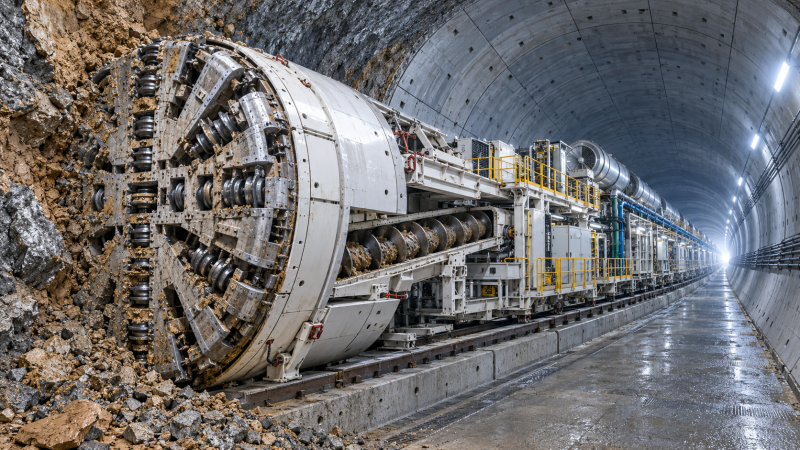
Tunneling Equipment Specification Planning: Key Criteria for Ground and Project Risks
Effective equipment specification planning tunneling begins with a project decision: define the risk envelope before selecting a machine, supplier, or excavation method.
Project managers usually search for this guidance because equipment selection can determine schedule certainty, safety performance, contractual exposure, and total project cost.
The central question is not which tunneling machine has the highest capacity, but which configuration can manage expected and unexpected conditions reliably.
For complex projects, a defensible specification connects ground data, tunnel geometry, operational constraints, contingency arrangements, and measurable acceptance criteria.
Start With the Decisions That Matter Most
Before issuing a tender, project teams should identify the decisions that cannot be corrected cheaply after the machine enters the ground.
These include excavation method, shield type, cutterhead design, segment logistics, backup layout, spoil handling, power supply, and emergency intervention capability.
Equipment specification planning tunneling should therefore be treated as a risk-management process, not simply a procurement exercise led by technical preferences.
Managers need to establish whether the project prioritizes rapid advance, maximum ground-control capability, low settlement, flexible operation, or lowest lifecycle cost.
Those priorities often conflict. A highly specialized machine may deliver excellent performance in predicted geology while offering limited resilience when conditions change.
A more adaptable configuration can cost more initially, yet reduce exposure to delay claims, intervention downtime, repair works, and community disruption.
The specification should state which risks remain with the owner, which are priced by the contractor, and which require shared contingency mechanisms.
Without this clarity, bidders may make incompatible assumptions, creating apparently competitive offers that conceal materially different delivery risks.
Translate Geological Uncertainty Into Equipment Requirements
Ground conditions are the primary technical driver of tunneling equipment selection, but borehole logs alone rarely provide sufficient certainty for final specification.
Project teams should convert available investigation data into a ground risk model that identifies variability, confidence levels, and potential consequence scenarios.
Important variables include rock strength, abrasivity, fracture frequency, groundwater pressure, soil permeability, boulders, mixed-face conditions, and gas occurrence.
For hard-rock tunnels, cutter wear, rockburst potential, squeezing ground, fault zones, and water ingress can significantly alter machine productivity.
For soft-ground schemes, face stability, settlement sensitivity, clogging potential, conditioning response, and pressure control may govern the chosen shield technology.
Earth pressure balance machines are often suitable for cohesive soils and mixed urban ground, provided conditioning can create a stable, manageable excavated material.
Slurry shields may be preferable where high groundwater pressures, granular soils, or demanding settlement limits require more controlled face support.
Where geology varies sharply, specify a defined operating range rather than assuming one mode will perform equally across all anticipated formations.
Assess Mixed Ground and Transition Zones Explicitly
Many tunneling projects fail to capture transition risk because equipment specifications focus on dominant geology rather than difficult interfaces between ground types.
Mixed-face conditions can produce uneven cutterhead loading, steering difficulties, excessive wear, water inflow, and unstable face behavior at critical locations.
The ground baseline should map likely transitions at a practical chainage resolution, including portals, fault crossings, river sections, and station enlargements.
Specify cutterhead openings, cutting tools, disc-cutter layout, scraper tools, wear protection, and intervention access against the most demanding credible ground conditions.
A machine optimized only for high production in uniform material can become a major liability when encountering isolated boulders or abrasive bands.
Teams should ask bidders to demonstrate previous performance in comparable mixed geology, including documented advance rates, tool changes, and intervention durations.
Requesting only reference project names is insufficient. Relevant evidence includes geology, diameter, pressure conditions, machine configuration, and actual operating outcomes.
This evidence helps distinguish genuine equipment suitability from generic supplier capability claims made during competitive procurement.
Match Shield Selection to Ground Control Needs
Shield selection should begin with the required level of face support and ground-loss control, especially beneath urban assets or sensitive infrastructure.
Settlement risk is rarely solved by machine selection alone, but the machine must provide stable, measurable, and responsive pressure-control capability.
Specifications should define allowable operating pressure ranges, sensor redundancy, data recording requirements, and alarm thresholds for abnormal excavation conditions.
Where an EPB TBM is selected, include requirements for foam, polymer, bentonite, or other conditioning systems based on laboratory and field evidence.
Conditioning requirements should address injection capacity, dosing control, storage, environmental handling, and the expected behavior of excavated material through the screw conveyor.
For slurry systems, specify separation plant capacity, slurry treatment quality, pipe abrasion protection, and contingency arrangements for blockage or plant failure.
The backup system must be sized for realistic peak demand, not average production assumptions that ignore maintenance, surge volumes, and difficult ground.
Ground-control provisions should also connect directly to the monitoring plan for surface settlement, building movement, utilities, and groundwater response.
Define Tunnel Geometry, Lining, and Interface Constraints
Machine diameter is only one geometric requirement. Equipment specification planning tunneling must account for alignment, curves, gradients, cross passages, and final lining tolerances.
Minimum curve radius affects shield articulation, steering capacity, segment ring design, and the risk of overbreak or segment damage.
Steep gradients influence traction, spoil transport, drainage, power distribution, personnel access, and the practical performance of conveyors or rail systems.
Segmental lining requirements should specify ring type, segment weight, gasket performance, bolt systems, allowable damage, and erection accuracy.
Segment handling equipment must match the production plan while preserving safe access for maintenance, inspection, and repair activities inside the backup train.
For long drives, logistics design can become the limiting factor even when the TBM can excavate faster than the supply chain supports.
Review the entire cycle: segment delivery, grout supply, consumables, cutter replacement, spoil removal, crew transfer, and emergency evacuation.
Specifications should require integrated layout drawings demonstrating that these interfaces work simultaneously rather than only as separate equipment packages.
Plan for Maintainability and Intervention Before Launch
Machine availability matters more than theoretical peak advance rate. A productive TBM is one that can be maintained safely and predictably underground.
Define target availability carefully, including exclusions for planned maintenance, ground-related interventions, utility outages, and downstream logistics failures.
Critical components require accessible inspection points, lifting arrangements, spare-part strategy, condition monitoring, and realistic replacement procedures under tunnel constraints.
Cutterhead intervention planning deserves particular scrutiny because time, pressure, confined space, and limited access can turn routine wear into a major delay.
Specifications should state whether interventions may occur from the excavation chamber, through pressurized access, or only after ground treatment and dewatering.
For pressurized work, define hyperbaric capability, medical support, decompression systems, trained personnel requirements, and applicable regulatory approvals.
Ask suppliers to provide intervention-duration assumptions for key scenarios, including damaged cutters, blocked openings, worn tools, and damaged sealing systems.
These assumptions should feed the programme risk model, rather than remaining isolated technical notes in equipment tender documentation.
Evaluate Production Capacity Through the Whole System
Advance rate estimates should be based on the complete tunneling system, including excavation, ring building, grout injection, spoil handling, and maintenance.
Headline TBM penetration rates can be misleading when conveyors, rail haulage, separation plants, shaft hoists, or segment factories constrain output.
Use a cycle-time model that distinguishes best-case, expected, and adverse conditions, then test each against the contractual completion milestones.
Project managers should require clear assumptions for working hours, crew changeovers, planned maintenance, consumable replacement, and recovery after stoppages.
Where multiple machines operate from shared shafts or treatment plants, examine bottlenecks caused by simultaneous demand for lifting, storage, or workforce access.
Electrical infrastructure also requires careful review. Power quality, backup generation, cable routing, transformer redundancy, and protection systems affect operational resilience.
Production planning should include ramp-up periods, because early tunneling performance often differs substantially from stabilized production after crews and systems mature.
A credible procurement evaluation rewards transparent production assumptions instead of selecting the bidder offering the most aggressive unqualified programme.
Build Safety and Environmental Controls Into the Specification
Safety requirements should be embedded in equipment design, not appended after supplier selection through generic site rules and procedural documents.
Key provisions include emergency egress, refuge arrangements, fire detection, fire suppression, ventilation capacity, communications, gas monitoring, and electrical protection.
Ventilation design must consider diesel emissions where relevant, dust, heat, gases, pressure conditions, welding activities, and the potential loss of primary fans.
Emergency response plans should address realistic underground events, such as flooding, conveyor fires, entrapment, power loss, compressed-air incidents, and medical evacuation.
Environmental requirements may include settlement limits, groundwater protection, noise control, spoil classification, slurry disposal, and treatment of contaminated excavated material.
These requirements affect equipment choices directly, especially separation technology, storage capacity, treatment plants, conveyor enclosure, and monitoring instrumentation.
Assign measurable performance standards wherever possible, because vague safety commitments are difficult to evaluate during tender assessment and project delivery.
Clear acceptance criteria also reduce disputes when responsibilities cross between the owner, contractor, equipment supplier, and specialist subcontractors.
Use Commercial Evaluation to Expose Hidden Risk
Lowest purchase price is rarely the lowest project cost. Commercial evaluation should compare whole-life value across construction, maintenance, delay, and recovery scenarios.
Build a cost model covering equipment capital cost, mobilization, assembly, energy, wear parts, labor, consumables, planned maintenance, and demobilization.
Add quantified allowances for credible risk events, especially extended cutter interventions, low advance rates, slurry treatment failures, or unexpected ground treatment requirements.
Where risk remains uncertain, use sensitivity analysis to show how different geological outcomes affect cost, completion dates, and contractual exposure.
Equipment specification planning tunneling is strongest when technical scoring and commercial scoring use the same evidence base and risk assumptions.
Require bidders to identify exclusions, operating limitations, recommended spares, supplier support arrangements, warranty conditions, and commissioning responsibilities in detail.
Availability guarantees should be examined carefully, since contractual definitions can exclude many events that cause practical downtime on site.
Project leaders should prefer transparent limitations and credible mitigation plans over broad guarantees that offer limited value during a difficult drive.
Create a Specification That Supports Better Delivery Decisions
A strong tunneling equipment specification is a decision document that makes geological uncertainty, interface constraints, and ownership of risk visible to all parties.
It should define required performance without unnecessarily prescribing every design detail, allowing suppliers to propose proven solutions and practical innovations.
However, flexibility must not become ambiguity. Critical requirements for ground control, safety, maintainability, monitoring, and logistics need explicit measurable standards.
For project managers, the best outcome is not simply a selected TBM, but an aligned delivery system with realistic productivity and recovery capability.
When specification planning is grounded in evidence, the project can compare bids fairly, allocate risk intelligently, and avoid expensive assumptions underground.
That is the practical value of disciplined equipment specification planning tunneling: greater control over the decisions that shape cost, safety, schedule, and final asset quality.
Related News
 Oct 05, 2026Tunneling Equipment Specification Planning: Key Criteria for Ground and Project RisksEquipment specification planning tunneling: learn how to match TBM systems to ground risks, geometry, safety, logistics, and lifecycle cost for more reliable project delivery.
 Oct 04, 2026Nuclear Lifting Equipment Cost: Budgeting for Compliance, Testing, and Lifecycle RiskNuclear lifting equipment cost explained: budget for compliance, proof-load testing, installation, documentation, and lifecycle risk to make confident procurement decisions.
 Oct 03, 2026How to Assess TBM Manufacturers for Hard-Rock Tunneling Projects?Choose the right tunnel boring machine manufacturer for hard-rock projects. Explore key criteria for design, lifecycle cost, factory quality, and service support.
 Oct 02, 2026How to Evaluate Heavy Equipment Technology Suppliers for Fleet Uptime and SupportHeavy equipment technology suppliers can make or break fleet uptime. Learn how to assess diagnostics, data access, parts, service coverage, and support terms before you buy.
Ms. Elena Rodriguez
Weekly Insights
Stay ahead with our curated technology reports delivered every Monday.