
Geotechnical Engineering Solutions: How to Match Soil Conditions to Ground Support Methods
Geotechnical Engineering Solutions: How to Match Soil Conditions to Ground Support Methods
Effective geotechnical engineering solutions start with one practical question.
What support method truly fits the ground that will carry, move, drain, and deform under load?
That question matters in tunnels, shafts, slopes, foundations, and mining access works.
It also matters when project schedules are tight and failure tolerance is low.
Good geotechnical engineering solutions do not begin with a favorite product.
They begin with observed soil behavior, groundwater response, stress redistribution, and construction sequence.
In practice, the strongest designs usually come from matching support stiffness and timing to actual ground conditions.
This is where geotechnical engineering solutions move from theory into project control.
Why soil behavior drives support selection
Soil is not just a bearing medium.
It is a changing material system affected by stress, water, disturbance, and time.
A dense sand layer can behave very differently from soft clay under the same excavation geometry.
A weathered fill may appear competent at first, then degrade quickly after rainfall or vibration.
That is why geotechnical engineering solutions must align with both initial conditions and likely changes during construction.
The key variables usually include strength, stiffness, permeability, compressibility, and sensitivity to disturbance.
Load path is equally important.
Support does not only resist load.
It redirects load, controls deformation, and buys time for the ground-support system to stabilize.
Core ground conditions that shape geotechnical engineering solutions
Before choosing any support method, the ground model needs to be decision-ready.
That means more than listing borehole logs.
It means identifying how the ground will react during excavation, loading, and long-term service.
1. Cohesive soils
Soft to medium clays often show delayed deformation and excess pore pressure effects.
Short-term stability may look acceptable while long-term settlement remains a problem.
In these settings, geotechnical engineering solutions often favor controlled excavation, staged support, and drainage management.
2. Granular soils
Sands and gravels are strongly influenced by density and groundwater level.
Loose saturated sand can lose stability quickly, especially around open faces.
Here, geotechnical engineering solutions often require immediate face control, seepage reduction, and robust confinement.
3. Mixed ground and fill
Mixed strata create some of the hardest support decisions.
Different zones carry load differently, drain differently, and fail differently.
That usually pushes geotechnical engineering solutions toward adaptable systems rather than single-response designs.
4. Weak rock and soil-rock transitions
Weak rock may behave like stiff soil once fractured or weathered.
Transitions are risky because field crews may expect rock performance and receive soil-like movement.
This is a common trigger for support redesign.
Matching support methods to soil response
The best geotechnical engineering solutions usually come from response-based matching.
Instead of asking which method is strongest, ask which method controls the expected failure mode.
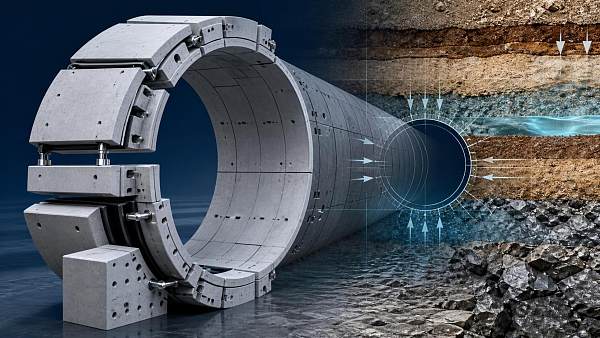
Shotcrete and lattice support
These systems work well where early surface confinement is critical.
They are common in tunneling through variable ground and weak rock.
They perform best when installation is immediate and deformation is monitored closely.
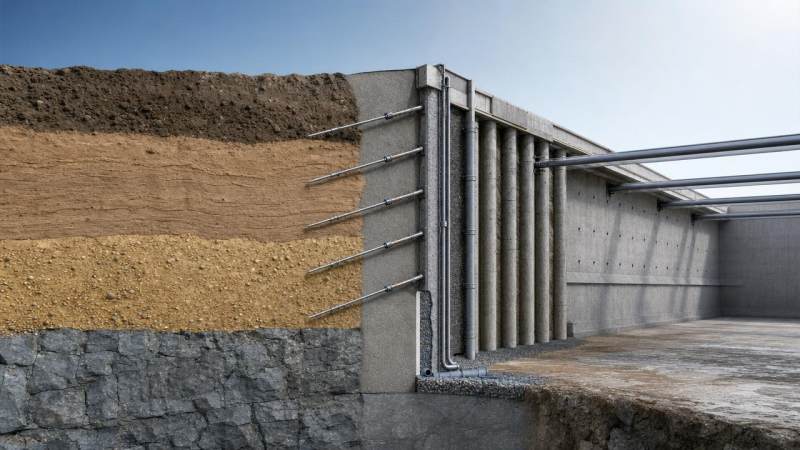
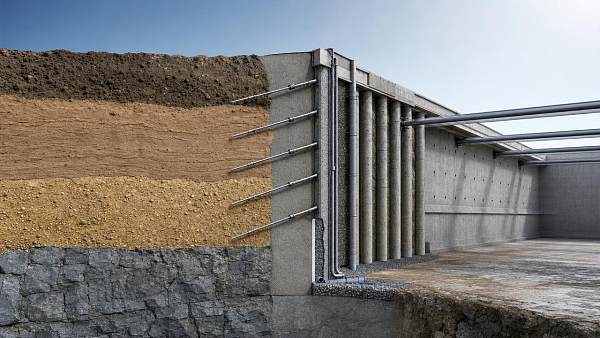
Soil nails and anchors
These options are effective when the ground mass can develop arching and tensile resistance.
They are often used for slopes, cuts, retaining systems, and portal stabilization.
In loose saturated soils, their reliability may drop without grouting control or drainage support.
Sheet piles, secant piles, and diaphragm walls
These systems are useful where excavation support and groundwater cutoff must work together.
Urban shafts and deep excavations often depend on this combined role.
The selection depends on wall stiffness, adjacent assets, seepage risk, and constructability limits.
Ground improvement
Sometimes the right answer is not a stronger support frame.
It is a better ground mass.
Jet grouting, deep soil mixing, compaction grouting, and dewatering can shift the entire risk profile.
Many high-value geotechnical engineering solutions combine support and improvement instead of treating them separately.
Groundwater, deformation, and sequencing
From recent project trends, groundwater is often the hidden driver behind support failure.
A support system may be structurally adequate and still fail operationally because seepage was underestimated.
Water changes effective stress, erosion potential, face stability, and long-term durability.
That also means geotechnical engineering solutions should be reviewed against wet-season and transient conditions, not dry snapshots.
Sequencing is the second major control.
Support installed one stage late can be equivalent to no support at all.
This is especially true in tunneling, staged cuts, and soft-ground transitions.
The more effective approach is to evaluate support not only by capacity, but also by installation window and response speed.
A practical evaluation framework
For consistent decisions, geotechnical engineering solutions should be screened through a structured framework.
- Define the controlling failure mode, not just the soil name.
- Check short-term and long-term behavior separately.
- Map groundwater pressure, flow path, and seasonal change.
- Review constructability under actual site access and equipment limits.
- Compare monitoring needs with available field control capability.
- Test whether the method remains stable during abnormal events.
This process keeps geotechnical engineering solutions tied to evidence rather than habit.
It also improves communication between design, construction, and risk review teams.
Common decision mistakes in geotechnical engineering solutions
Several mistakes appear repeatedly across heavy civil and underground projects.
- Choosing support by precedent without checking local groundwater behavior.
- Treating laboratory strength values as direct field performance indicators.
- Assuming one support method can handle every zone in mixed ground.
- Ignoring installation quality as a design variable.
- Underestimating monitoring thresholds and trigger actions.
The clearer signal today is that successful geotechnical engineering solutions are increasingly data-linked.
Field instrumentation, observational methods, and construction feedback now shape support decisions more directly than before.
That shift improves resilience, especially in projects where geology changes faster than early models suggest.
Final takeaway
Reliable geotechnical engineering solutions come from matching ground behavior to support response, not from overdesign alone.
When soil type, groundwater, deformation pattern, and sequence are evaluated together, support choices become far more defensible.
That leads to better safety margins, fewer redesign cycles, and stronger lifecycle performance.
In real engineering work, the most valuable geotechnical engineering solutions are the ones that stay practical under changing site conditions.
Use the ground model as a live decision tool, verify assumptions in the field, and let support selection follow measurable behavior.
That approach keeps design intent, construction control, and long-term performance moving in the same direction.
Related News
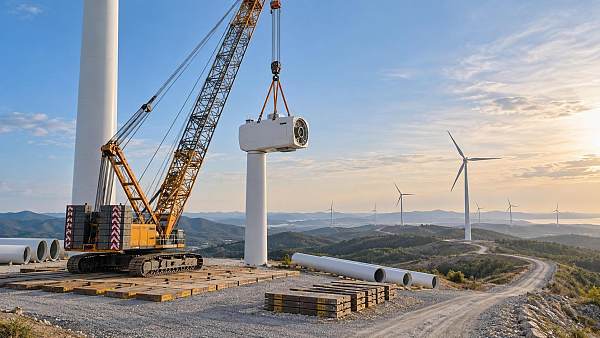
 Sep 13, 2026Crawler Crane Application Analysis for Wind Farms, Bridges, and Confined SitesCrawler crane application analysis for wind farms, bridges, and confined sites—optimize lift paths, ground conditions, access, and schedules for safer project delivery.
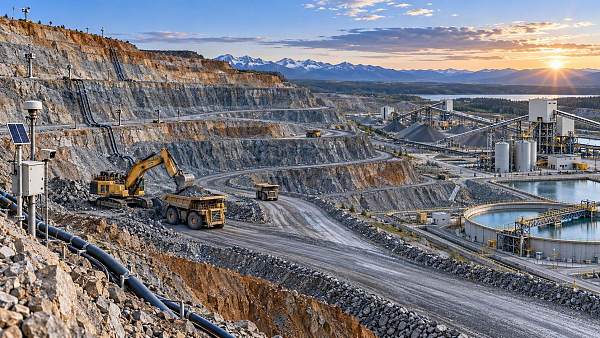
 Sep 12, 2026Open-Pit Mining in North America: Key Project Risks and Planning PrioritiesOpen-pit mining North America: uncover key risks and planning priorities for geology, permitting, water, fleet strategy, and resilient project delivery.
 Sep 11, 2026TBM Systems in Southeast Asia: Key Selection Factors for Variable Ground ConditionsTBM systems Southeast Asia: discover key selection factors for variable ground, pressure control, monsoon resilience, and safer tunnel delivery.
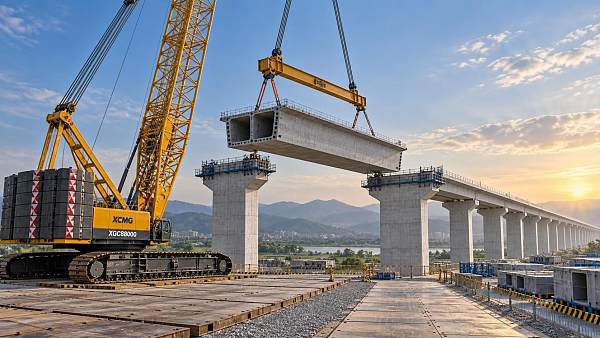
 Sep 10, 2026How to Select Bridge Lifting Machinery for Span, Load, and Site ConstraintsLifting machinery for bridges: learn how to match capacity, span, radius, ground conditions, and access constraints for safer, cost-effective bridge erection.

Geological Boring Fellow
Weekly Insights
Stay ahead with our curated technology reports delivered every Monday.