
How geotechnical construction methods affect ground stability
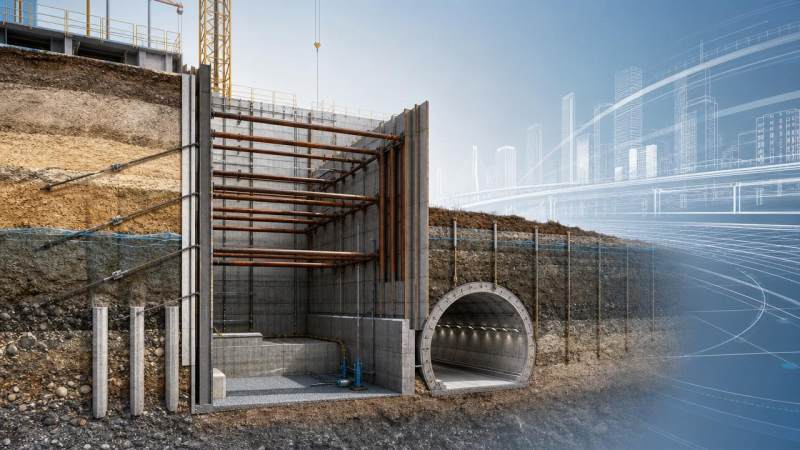
Ground stability is never determined by soil conditions alone; it is shaped by the geotechnical construction methods selected for excavation, support, drainage, and load transfer. For technical evaluators, understanding how these methods influence settlement, deformation, and long-term performance is essential to reducing project risk, improving constructability, and aligning engineering decisions with demanding infrastructure safety and productivity goals.
For most technical evaluators, the key question is not whether a method can work in theory, but how that method will change stress paths, groundwater behavior, deformation patterns, and operational risk in the field.
The short answer is clear: geotechnical construction methods directly affect ground stability by altering confinement, pore pressure, load redistribution, and disturbance intensity. The right method can control settlement and maintain serviceability; the wrong one can amplify instability even in manageable ground.
What searchers usually want to know about geotechnical construction methods
When users search for geotechnical construction methods, they are usually looking for a practical evaluation framework. They want to understand which methods improve stability, which create hidden risk, and how to compare alternatives for real projects.
For technical assessment teams, the concern is rarely limited to theoretical soil mechanics. Their focus is whether a construction sequence will trigger settlement, face loss, heave, lateral movement, seepage, vibration damage, or long-term performance issues.
This makes method selection a strategic issue, not only a site execution topic. In tunnels, foundations, cuts, shafts, and embankments, construction technique often determines whether the designed support concept performs as intended under actual ground and groundwater conditions.
Why construction method matters as much as ground conditions
Many project reviews begin with soil classification, rock mass quality, and groundwater mapping. Those inputs are essential, but stability outcomes depend just as heavily on how excavation, support installation, dewatering, and load transfer are staged on site.
A stable soil profile can become problematic if excavation advances too quickly, support is delayed, or drainage changes effective stress unexpectedly. Conversely, difficult ground can often be managed successfully through controlled sequencing, immediate support, and minimized disturbance.
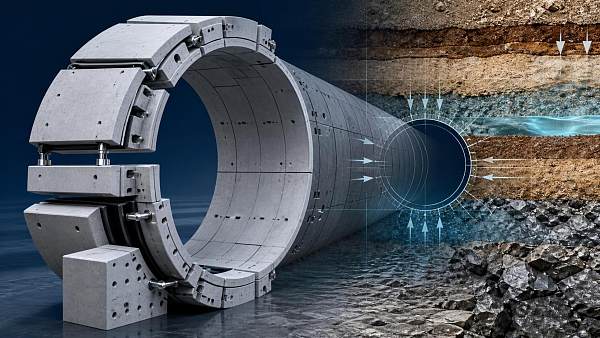
From an evaluation standpoint, the core principle is simple: geotechnical construction methods modify the mechanical state of the ground. They influence stress release, strain concentration, permeability pathways, and the time available for consolidation or relaxation.
That is why technical reviewers should evaluate method-ground interaction, not just material properties. A design may be robust on paper, yet become vulnerable if the selected method introduces excessive unloading, water inflow, vibration, or overbreak.
How excavation methods influence settlement and deformation
Excavation is one of the strongest drivers of stability change because it removes confinement and redistributes stress. The amount of ground movement depends not only on soil type, but on excavation geometry, advance rate, face control, and exposure duration.
Open-cut excavation, for example, can be efficient and transparent for inspection, but wide unsupported exposures may induce slope instability or wall deflection. In urban settings, adjacent utilities and structures can be sensitive to even modest lateral movements.
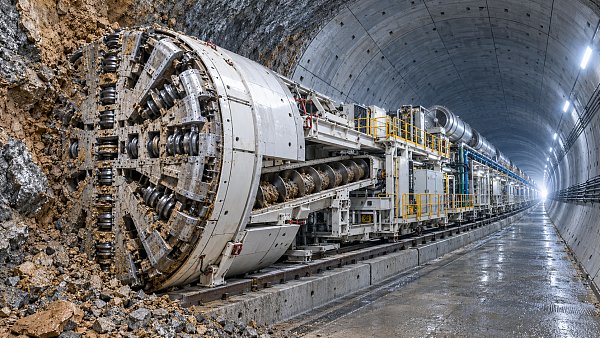
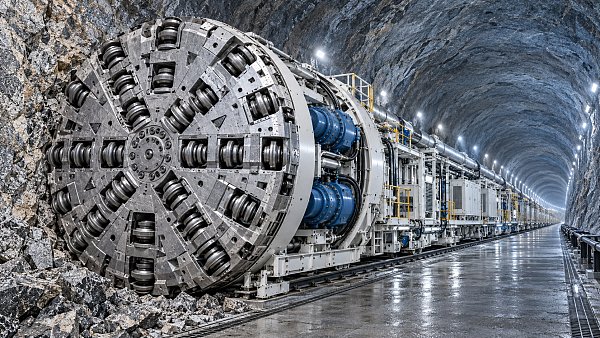
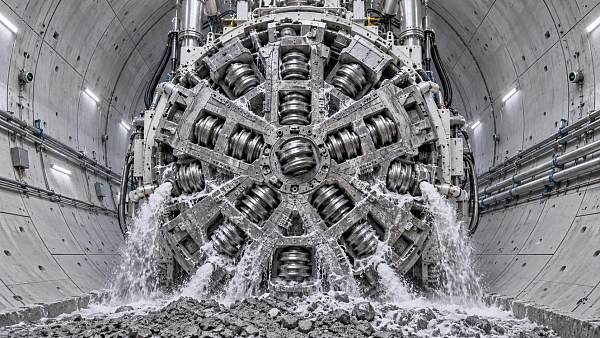
Mechanized tunneling with a tunnel boring machine can significantly improve ground control when face pressure, spoil balance, and lining installation are managed precisely. However, poor pressure control or tail void grouting can still produce settlement troughs and serviceability issues.
Sequential excavation methods offer flexibility in variable ground, especially when geology changes rapidly. Yet they demand disciplined monitoring and timely support closure, because partial-face excavation and delayed invert formation can increase convergence and instability risk.
For technical evaluators, the practical question is how much disturbance each excavation method creates relative to the allowable movement envelope. The preferred method is often the one that best limits uncontrolled deformation, not simply the one with the highest production rate.
Support installation timing often determines whether stability is preserved
Support systems do not stabilize ground by their presence alone; they stabilize it by engaging at the right time and in the right sequence. This is especially important in weak rock, soft ground, mixed face conditions, and water-bearing formations.
In retaining wall construction, the difference between staged bracing and delayed bracing can be the difference between acceptable wall movement and excessive ground loss. The same principle applies in tunnels where early ring closure improves confinement.
Shotcrete, rock bolts, steel ribs, diaphragm walls, secant piles, anchors, and geosynthetics all perform differently depending on installation timing. A technically sound support type may underperform if the ground has already relaxed beyond the intended design assumption.
Assessment teams should therefore review support as a time-sensitive system. The key criteria are installation lag, stiffness development, continuity, tolerance control, and compatibility with expected deformation modes rather than nominal capacity alone.
Dewatering and drainage can improve stability or create new failure mechanisms
Groundwater control is one of the most underestimated dimensions of geotechnical construction methods. Lowering water pressure can improve short-term workability and increase effective stress, but it can also induce settlement, piping, or regional drawdown effects.
In deep excavations, aggressive dewatering may reduce basal instability risk while simultaneously causing consolidation settlement in adjacent compressible layers. For projects near existing buildings or transport assets, that trade-off can dominate the entire risk profile.
Drainage behind retaining structures, tunnel waterproofing, face sealing, grouting, and recharge systems all influence how water moves during and after construction. The critical issue is not only water removal, but controlled hydraulic behavior over time.
Technical evaluators should ask whether the selected method changes groundwater in a reversible or irreversible way. Short-term gains in excavation efficiency may not justify long-term deformation, environmental impact, or claims exposure if hydraulic consequences are poorly managed.
Foundation and load transfer methods shape long-term ground performance
Ground stability is not only about excavation safety. It also depends on how loads are introduced into the ground after construction. Shallow foundations, driven piles, bored piles, barrettes, ground improvement, and mat systems each produce different stress distributions.
Driven piles can densify certain loose granular soils, improving capacity locally, but vibration may disturb nearby structures or sensitive utilities. Bored piles reduce vibration but may loosen sidewalls, encounter slurry management problems, or suffer defects if execution quality is inconsistent.
Ground improvement methods such as jet grouting, deep soil mixing, vibro-compaction, stone columns, and compaction grouting can transform marginal ground into buildable ground. Their value depends on treatment uniformity, verification quality, and compatibility with groundwater conditions.
For evaluators, the real issue is whether the selected load transfer method produces predictable settlement behavior throughout the design life. Initial constructability must be balanced against creep, consolidation, negative skin friction, and differential movement risk.
Method selection should be based on disturbance control, not habit
Projects often inherit preferred methods from contractor experience, equipment availability, or regional practice. While practical constraints matter, method selection should be based on disturbance control and stability outcomes rather than familiarity alone.
A useful evaluation framework compares methods against six criteria: expected ground loss, groundwater sensitivity, support response time, tolerance to geological variability, impact on adjacent assets, and monitoring responsiveness. These factors usually predict field performance better than cost alone.
For example, a high-output excavation method may look attractive in planning. Yet if it has low tolerance for mixed ground or strict pressure balance requirements, it may create larger stability risks than a slower but more controllable alternative.
This is particularly important in infrastructure sectors covered by TF-Strategy, including tunneling, mining access works, heavy lifting platforms, and road corridor construction. Large equipment productivity only delivers value when the chosen geotechnical method preserves stable working ground.
What technical evaluators should check before approving a method
Technical evaluation should move beyond reviewing method statements at a generic level. The review must test whether the construction approach is genuinely matched to stratigraphy, hydrogeology, geometry constraints, asset sensitivity, and achievable quality control.
First, check the assumed failure modes. Does the contractor understand whether the governing concern is basal heave, face instability, ravelling, hydraulic fracture, wall deflection, settlement, or long-term creep? A method without a clear failure hypothesis is a warning sign.
Second, examine sequencing. Stability often depends on the order of excavation, support closure, dewatering, backfilling, or load application. Small sequence changes can produce major differences in deformation, particularly in staged works and urban interfaces.
Third, review the control variables that can actually be measured in the field. These may include face pressure, advance rate, grout volume, piezometric level, wall deflection, bolt load, vibration intensity, or settlement rate. If control variables are vague, stability assurance is weak.
Fourth, test constructability under deviation scenarios. Ask what happens if groundwater inflow increases, cutter wear accelerates, weather changes, excavation pauses, or delivered material properties vary. Resilient geotechnical construction methods retain control under imperfect conditions.
Finally, verify the monitoring and trigger plan. Instrumentation should not be treated as a reporting formality. It is part of the stability method itself, because it enables feedback-based adjustment before movement becomes damage.
Common reasons geotechnical construction methods fail to protect stability
Stability problems often arise not because the selected method was inherently unsuitable, but because execution drifted away from the assumptions used in assessment. This gap between design intent and field reality is one of the main sources of preventable risk.
Frequent causes include delayed support installation, poor groundwater control, over-excavation, insufficient compaction, inadequate grouting, weak interface management, and low-quality verification records. Even advanced equipment cannot compensate for loss of procedural discipline.
Another common issue is treating geotechnical variability as an exception rather than a baseline condition. Construction methods that rely on narrow operating windows may become unstable when moving between soft ground, boulders, weathered rock, and high inflow zones.
Technical evaluators should be especially cautious when promised productivity gains depend on idealized assumptions. In many cases, moderate production with strong geotechnical control produces better schedule reliability and lower total cost than aggressive production with instability interruptions.
How to connect method choice with project value, not only compliance
For technical decision-makers, the value of selecting the right geotechnical construction methods extends beyond regulatory compliance. Stable ground means fewer claims, fewer emergency interventions, more reliable equipment utilization, and improved protection of surrounding infrastructure.
In heavy civil and underground works, instability affects the full project system. It can disrupt TBM advance, delay crane platform readiness, compromise haul road performance, and increase maintenance demand on high-value machinery operating in constrained environments.
That is why method evaluation should connect geotechnical performance with asset productivity and lifecycle economics. The method that best protects stability often also reduces rework, unplanned shutdowns, and total cost of ownership across the project delivery chain.
For organizations operating in globally competitive infrastructure markets, this integrated view is critical. Ground control is not a narrow geotechnical issue; it is a strategic enabler of safe, efficient, and high-confidence engineering execution.
Conclusion: stable ground is the result of controlled method-ground interaction
How geotechnical construction methods affect ground stability can be summarized in one principle: construction changes the ground, and those changes must be managed deliberately. Excavation, support, drainage, and load transfer all reshape stress and hydraulic behavior.
For technical evaluators, the best judgment comes from asking not just whether a method is common or feasible, but whether it minimizes disturbance, controls deformation, responds to variability, and remains measurable during execution.
When method selection is aligned with actual ground behavior, stability becomes predictable rather than reactive. That is the foundation for safer infrastructure, more reliable heavy equipment performance, and stronger engineering outcomes across complex civil and underground projects.
Related News
 Oct 06, 2026Selecting Petrochemical Overhead Cranes for Hazardous Areas and Heavy Process LoadsPetrochemical overhead cranes for hazardous areas: learn how to match capacity, duty, controls, corrosion protection, and maintenance access for safer, reliable lifts.
 Oct 05, 2026Tunneling Equipment Specification Planning: Key Criteria for Ground and Project RisksEquipment specification planning tunneling: learn how to match TBM systems to ground risks, geometry, safety, logistics, and lifecycle cost for more reliable project delivery.
 Oct 04, 2026Nuclear Lifting Equipment Cost: Budgeting for Compliance, Testing, and Lifecycle RiskNuclear lifting equipment cost explained: budget for compliance, proof-load testing, installation, documentation, and lifecycle risk to make confident procurement decisions.
 Oct 03, 2026How to Assess TBM Manufacturers for Hard-Rock Tunneling Projects?Choose the right tunnel boring machine manufacturer for hard-rock projects. Explore key criteria for design, lifecycle cost, factory quality, and service support.
Geological Boring Fellow
Weekly Insights
Stay ahead with our curated technology reports delivered every Monday.