
How to reduce underground construction costs without compromising safety compliance?
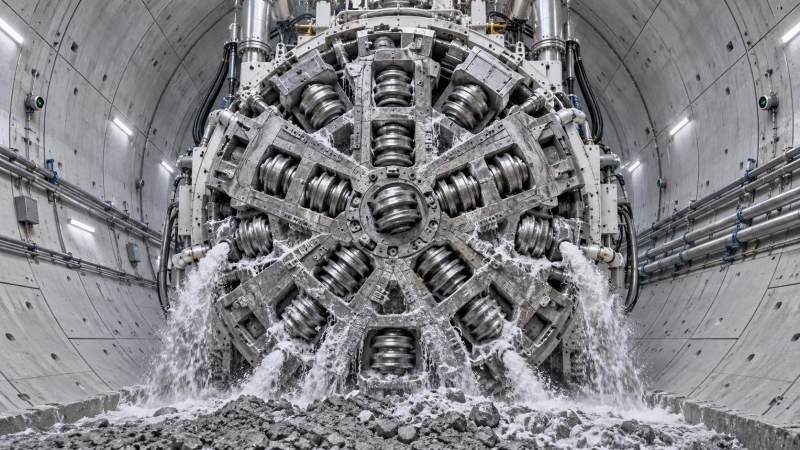
How to reduce underground construction costs without cutting safety?
That question isn’t rhetorical—it’s the daily calibration point for project directors overseeing TBMs beneath metro hubs, geotechnical leads interpreting fault zones in Himalayan alignments, and procurement strategists weighing cutterhead replacement cycles against schedule risk. Cost pressure is real. Safety compliance isn’t negotiable. The false choice—“cut corners or blow the budget”—has long masked a deeper issue: misaligned intelligence.
At TF-Strategy, we don’t track TBM advance rates as abstract KPIs. We map them—geologically, hydraulically, commercially—to see where friction lives. A 3% drop in penetration rate isn’t just slower progress; it’s often an early signal of unmodelled rock abrasivity, suboptimal foam injection pressure, or delayed cutter change timing that later triggers unplanned stoppages, rework, or regulatory scrutiny. That’s where cost and compliance converge—not at the bid stage, but in the borehole.
It starts with what you measure—and why
Most contractors optimize for “meters per day.” But meters aren’t equal. Advancing 12 m/day through competent granite with zero overbreak and stable ground support is structurally different from 12 m/day through mixed-face conditions requiring constant grouting, segment adjustments, and real-time convergence monitoring. The former may carry lower TCO over the full tunnel length. The latter may look faster on paper—but inflates risk-adjusted cost per meter by 18–32%, based on observed patterns across recent European and Southeast Asian urban tunneling projects.
So how do you shift from output-driven metrics to outcome-aware ones? Not by adding layers of reporting—but by anchoring decisions in three interlocking domains:
- Geological fidelity: Not just the RMR or Q-value from the desk study—but how those values translate into actual cutter wear profiles under specific thrust and torque combinations.
- Machinery responsiveness: How quickly can the TBM control system adapt to sudden changes in ground stiffness? Does its hydraulic power unit maintain stable pressure during transient loading—or does it dip, triggering micro-settlement alerts?
- Operational continuity logic: When a cutter change is scheduled, is it timed to avoid overlapping with critical lining installation windows? Is spare part logistics aligned with predicted failure modes—not just manufacturer MTBF tables?
These aren’t theoretical concerns. They’re parameters our Geological Boring Fellows and Hydraulic Power Analysts routinely cross-reference when modeling TBM performance for clients in Chilean Andes tunnels or Jakarta metro extensions—where altitude, humidity, and local labor certification rules reshape what “safe operation” actually means on site.
Where digital twin stops being buzzword—and starts saving money
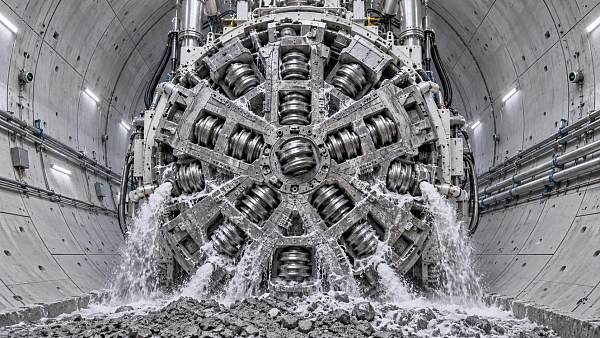
A digital twin of a TBM isn’t a 3D animation. It’s a live, calibrated model fed by real-time sensor streams: cutterhead temperature gradients, gripper shoe displacement, shield skin pressure differentials, even lubricant particle counts in circulating oil. When used right, it doesn’t just predict bearing failure—it reveals whether a 0.5 mm increase in radial play correlates with measurable vibration harmonics *before* settlement thresholds are breached.
That predictive clarity changes the economics of safety. Instead of mandatory weekly inspections based on calendar time, maintenance becomes condition-triggered—reducing downtime by up to 22% in pilot deployments (per internal field logs from 2022–2024). More importantly, it shifts compliance from reactive documentation (“we inspected”) to proactive validation (“we verified stability before advancing”).
But here’s the catch: a digital twin only delivers value if its inputs reflect actual site physics—not idealized OEM specs. That’s why TF-Strategy’s Commercial Insights module includes material iteration tracking—not just for new tungsten-carbide composites, but for how those materials behave under combined thermal and abrasive stress in real-world TBM applications. One client in Norway replaced standard disc cutters with a newly hardened variant—and saw 40% longer life in schist, but no improvement in quartzite. Without granular geological context, the “innovation” became cost inflation.
The overlooked leverage: interface management
Costs spike not at the machine—but where machines meet people, processes, and paperwork. Consider the handover between geotechnical survey teams and TBM operators. If rock mass classifications aren’t translated into actionable torque/thrust bands *before* launch—and updated dynamically as face conditions evolve—then every deviation becomes a negotiation, not a response. Delays accumulate. Safety margins shrink. Documentation gaps widen.
TF-Strategy’s Strategic Intelligence Center treats this interface as infrastructure—just like tunnel lining or ventilation ducting. Our Heavy Haulage Strategists don’t just chart truck payload capacity; they map how haul route geometry affects driver fatigue cycles, which then feeds into fatigue-monitoring protocols required under EU Directive 2002/15/EC. Similarly, our work on “Power and Precision” links hydraulic pump efficiency curves to permissible grout injection pressures—and shows how exceeding those limits risks both liner integrity *and* occupational exposure limits for silica dust.
This isn’t about adding bureaucracy. It’s about making compliance legible—not as a checklist, but as a set of interdependent physical constraints.
What’s next—not what’s available
There’s no universal cost-reduction formula. A strategy that works for a 5-km urban rail tunnel in Singapore won’t transfer directly to a 12-km hydroelectric diversion in Bhutan—different seismic codes, different labor certification paths, different spares logistics horizons.
What *is* universal is the need for intelligence that respects that complexity—without oversimplifying it. That means moving beyond “how to reduce underground construction costs without cutting safety?” as a standalone question—and treating it instead as one node in a larger decision network: geological uncertainty, machinery capability, workforce readiness, regulatory sequencing, and supply chain resilience.
If your current planning relies on static assumptions—about rock behavior, equipment uptime, or inspection frequency—you’re already operating on borrowed time. The alternative isn’t more data. It’s better-stitched intelligence: where geological insight meets hydraulic reality, and where commercial logic aligns with structural consequence.
That’s the work we do—not as vendors, but as observers of earth engineering’s deepest currents.
Related News
 Sep 17, 2026How TBM Guidance Technology Maintains Alignment Through Curves and Variable GroundTunnel boring machine guidance technology helps teams maintain precise alignment through curves and variable ground, reducing risk, improving lining accuracy, and protecting schedules.
 Sep 16, 2026Infrastructure Equipment Market Reference: Demand, Pricing, and Supplier BenchmarksInfrastructure equipment market reference for buyers: assess demand signals, total cost, pricing risks, and supplier benchmarks for tunnels, mining, cranes, and road projects.
 Sep 15, 2026How to Evaluate Infrastructure Equipment Suppliers for Complex Project RequirementsInfrastructure equipment solutions supplier evaluation guide for complex projects: assess technical fit, lifecycle cost, reliability, local support, and contract risk.
 Sep 14, 2026What Drives Surface Mining Equipment Cost Across a Mine’s Operating Life?Surface mining equipment cost depends on fleet matching, fuel, wear, maintenance, availability, and rebuild timing. Explore lifecycle strategies that protect output and margins.
Geological Boring Fellow
Weekly Insights
Stay ahead with our curated technology reports delivered every Monday.