
Tunneling Equipment Selection: 7 Specs to Compare Before Choosing a TBM Setup
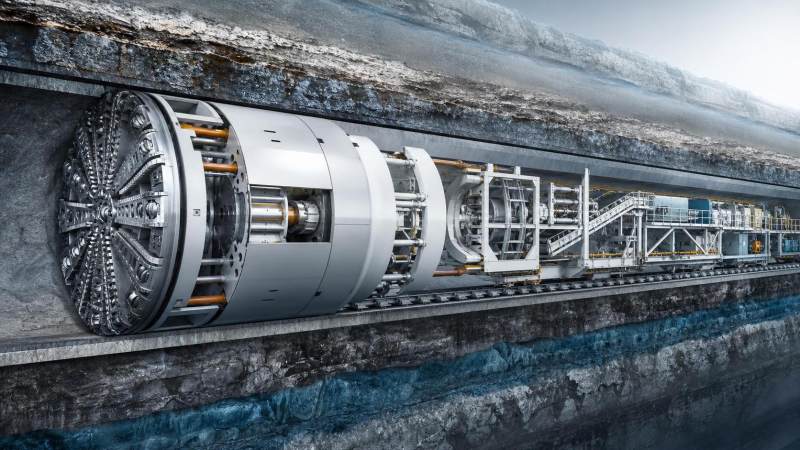
Tunneling equipment selection rarely turns on one headline number. A TBM setup may look powerful on paper, yet struggle underground if geology, cutterhead behavior, backup logistics, and maintenance windows are misread.
That is why current TBM evaluation is drawing broader attention across infrastructure programs. Urban rail, water transfer, hydropower, and mountain corridors all demand machine choices that protect schedule certainty, ground control, and total project value.
For platforms such as TF-Strategy, the issue fits a larger heavy-industry pattern. Physical machine parameters only become meaningful when they are connected to construction method, risk exposure, and the commercial logic behind delivery quality.
Why TBM setup decisions have become more demanding
The old shortcut was simple: match tunnel diameter, check installed thrust, then move ahead. That approach now misses too much.
Mixed ground conditions are more common in large transport corridors. Environmental controls are tighter. Contract structures also penalize downtime more aggressively than before.
In practice, tunneling equipment selection now sits at the intersection of engineering and asset strategy. A machine is no longer judged only by excavation ability, but by how predictably it performs across the full operating chain.
This is especially relevant when comparing Earth Pressure Balance, Slurry, hard rock, or hybrid concepts. Similar tunnel diameters can still require very different TBM setups once groundwater, abrasivity, settlement limits, and muck handling are mapped properly.
The seven specifications that deserve close comparison
A useful review starts by treating the TBM as a working system, not a single machine. The seven specifications below usually shape the outcome more than marketing labels do.
1. Geological compatibility
This is the anchor point for tunneling equipment selection. Ground class, fault zones, squeezing behavior, groundwater pressure, and cobble content should all be tied to expected machine response.
A TBM optimized for uniform clay can become inefficient in mixed-face conditions. A hard rock machine can lose productivity fast if fractured zones or high inflows were underestimated.
2. Cutterhead design and opening ratio
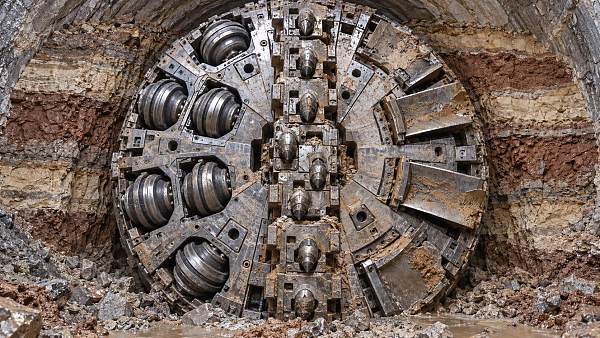
Cutterhead layout influences face support, muck entry, wear pattern, and vibration. Opening ratio is not a cosmetic value. It changes how the face behaves and how spoil enters the excavation circuit.
Disc cutter arrangement, scraper tools, wear protection, and spoke or dome geometry should be reviewed against actual formation data, not generic machine family assumptions.
3. Thrust and installed torque
These two values are often overemphasized and underinterpreted at the same time. More thrust or torque does not automatically mean better performance.
What matters is usable force within the project envelope. High torque without stable muck evacuation can lead to clogging. High thrust without proper segment or lining coordination can create secondary constraints.
4. Penetration rate and achievable advance
Penetration rate describes cutting behavior. Advance rate reflects the real project rhythm after ring build, inspections, maintenance, probe drilling, and logistics are included.
For tunneling equipment selection, the more useful question is not peak meters per day. It is whether the configuration can hold consistent weekly production under expected site interruptions.
5. Backup train and material flow
The backup system decides whether the front-end machine can keep moving. Conveyor layout, slurry separation, cable handling, ventilation, grout supply, and segment transport all affect actual output.
A strong cutterhead paired with a weak logistics chain will still underperform. This is one of the most common blind spots in early tunneling equipment selection reviews.
6. Maintainability and cutter intervention strategy
Maintenance access changes project risk more than many comparison sheets suggest. Tool change intervals, hyperbaric intervention needs, spare parts availability, and diagnostic systems must be priced into the decision.
If the machine requires complex interventions in unstable or pressurized ground, downtime risk rises sharply. That affects both safety planning and commercial exposure.
7. Lifecycle cost and upgrade path
The purchase figure is only the visible layer. Energy demand, cutter consumption, additive use, staffing profile, refurbishment scope, and digital monitoring capability all shape lifecycle cost.
There is also a strategic question. Can the TBM setup be adapted for changing ground knowledge, tighter environmental reporting, or future automation requirements?
How these specifications interact in real projects
The seven items should never be scored in isolation. Their interaction usually explains success or failure.
For example, a larger cutterhead opening may improve muck intake in certain formations. Yet it can also alter face stability requirements and change support pressure control.
Likewise, higher installed torque may support difficult cutting. But if heat management, wear consumption, and backup throughput are not aligned, the expected gain may disappear.
This systems view is increasingly important in intelligence-led heavy equipment assessment. TF-Strategy’s broader industry lens is useful here because the same logic appears across cranes, excavators, and hauling fleets: specification value depends on operational context.
Where tunneling equipment selection creates business value
Good selection work reduces more than technical uncertainty. It can improve bid quality, procurement timing, spare planning, and interface management across the entire tunnel package.
In metro projects, the right TBM setup supports settlement control and consistent ring production. In long mountain tunnels, it can protect availability under abrasive rock and remote logistics conditions.
In water conveyance or hydropower works, tunneling equipment selection often influences lining philosophy, ventilation design, and downstream installation sequencing. Those links matter because a tunnel machine never operates as an isolated asset.
A practical way to compare TBM setups
A comparison process works better when it starts with tunnel behavior, not supplier brochures. The first task is to translate geology and alignment constraints into machine-response requirements.
After that, each candidate setup can be reviewed against the same decision frame.
- Map expected ground transitions by chainage, not only by average formation type.
- Check whether cutterhead geometry matches the worst credible face condition.
- Test thrust and torque values against support method and spoil removal limits.
- Compare advance assumptions using maintenance and logistics delays, not peak cutting data.
- Review intervention scenarios with actual access, pressure, and safety implications.
- Calculate lifecycle cost with consumables, power, staffing, refurbishment, and downtime exposure.
This method keeps tunneling equipment selection grounded in measurable tradeoffs. It also makes discussions with OEMs, contractors, and planners more transparent.
What deserves closer attention next
The strongest TBM decisions usually come from better questions, not longer equipment lists. Where is the ground model weakest? Which spec becomes critical under delay conditions? Which subsystem creates the highest recovery cost after failure?
That is where tunneling equipment selection moves from catalog comparison to disciplined project judgment. A clear matrix covering the seven specifications is often the best next step.
From there, it becomes easier to screen options, challenge optimistic assumptions, and decide whether a proposed TBM setup truly fits the tunnel, the contract, and the long-term operating logic behind the project.
Related News
 Sep 29, 2026Infrastructure Construction Standards: A Project Manager’s Guide to ComplianceInfrastructure construction standards guide for project managers: turn requirements into field controls, hold points, traceability, and compliant delivery.
 Sep 28, 2026How to Specify Custom Mining Equipment for Abrasive Ground and High-Load HaulageCustom mining equipment for abrasive ground and high-load haulage: learn how to optimize payload, wear protection, powertrains, uptime, and lifecycle cost for safer, reliable production.
 Sep 29, 2026What belongs in a construction equipment package sourcing plan?Construction equipment package planning sourcing guide: learn how to match machines, attachments, site conditions, supplier support, costs, and acceptance gates for reliable project delivery.
 Sep 29, 2026How to verify equipment durability before approving suppliers at scaleHow can heavy equipment manufacturers verify durability and manage supplier risk at scale? Explore practical testing, traceability, audits, and control strategies.
Geological Boring Fellow
Weekly Insights
Stay ahead with our curated technology reports delivered every Monday.