
Which Geotechnical Factors Matter Most When Selecting a TBM?
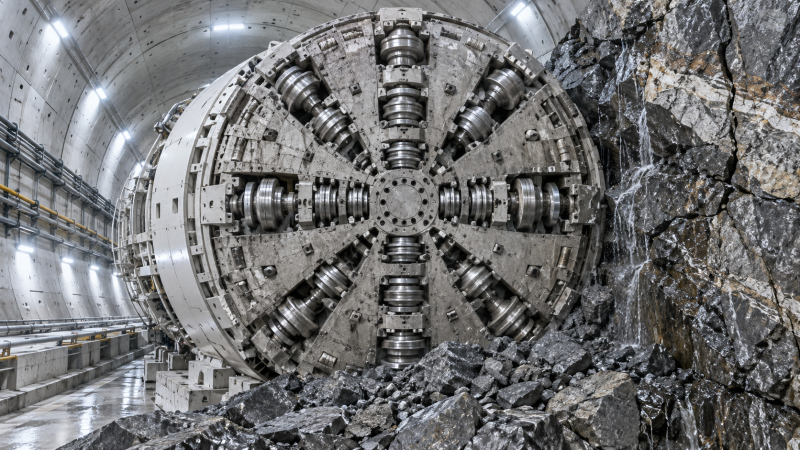
Which Geotechnical Factors Matter Most When Selecting a TBM?
TBM selection begins long before a machine reaches the launch shaft. By the time cutterhead diameter, drive power, backup length, and contractual production targets are being discussed, the decisive questions should already have been asked underground: what is the ground made of, how does it behave under stress, where can water enter, and how abruptly can conditions change along the alignment?
For contractors, owners, and designers, the practical question is not simply “Which machine can excavate this tunnel?” Almost any modern tunnel boring machine can excavate something. The real question is: What geotechnical factors affect TBM selection the most? The answer determines whether a project gets a machine suited to the full ground envelope—or a machine optimized for the most convenient portion of the route and exposed to avoidable delay in the difficult sections.
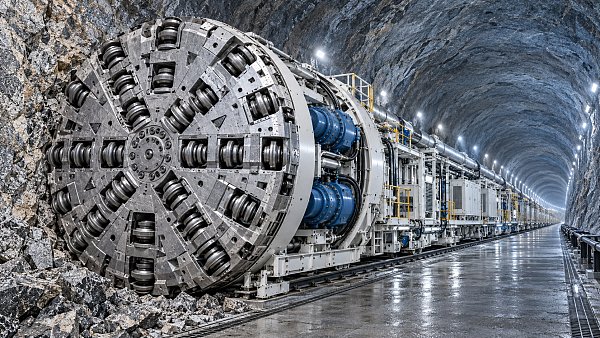
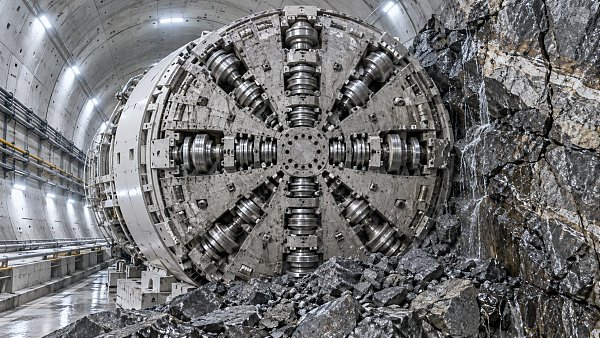
Rock strength, abrasivity, groundwater, fracture patterns, mixed-face transitions, and faulted zones all influence the choice between hard rock, single-shield, double-shield, earth pressure balance (EPB), slurry, and hybrid-capable TBM concepts. They also influence the details that often decide performance: cutter type and spacing, cutterhead opening ratio, face intervention strategy, thrust capacity, segmental lining design, conditioning systems, and probe drilling capability.
Ground Model Before Machine Model
A TBM should not be selected from a geological summary alone. A useful ground model needs to distinguish between lithology, rock mass condition, hydrogeology, in-situ stress, and the probability of change. A route described as “predominantly granite” may still contain weathered seams, dykes, sheared contacts, water-bearing fractures, and short stretches of soft overburden that control the project’s highest-risk decisions.
This is why borehole logs, core recovery, laboratory tests, geological mapping, geophysical interpretation, and historical data from nearby excavations should be read together rather than treated as separate reports. Boreholes remain essential, but their spacing can leave uncertainty between investigation points. The procurement team should therefore ask not only what conditions have been proven, but also what conditions remain plausible.
For long mountain tunnels and urban utility corridors alike, the best machine decision is usually based on a range of expected conditions, with clear operating assumptions for the adverse but credible ground. Designing solely around average conditions can create a low initial equipment price and a high project cost later.
Rock Strength Is Important, but It Is Not the Whole Story
Intact rock strength, commonly assessed through tests such as uniaxial compressive strength, is an obvious starting point. Strong rock generally demands robust cutterhead structure, adequate torque and thrust, and disc cutters capable of maintaining penetration without excessive bearing damage. Very strong formations may slow penetration, increase cutter changes, and raise demands on muck handling and maintenance planning.
Yet strength alone can be misleading. A massive, competent hard rock can be excavated efficiently by a hard rock TBM when it fractures predictably under disc cutters. Conversely, a weaker but heavily broken rock mass may be operationally more difficult because it ravels, squeezes, permits water inflow, or creates unstable cavities ahead of the face. In other words, intact strength helps size the cutting system, while rock mass behavior helps determine whether the machine can safely maintain face control and install support.
The relevant question is not merely “How hard is the rock?” It is “How will this rock break, stand, move, and interact with the shield while excavation advances?” That distinction can change the preferred machine configuration.
Abrasivity Drives Wear, Downtime, and the Cutterhead Strategy
Abrasive ground is often underestimated because it may not present an immediate excavation stability problem. Quartz-rich rock, abrasive sand, and hard mineral inclusions can accelerate wear on disc cutters, scraper tools, cutterhead components, screw conveyors, slurry circuit equipment, and pipework. The consequence is not simply a higher consumables budget. It is more frequent intervention, more exposure to schedule disruption, and greater pressure on the logistics chain for cutters and wear parts.
Abrasion testing and petrographic assessment can inform the likely wear environment, but results should be interpreted alongside grain size, mineral texture, confinement, groundwater, and expected operating mode. An abrasive formation excavated in open mode does not impose exactly the same demands as the same material processed through an EPB or slurry system.
For machine selection, abrasivity affects cutterhead access, the protection of vulnerable components, cutter-change philosophy, and the provision of spare parts. On a long drive, the ability to inspect and replace cutters safely may matter as much as the nominal durability of the cutter itself.
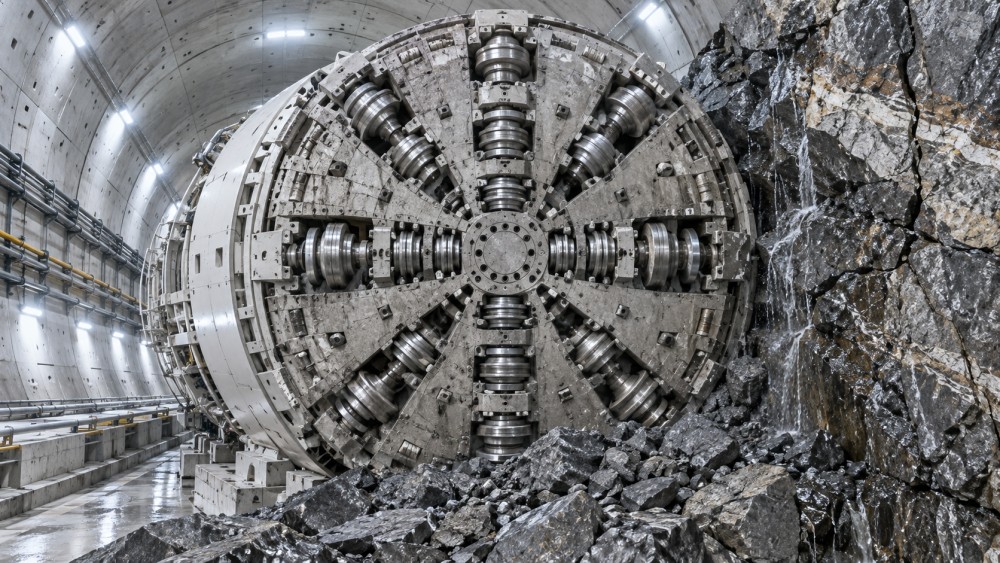
Fractures, Joints, and Fault Zones Often Set the Risk Profile
The orientation, spacing, persistence, filling, and roughness of discontinuities can alter excavation behavior dramatically. Closely jointed rock may overbreak or unravel around the face. Adversely oriented bedding and foliation can create wedges. Clay-filled joints can reduce shear resistance, while crushed fault material may behave more like soil than rock. These conditions affect the choice of shield length, articulation, steering capacity, roof support arrangements, and the need for pre-excavation ground treatment.
Fault zones deserve special attention because they are rarely isolated “events” that can be managed with a single contingency note. They can combine weak ground, high permeability, deformation, and variable boulder content. A machine that performs well in sound bedrock may encounter severe difficulties when a fault causes sudden face instability or water ingress.
For this reason, geological baseline documentation should identify not only known faults but also structural domains where faults are more likely. Machine specifications may then include probe drilling, grout ports, enhanced sealing, additional articulation, conditioning capacity, or procedures for controlled intervention. No specification eliminates uncertainty, but a credible fault strategy makes that uncertainty manageable.
Groundwater Is a Machine-Selection Issue, Not a Dewatering Footnote
Water pressure and permeability are central to face support decisions. In permeable soils below the water table, uncontrolled inflow can cause loss of ground, settlement at the surface, face instability, and damage to surrounding assets. EPB and slurry TBMs are both designed to operate with controlled face pressure, but they manage excavated material in different ways and have different sensitivities to soil type, permeability, fines content, and conditioning.
EPB tunnelling generally relies on excavated material being conditioned into a workable, low-permeability plastic paste that can transmit pressure and be removed through a screw conveyor. It is often well suited to many fine-grained soils and mixed urban deposits, provided the material can be conditioned reliably. Slurry systems use pressurized slurry to support the face and separate spoil through a treatment plant. They can be particularly relevant where water-bearing granular ground and high pressures make face control demanding.
Neither choice should be reduced to a slogan. The right approach depends on groundwater regime, expected pressure, particle-size distribution, clay content, environmental controls, available site footprint, spoil handling, and the consequences of settlement. It also depends on whether the alignment crosses sections where the material changes fast enough to challenge conditioning or separation performance.
Mixed-Face Conditions Test a TBM’s Adaptability
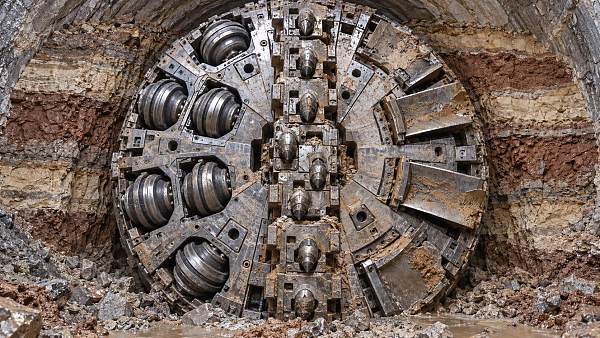
Mixed-face conditions occur when different materials occupy the face at the same time: soil over rock, weathered rock beside competent rock, soft clay around hard boulders, or variable deposits associated with old river channels. These transitions are common near portals, beneath urban development, and along routes that cross complex geological contacts.
They are difficult because the face does not respond uniformly to pressure or cutting action. Hard sections may resist penetration while soft sections deform or flow. Differential cutting can cause machine deviation; uneven loads can raise stress on the cutterhead and drive; and the risk of local over-excavation grows. In pressurized tunnelling, maintaining stable support pressure becomes more complicated when permeability differs across the face.
A credible TBM selection process should identify the expected length, frequency, and severity of mixed-ground zones. This affects cutterhead geometry, tool mix, foam and polymer conditioning capability, torque reserve, steering design, and operational procedures. It may also justify a hybrid or convertible design, although flexibility always needs to be assessed against added complexity, maintenance requirements, and the actual probability of transition.
Squeezing, Swelling, and High Stress Change the Shielding Decision
Deep tunnels can encounter elevated in-situ stresses. In weak rock, these stresses may lead to squeezing ground, where deformation converges around the excavation and grips the shield. In brittle, strong rock, stress release can contribute to spalling or rockburst-related hazards. Some clay-bearing formations may swell when exposed to water, adding another source of deformation and support demand.
These mechanisms influence shield diameter allowance, shield length, articulation, thrust requirements, lining installation timing, and the ability to apply lubrication or overcut where appropriate. A double-shield TBM can offer productivity advantages where stable conditions permit simultaneous boring and segment erection, but severe convergence can complicate shield movement and ring building. In difficult deformation zones, the selected machine and support sequence must be evaluated together rather than as separate packages.
The geological report should therefore be translated into deformation scenarios, not left as a list of rock classifications. Designers and contractors need to consider what happens when the shield skin sees closure, when a segmental ring is erected under load, and when a planned advance rate is no longer realistic.
A Practical Way to Compare the Main Geotechnical Inputs
Treat Interfaces as Seriously as the Machine
TBM selection is sometimes discussed as if the machine operates independently of the rest of the project. It does not. A slurry TBM needs a properly sized separation and slurry management system. An EPB machine needs reliable conditioning materials, conveyor arrangements, and spoil acceptance planning. A hard rock machine requires a realistic approach to muck transport, rock support, cutter logistics, and maintenance access. The machine, backup system, shaft layout, segment supply, power availability, ventilation, and emergency response plan form one operating system.
Geotechnical uncertainty should also appear in contract interfaces. If ground data are incomplete, the commercial model needs transparent assumptions about changed conditions, interventions, ground treatment, and schedule relief. The goal is not to transfer every risk to one party. It is to ensure that the project has an agreed technical basis for responding when reality differs from prediction.
Selection Should Be a Living Decision
A well-chosen TBM is not the one with the most impressive brochure specification. It is the one whose cutting, support, pressure-control, and maintenance strategy match the geological risks that are most likely to govern the drive. Before award, teams should challenge the ground model, define credible adverse scenarios, review interfaces with the construction method, and verify that contingencies are operationally possible rather than merely noted in a risk register.
At TF-Strategy, the TBM discussion is viewed within the wider relationship between machine parameters, construction methodology, and infrastructure delivery risk. That perspective matters because underground performance is rarely decided by a single specification line. It emerges from the fit between geology, mechanical design, site systems, and informed decisions as new ground information appears.
For any proposed drive, the next useful step is to put the geological baseline, hydrogeological interpretation, alignment profile, and preliminary TBM concept on the same review table. If those documents tell different stories, the machine decision is not ready yet.
Related News
 Oct 05, 2026Tunneling Equipment Specification Planning: Key Criteria for Ground and Project RisksEquipment specification planning tunneling: learn how to match TBM systems to ground risks, geometry, safety, logistics, and lifecycle cost for more reliable project delivery.
 Oct 04, 2026Nuclear Lifting Equipment Cost: Budgeting for Compliance, Testing, and Lifecycle RiskNuclear lifting equipment cost explained: budget for compliance, proof-load testing, installation, documentation, and lifecycle risk to make confident procurement decisions.
 Oct 03, 2026How to Assess TBM Manufacturers for Hard-Rock Tunneling Projects?Choose the right tunnel boring machine manufacturer for hard-rock projects. Explore key criteria for design, lifecycle cost, factory quality, and service support.
 Oct 02, 2026How to Evaluate Heavy Equipment Technology Suppliers for Fleet Uptime and SupportHeavy equipment technology suppliers can make or break fleet uptime. Learn how to assess diagnostics, data access, parts, service coverage, and support terms before you buy.
Geological Boring Fellow
Weekly Insights
Stay ahead with our curated technology reports delivered every Monday.