
Can TBM cutter heads be adapted for mixed-face ground conditions without compromising advance rate?

Yes—TBM cutter heads can be adapted for mixed-face ground conditions without compromising advance rate, but only when adaptation is grounded in real-time geological feedback, modular tooling logic, and mechanical design margins—not retrofitting or operational improvisation. This capability isn’t inherent to all TBMs; it emerges from deliberate integration between cutter head kinematics, rock mass response modeling, and on-site tool management discipline. At TF-Strategy, we observe that projects achieving sustained advance rates across transitions—such as sandstone–shale interfaces, faulted granite–schist boundaries, or clay–gravel lenses—share three non-negotiable traits: pre-excavation geotechnical segmentation at ≤5 m resolution, dynamic torque and penetration rate thresholds embedded in control logic, and cutter head configurations that decouple hard-rock cutting from soft-ground excavation rather than attempting hybrid compromise.
Mixed-face conditions are not anomalies—they’re the operational baseline for >68% of urban metro and alpine tunneling projects tracked by our Geological Boring Fellows over the past five years. When a TBM encounters alternating strata within a single 1.2-m excavation cycle, conventional fixed-cone or full-face disc cutter layouts face immediate trade-offs: excessive wear in abrasive zones, clogging in plastic clays, or slurry pressure instability in water-bearing fissures. The result isn’t just slower progress—it’s reactive interventions: frequent shutdowns for manual cleaning, unplanned tool changes mid-bore, or conservative reduction of thrust and rpm that erodes daily advance by 30–45%. These aren’t theoretical risks; they manifest as measurable schedule compression in tender documentation, where contractors now allocate ≥12% of total TBM time for “geological contingency interventions” in mixed-face sections.
What Defines True Adaptability—Not Just Compatibility?
Adaptability begins with recognizing that “mixed-face” is not a single condition but a spectrum defined by two orthogonal variables: spatial scale (strata thickness relative to cutter head diameter) and mechanical contrast (UCS ratio, abrasivity index, and pore pressure differential). A 30-cm band of clay sandwiched between 2-m granite blocks behaves fundamentally differently than a 5-m interbedded sequence of marl and limestone. Cutter head adaptation must respond to both.
Fixed-cone cutter heads—common in EPB and slurry machines—offer limited flexibility. Their geometry assumes uniform material behavior across the entire face. When encountering localized weak zones, they rely on external systems (e.g., foam injection, screw conveyor speed modulation) to manage muck flow, not on intrinsic head configuration. In contrast, modular cutter heads—particularly those with interchangeable tool carriers and segmented radial tool placement—allow targeted allocation: disc cutters concentrated in high-UCS bands, carbide-tipped drag bits in transitional shear zones, and full-face scrapers only where plastic deformation dominates. Crucially, this modularity must be implemented *before* breakthrough—not during.
Advance Rate Preservation Relies on Three Technical Boundaries
Maintaining advance rate hinges less on tool count and more on respecting three physical limits:
- Thrust distribution limit: In mixed-face bores, thrust cannot be uniformly applied. If 40% of the face is competent rock requiring 25 MPa contact stress, while 30% is saturated silt needing <5 MPa to avoid extrusion, the cutter head must enable differential loading—either via segmented hydraulic jacks or passive load-sharing mechanisms built into tool carrier mounts.
- Cutting energy partitioning: Disc cutters consume ~65% of total drive power in hard rock but become inefficient below UCS 40 MPa. Drag bits operate efficiently down to UCS 5 MPa but stall above 80 MPa. A functional mixed-face configuration allocates power *by zone*, not by head rotation. This requires variable-frequency drives per tool group or intelligent gear train splitting—not a single motor driving all tools identically.
- Wear asymmetry tolerance: Uneven wear across the face is inevitable. What matters is whether the system detects and compensates before misalignment exceeds 0.8°—the threshold where cutter head vibration begins degrading guideway accuracy. Real-time acoustic emission monitoring at each tool station, correlated with torque ripple analysis, provides earlier warning than traditional temperature or current sensors alone.
Where Modular Design Falls Short—And Why It’s Still Necessary
Modular cutter heads are essential—but insufficient on their own. We’ve documented cases where contractors installed fully configurable heads yet saw no advance rate improvement because geological models used for tool layout were based on borehole logs spaced >15 m apart, missing thin but critical clay seams. Others deployed high-resolution seismic refraction surveys but failed to integrate the data into the TBM’s control firmware; tool selection remained static across 200 m of variable strata. Adaptation fails not at the hardware level, but at the interface between geological intelligence and machine execution logic.
The most effective deployments use what TF-Strategy terms “closed-loop geological steering”: continuous core logging (via auger sampling behind the shield), real-time RQD updates fed directly into the cutter head controller, and automatic tool engagement mapping updated every 3 m. This isn’t AI-driven prediction—it’s deterministic response to measured parameters. When RQD drops below 45% and SPT-N exceeds 30 in the same interval, the system disables disc cutters in that radial sector and activates scraper blades with increased lateral oscillation. No operator input required. Advance rate remains stable because the machine doesn’t slow down to “figure things out”—it executes pre-validated responses to validated conditions.

Operational Discipline Trumps Mechanical Flexibility
No cutter head configuration compensates for inconsistent tool management. In mixed-face bores, tool life variance can exceed 400% across a single ring: drag bits may last 80 m in clay but fail after 12 m in quartzite veins; disc cutters rated for 300 m in granite may fracture after 45 m when encountering micro-fractured basalt. Contractors maintaining stable advance rates log tool wear per 0.5 m of advance—not per ring—and correlate wear patterns with logged geological units. This enables predictive replacement: swapping tools *before* performance degradation, not after failure. It also reveals whether observed wear aligns with expected strata—flagging discrepancies that point to undetected geological complexity.
Equally critical is muck characterization discipline. Mixed-face muck is rarely homogeneous. A single sample taken from the screw conveyor outlet may show 70% sand content, masking a 15-cm clay lens that caused localized face bulging 20 m back. Effective teams take stratified samples—top, middle, and bottom of conveyor discharge—every 5 m and cross-reference particle size distribution with torque and thrust trends. Deviations trigger immediate re-evaluation of face support pressure and cutter head rpm, not just tool inspection.
When Adaptation Is Not Feasible—And What to Do Instead
There are conditions where even optimized modular cutter heads cannot sustain advance rate: rapid vertical transitions (<1 m) between UCS >150 MPa gneiss and UCS <5 MPa quick clay, or zones where groundwater inflow exceeds 50 L/min/m² under confined pressure >3 bar. In these cases, adaptation shifts from cutter head configuration to excavation methodology. Successful projects deploy sequential excavation—using pilot TBMs or forepoling drills ahead of main bore—to precondition the face, or switch to hybrid modes (e.g., EPB-to-slurry transition) with synchronized shield pressurization adjustments. The decision isn’t made at the tool level; it’s triggered by predefined hydrogeological thresholds embedded in the project’s geological risk register—not vendor brochures.
Ultimately, cutter head adaptability for mixed-face conditions is not about adding more tools or smarter software. It’s about aligning mechanical capability with geological certainty, enforcing operational rigor at the meter scale, and accepting that some ground transitions demand methodological—not just configurational—response. Advance rate is preserved not by forcing uniformity onto heterogeneous ground, but by enabling the machine to express different behaviors in different places—without waiting for human interpretation.
Related News
 Sep 15, 2026How to Evaluate Infrastructure Equipment Suppliers for Complex Project RequirementsInfrastructure equipment solutions supplier evaluation guide for complex projects: assess technical fit, lifecycle cost, reliability, local support, and contract risk.
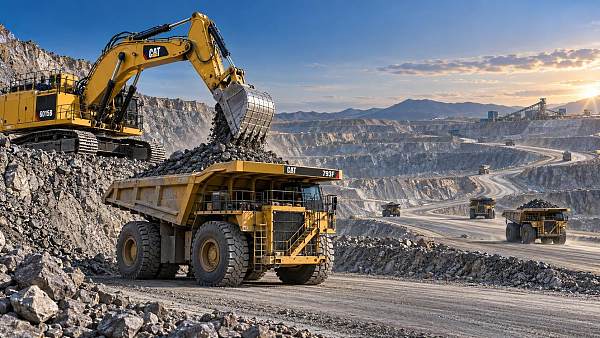
 Sep 14, 2026What Drives Surface Mining Equipment Cost Across a Mine’s Operating Life?Surface mining equipment cost depends on fleet matching, fuel, wear, maintenance, availability, and rebuild timing. Explore lifecycle strategies that protect output and margins.
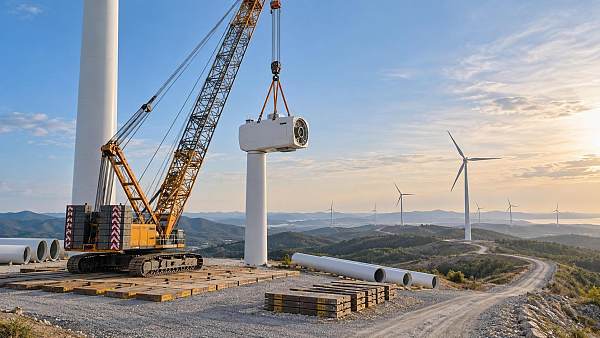
 Sep 13, 2026Crawler Crane Application Analysis for Wind Farms, Bridges, and Confined SitesCrawler crane application analysis for wind farms, bridges, and confined sites—optimize lift paths, ground conditions, access, and schedules for safer project delivery.
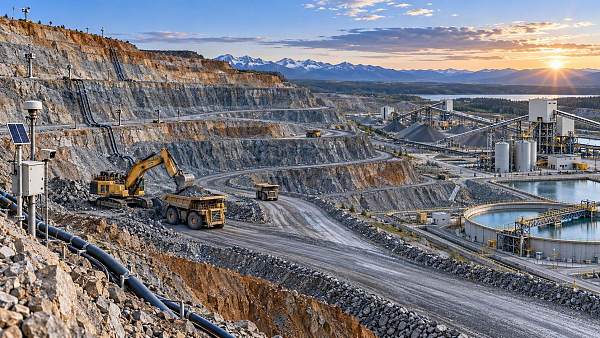
 Sep 12, 2026Open-Pit Mining in North America: Key Project Risks and Planning PrioritiesOpen-pit mining North America: uncover key risks and planning priorities for geology, permitting, water, fleet strategy, and resilient project delivery.



Geological Boring Fellow
Weekly Insights
Stay ahead with our curated technology reports delivered every Monday.