
Wind Lifting Equipment in North America: What to Check for Site Access and Lift Capacity
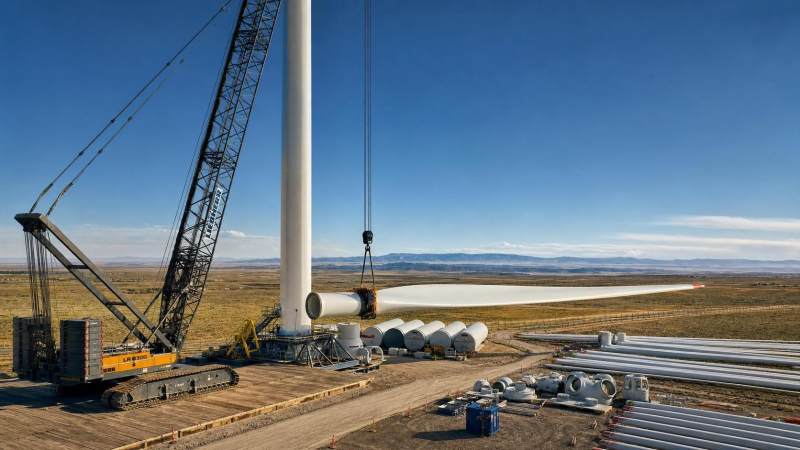
Wind Projects Rarely Fail on Capacity Alone
Selecting wind lifting equipment North America is usually framed around maximum tonnage, yet real project risk starts much earlier.
A crane that looks suitable on paper can become inefficient when access roads tighten, subgrade softens, or assembly space disappears.
That is why wind lifting equipment North America must be judged through site conditions, transport practicality, lift geometry, and installation sequence.
In heavy industry analysis, TF-Strategy often treats crawler cranes as the steel backbone of energy construction, but backbone strength still depends on ground truth.
For wind farms, the right choice links machine parameters with road engineering, weather windows, and turbine component handling.
In practice, the better evaluation method is to ask where the crane will travel, where it will assemble, and how it will actually lift.
Why One North American Site Differs So Much from Another
Wind lifting equipment North America covers very different operating environments, even when turbine ratings look similar.
A flat prairie site may allow long transport trailers, wider turning radii, and simpler crane assembly.
A mountain ridge project changes the equation immediately.
Steep grades, switchbacks, and narrow laydown areas can force smaller component loads, split deliveries, or different boom configurations.
Coastal projects add another layer.
Salt exposure, stronger gust patterns, and stricter weather stoppage thresholds may affect utilization more than nominal crane capacity.
Cold-region work can be equally demanding, especially when frozen surfaces hide thaw-related bearing weakness.
The practical lesson is simple: wind lifting equipment North America should be matched to the site development package, not only to the nacelle weight.
Access Roads Often Decide the Crane Before the Lift Chart Does
More projects run into trouble on approach routes than at the tower pad.
If access design is weak, even premium wind lifting equipment North America can lose days before installation begins.
Route review should cover bridge ratings, overhead lines, culvert limits, turning radius, road width, and seasonal restrictions.
The issue is not only whether the crane can arrive.
It is whether all support trucks, counterweights, boom sections, and assist cranes can arrive in the required sequence.
- Check transported axle loads against county and state restrictions.
- Verify temporary road widening needs at blade and crane turning points.
- Confirm whether escort timing limits disrupt assembly windows.
- Review if imported components require customs timing coordination near borders or ports.
This is where a logistics-centered reading of wind lifting equipment North America becomes more valuable than a brochure comparison.
Ground Bearing Conditions Change Equipment Suitability Fast
Ground pressure is often underestimated because crews focus on lifted load rather than machine reaction load.
Yet for wind lifting equipment North America, bearing capacity can be the real pass-or-fail condition.
Crawler cranes spread load differently from wheeled alternatives, but that does not remove the need for geotechnical checks.
Pads built during dry months may soften after rain or thaw cycles.
On reclaimed land or agricultural conversions, subsurface variability can be wider than expected across the same project.
A useful review includes crane mat design, drainage path, pad compaction records, and the effect of repeated travel on haul roads.
Where transport and lifting share the same corridor, surface rutting can also slow component delivery.
Common conditions and what they change
Lift Capacity Must Be Read in Real Geometry, Not Marketing Geometry
The phrase wind lifting equipment North America often leads buyers toward headline capacity, but turbine erection depends on radius, hook height, and wind restrictions.
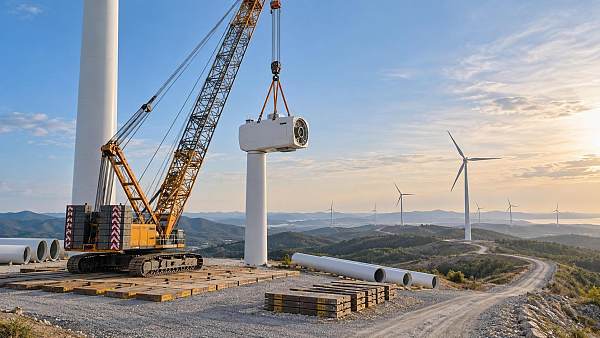
A crane may handle a nacelle at one radius and fail at the actual radius created by pad limits or tandem setup needs.
That is especially true as hub heights rise and rotor diameters expand.
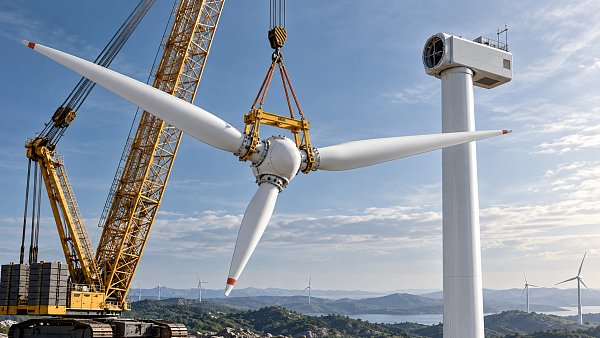
Longer blades also change rigging behavior during pickup, tailing, and final positioning.
In real site reviews, the lift chart should be checked against complete erection sequence, not isolated component weights.
- Use gross lifted weight, including rigging, lifting beams, hooks, and contingency.
- Apply the actual site radius after accounting for pad edge limits.
- Confirm boom and jib options against transport and assembly constraints.
- Review allowable wind speeds for each critical lift stage.
This more disciplined method keeps wind lifting equipment North America aligned with execution reality.
Different Project Setups Need Different Crane Strategies
Not every wind farm benefits from the same lifting concept.
Projects with repeated turbine layouts and generous pad spacing may justify a larger crawler with fewer crane changes.
More fragmented sites often favor a strategy that reduces dismantling time, support fleet size, or inter-turbine travel complexity.
This is where wind lifting equipment North America should be evaluated as a fleet and process question, not a single asset question.
Where Evaluations Commonly Go Wrong
One frequent mistake is assuming similar turbine sizes create similar crane requirements.
They do not, because road geometry, erection sequence, and weather thresholds reshape the job.
Another mistake is treating mobilization as a secondary cost line.
For wind lifting equipment North America, mobilization can drive schedule exposure, permit complexity, and site-preparation burden.
A third error is checking tower lifts and nacelle lifts carefully, then underestimating blade handling.
Blade orientation, tag-line control, and local gust behavior can become the tighter constraint.
It is also common to rely on idealized lift charts without matching them to derating factors, operator procedures, and local safety rules.
In TF-Strategy style equipment intelligence, this is where physical parameters need to be stitched to construction methodology, not read separately.
A Practical Way to Shortlist Wind Lifting Equipment North America
A workable shortlist usually starts with three linked files: site civil drawings, transport route constraints, and full turbine erection data.
From there, compare wind lifting equipment North America using actual project conditions rather than generalized crane classes.
- Map the heaviest and highest-risk lifts first.
- Test route viability for every major crane component.
- Confirm pad size, bearing capacity, and leveling requirement at each turbine position.
- Check whether weather downtime changes the preferred crane size or quantity.
- Compare mobilization, assembly, and demobilization time against the project schedule.
- Review total cost of execution, not only rental or ownership cost.
This approach usually reveals whether a larger crane truly improves productivity, or only adds transport and ground-preparation burden.
Before Final Selection, Build a Site-Specific Decision Standard
The strongest decisions on wind lifting equipment North America come from a site-specific checklist rather than a generic equipment preference.
That checklist should tie lift geometry, access limits, pad engineering, weather exposure, and erection sequence into one review path.
Where conditions vary across the same wind farm, zoning the site into access and bearing categories is often more reliable than one global equipment assumption.
The next useful step is to rank each turbine position by route difficulty, ground risk, and lift complexity.
That makes it easier to compare crane options, identify weak points early, and reduce avoidable schedule loss.
For projects tracking the broader heavy-equipment landscape through TF-Strategy, the same principle applies across sectors: machine power matters most when it is matched to execution reality.
Related News
 Sep 29, 2026Infrastructure Construction Standards: A Project Manager’s Guide to ComplianceInfrastructure construction standards guide for project managers: turn requirements into field controls, hold points, traceability, and compliant delivery.
 Sep 28, 2026How to Specify Custom Mining Equipment for Abrasive Ground and High-Load HaulageCustom mining equipment for abrasive ground and high-load haulage: learn how to optimize payload, wear protection, powertrains, uptime, and lifecycle cost for safer, reliable production.
 Sep 29, 2026What belongs in a construction equipment package sourcing plan?Construction equipment package planning sourcing guide: learn how to match machines, attachments, site conditions, supplier support, costs, and acceptance gates for reliable project delivery.
 Sep 29, 2026How to verify equipment durability before approving suppliers at scaleHow can heavy equipment manufacturers verify durability and manage supplier risk at scale? Explore practical testing, traceability, audits, and control strategies.
Structural Load Expert
Weekly Insights
Stay ahead with our curated technology reports delivered every Monday.