
ASME Nuclear Component Lifting Solutions: Key Compliance Points and Design Limits
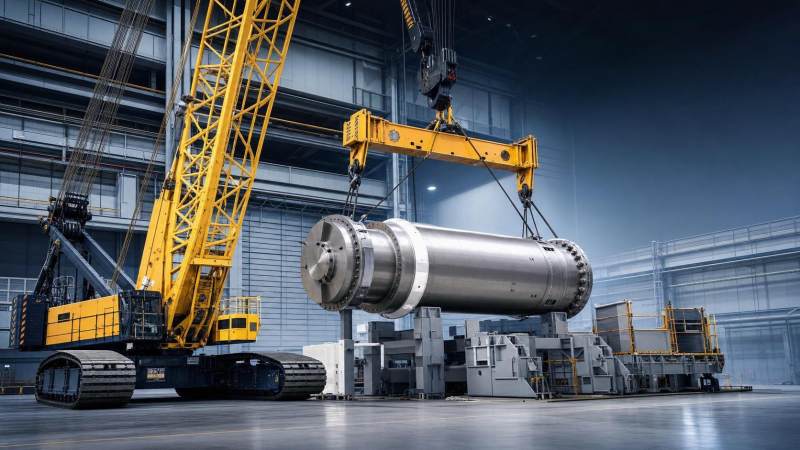
For nuclear lifting work, compliance is never a paperwork exercise. In practice, nuclear component lifting solutions ASME requirements define where design responsibility starts, where operational limits end, and how risk is controlled before a load ever leaves its support point.
That matters more now because nuclear projects are moving through tighter schedules, heavier module strategies, and stronger scrutiny from owners, regulators, insurers, and EPC teams. In this environment, lifting plans must connect structural calculations, rigging details, crane capability, and documented acceptance criteria.
From the perspective of TF-Strategy, which tracks crawler cranes and other ultra-large lifting systems across global infrastructure, nuclear lifting sits at the point where power, precision, and traceability must work together. A compliant lift is not only a mechanical event. It is also a controlled engineering decision.
Why ASME Framing Matters in Nuclear Lifting
When people discuss nuclear component lifting solutions ASME usually enters the conversation for one reason: the load is too critical for informal judgment. Reactor vessels, steam generators, pumps, casks, shielding structures, and large modules carry high consequence if handling assumptions are wrong.
ASME-based expectations help create a common technical language. They guide how lifting devices are designed, rated, inspected, tested, marked, and used. They also help separate what belongs to the crane manufacturer, the lifting beam designer, the rigging supplier, and the lifting authority on site.
In nuclear work, the issue is rarely the nominal weight alone. The real challenge comes from load path sensitivity, center-of-gravity uncertainty, limited clearances, seismic or environmental constraints, contamination controls, and the need for auditable records.
What Nuclear Component Lifting Solutions Actually Include
The phrase nuclear component lifting solutions ASME should not be reduced to a spreader beam or a hook. It usually covers the full engineered handling system around the component.
That system often includes below-the-hook devices, lift lugs, trunnions, shackles, slings, special yokes, motion controls, temporary supports, and procedural hold points. In more complex projects, it also includes transport interface fixtures and staged lifting arrangements.
The design package has to address more than capacity. It needs load combinations, dynamic effects, side loading restrictions, material traceability, weld qualification, NDE requirements, inspection access, and proof testing logic.
Typical objects and lifting conditions
The Compliance Points That Usually Decide Acceptance
In review practice, acceptance often turns on a manageable number of issues. Teams that miss them tend to face redesign, delayed approvals, or field restrictions.
Rated load and design basis
The rated load must be tied to a clear engineering basis. That means actual component weight, rigging weight, uncertainty allowance, and expected dynamic effects should all be visible in the calculation package.
A common weakness is using a clean catalog capacity while ignoring handling realities. Nuclear component lifting solutions ASME reviews usually expect a traceable path from design assumptions to site execution limits.
Material control and fabrication quality
Material certificates, weld procedures, welder qualifications, heat treatment records, and NDE results are not side documents. For nuclear lifting devices, they are part of the evidence that the rated capacity can be trusted.
This becomes especially important for custom lifting beams and lugs. If traceability breaks, confidence in the entire device drops, even when the geometry appears adequate.
Inspection, testing, and marking
Proof testing, dimensional verification, identification marking, and pre-use inspection criteria should be specified before fabrication ends. Otherwise, project teams often discover that the device cannot be accepted without rework or incomplete documentation.
Marking should connect the physical item to drawings, certificates, and revision status. That simple control point prevents many field-level mix-ups.
Where Design Limits Commonly Get Misread
The phrase design limit sounds straightforward, but it is often misunderstood. A lifting device may satisfy static capacity and still be unacceptable in service.
Nuclear component lifting solutions ASME reviews tend to focus on the margins between theory and actual use. That includes motion, alignment, tolerance stack-up, and unintended loading.
- Side loads created by crane drift, unequal sling lengths, or uneven pick points.
- Local overstress at lugs, trunnions, pin holes, or weld toes.
- Reduced capacity caused by temperature, corrosion allowance, or service degradation.
- Interference between the load and nearby structures during rotation or upending.
- Elastic deflection that changes sling angles and redistributes force.
In actual projects, these are not minor details. They are often the reasons a lift must be re-sequenced, re-engineered, or downgraded to a more conservative operating window.
Why Heavy Equipment Intelligence Improves Nuclear Lift Decisions
Nuclear lifting does not happen in isolation from the wider heavy equipment market. Crane selection, logistics windows, modular construction trends, and fabrication lead times all influence the final handling strategy.
That is where a broader intelligence view becomes useful. TF-Strategy follows crawler crane deployment, major industrial lifts, and infrastructure delivery patterns across sectors such as wind, petrochemical, mining, and tunneling.
Those cross-sector signals matter because nuclear projects increasingly compete for the same high-capacity lifting resources and engineered transport expertise. Knowing equipment availability, typical boom configurations, and site logistics constraints can sharpen early design choices.
In other words, good compliance work is stronger when it is informed by both code discipline and real market conditions.
Practical Review Points Before a Lift Plan Is Released
A useful review does more than confirm that calculations exist. It tests whether the planned lift can survive contact with site reality.
Questions worth resolving early
- Is the component weight backed by latest fabrication status and installed internals?
- Does the center of gravity reflect temporary attachments and rigging?
- Are allowable loads on lugs and supports checked for every lift phase?
- Do crane charts match the actual radius, boom mode, and environmental limits?
- Are hold points defined for inspection, test evidence, and final release?
- Can the full document set be audited without missing revisions or certificates?
These checks sound basic, yet they are the backbone of reliable nuclear component lifting solutions ASME implementation. Most field problems trace back to one of them.
How to Read Compliance as a Business Control
It is tempting to see ASME alignment only as a safety obligation. The stronger view is that it also protects schedule, claims position, and asset reputation.
When nuclear component lifting solutions ASME requirements are translated into procurement language, fabrication controls, and pre-lift verification, project teams reduce late redesign and avoidable lift cancellations. That has measurable value on high-capex sites.
For owners and contractors, the gain is not abstract. Better-defined design limits support cleaner approvals, more credible contractor evaluation, and stronger confidence in critical path handling operations.
What to Prioritize Next
The next step is usually not adding more documents. It is identifying where the current lifting basis is still assumed rather than demonstrated.
Start with the highest consequence components, then compare design assumptions, fabrication records, crane constraints, and lift sequence details in one review path. That approach exposes gaps faster than checking each package separately.
For teams following global heavy equipment and infrastructure trends through TF-Strategy, the most useful signal is this: nuclear lifting performance depends on disciplined standards work plus accurate understanding of real equipment, real sites, and real limits. That is where compliance becomes operational strength.
Related News
 Oct 02, 2026How to Evaluate Heavy Equipment Technology Suppliers for Fleet Uptime and SupportHeavy equipment technology suppliers can make or break fleet uptime. Learn how to assess diagnostics, data access, parts, service coverage, and support terms before you buy.
 Oct 01, 2026How to Use Technical References to Benchmark Industrial Equipment PricesIndustrial equipment technical reference pricing: learn how to normalize specifications, scope, service life, and operating costs to benchmark quotes accurately and choose the best-value equipment.
 Sep 30, 2026What Does an Ultra-Large Excavator Really Cost Over Its Service Life?Ultra-large excavators cost far more than purchase price. Explore lifecycle expenses, uptime risks, energy use, maintenance, and cost-per-tonne insights.
 Sep 29, 2026Infrastructure Construction Standards: A Project Manager’s Guide to ComplianceInfrastructure construction standards guide for project managers: turn requirements into field controls, hold points, traceability, and compliant delivery.

Structural Load Expert
Weekly Insights
Stay ahead with our curated technology reports delivered every Monday.