
Crawler Crane Manufacturer Selection Guide: Key Specs, Support, and Jobsite Fit
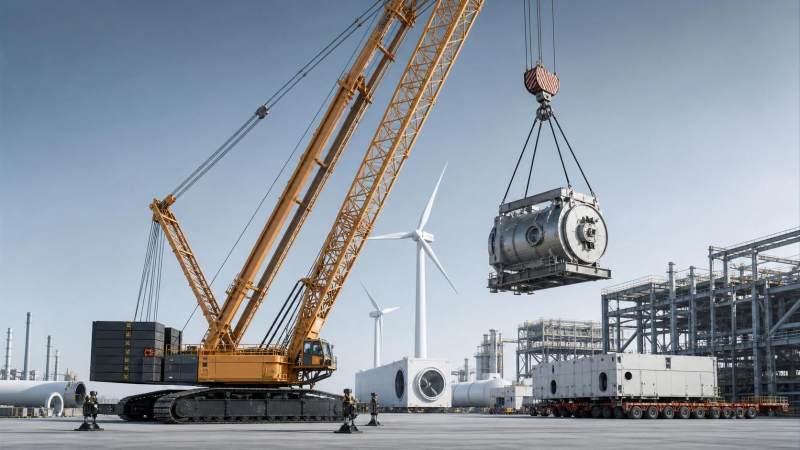
Crawler Crane Manufacturer Selection Guide: Key Specs, Support, and Jobsite Fit
Choosing the right crawler crane manufacturer is more than comparing rated loads.
In technical evaluation, the real answer sits inside performance limits, service depth, and project fit.
A crane may look strong on paper, yet still fail a wind farm lift plan or refinery shutdown schedule.
That is why manufacturer selection should connect specifications, transportability, controls, support response, and local operating realities.
For projects in wind, nuclear, petrochemical, and heavy civil construction, the margin for mismatch is small.
This guide breaks down how to assess a crawler crane manufacturer with a practical, decision-ready approach.
Start With Application Reality, Not Brochure Rankings
Every crawler crane manufacturer presents maximum capacity figures.
Those figures matter, but they rarely decide field performance on their own.
The first question is simple: what exactly must the crane do on the actual site?
A wind project may require long boom combinations and high hook heights.
A petrochemical job may value tight-radius lifting in congested spaces.
A nuclear or modular construction project may prioritize precision, redundancy, and traceable maintenance records.
This changes the evaluation logic.
Instead of asking which crawler crane manufacturer is biggest, ask which one fits the lift profile with the least operational compromise.
Useful starting filters include:
- Typical load weight, radius, and hook height
- Frequency of assembly and disassembly
- Ground bearing limits and travel path restrictions
- Transport envelope, axle limits, and port access
- Required safety documentation and digital reporting
Once these are defined, comparisons become sharper and far more realistic.
Key Technical Specs That Actually Affect Selection
A reliable crawler crane manufacturer should provide detailed, transparent technical data.
If the data package is vague, the risk usually appears later in execution.
Lift Charts and De-Rating Logic
Lift charts are the center of technical review.
Check capacities across the exact boom lengths, jib setups, and working radii you expect.
Also verify de-rating factors for wind, side loading, and special lifting attachments.
A strong crawler crane manufacturer explains not only the chart, but the conditions behind it.
Ground Pressure and Track Configuration
Ground pressure matters more than many early evaluations assume.
Soft ground, temporary pads, and partially improved surfaces can limit crane choice fast.
Review track width, counterweight options, and load distribution during travel and lifting.
The better crawler crane manufacturer will support bearing pressure calculations early.
Boom System, Jib Options, and Modular Flexibility
Different projects need different front-end configurations.
Look at main boom lengths, luffing jib combinations, fixed jib compatibility, and quick-change efficiency.
This is especially important for contractors moving across mixed project portfolios.
Powertrain, Controls, and Safety Systems
Control quality directly affects precision and setup confidence.
Review engine performance, hydraulic smoothness, load moment indicators, anti-two-block systems, and fault diagnostics.
A modern crawler crane manufacturer should also offer clear telematics and event logging.
That becomes valuable during audits, preventive maintenance, and incident review.
Transport and Assembly: Where Good Specs Can Still Fail
From recent market shifts, transport complexity has become a bigger selection factor.
Ports are congested, road permits are tighter, and project schedules leave less room for delay.
That means a crawler crane manufacturer must be judged on logistics, not just lifting.
Focus on these points:
- Shipping dimensions for boom sections, crawlers, carbody, and counterweights
- Number of trucks or containers required
- Assembly time under normal site conditions
- Need for assist cranes during erection
- Availability of local rigging instructions and certified procedures
In practice, easier assembly can improve utilization more than a small increase in rated capacity.
This is one area where an experienced crawler crane manufacturer often stands out quickly.
After-Sales Support Is a Core Technical Variable
Support quality is not a soft issue.
For high-value lifting equipment, it is a direct uptime variable.
A crawler crane manufacturer with weak support can turn a manageable fault into a multi-day project disruption.
Evaluate support using measurable criteria:
- Regional spare parts inventory depth
- Field technician response time
- Remote diagnostics capability
- Operator and maintenance training programs
- Documentation quality in the required language
- Warranty terms for major hydraulic and structural components
More importantly, ask for proof.
Service maps, parts lead times, customer references, and training records reveal much more than sales claims.
For remote mining or energy sites, support depth may outweigh a lower purchase price.
How to Compare a Crawler Crane Manufacturer Across Jobsite Types
Not every crawler crane manufacturer performs equally across all sectors.
The right choice often depends on where the crane will live most of its service life.
This is where contextual evaluation beats generic ranking lists.
A strong crawler crane manufacturer in one segment may be only average in another.
A Practical Evaluation Framework for Decision Teams
To keep selection disciplined, use a weighted comparison model.
This reduces bias toward headline capacity or aggressive commercial pricing.
A workable structure looks like this:
- Define the main lift cases and non-negotiable site constraints.
- Shortlist each crawler crane manufacturer by chart fit, not branding.
- Score transport, assembly, and local compliance readiness.
- Score support network, parts access, and technician response.
- Review lifecycle cost, including downtime risk and resale outlook.
- Request references from similar project types and tonnage classes.
This approach brings commercial and technical judgment into the same decision frame.
It also makes internal approval easier when project stakeholders ask why one option was chosen.
Final Decision: Look for Fit, Proof, and Support Depth
The best crawler crane manufacturer is rarely the one with the most impressive brochure headline.
The better choice is the one that matches your lift cases, site limits, logistics path, and uptime expectations.
That means checking hard data, validating field support, and testing whether the machine fits the full project system.
In real projects, fit usually wins over raw specification theater.
Use the crawler crane manufacturer selection process to eliminate uncertainty before mobilization, not after it.
When the evaluation focuses on lift charts, transport logic, controls, service evidence, and jobsite fit, decision quality improves noticeably.
Related News
 Sep 27, 2026Heavy Equipment Selection Factors for Matching Machine Capacity to Jobsite ConditionsHeavy equipment selection factors for matching capacity to jobsite conditions, improving productivity, safety, fleet efficiency, and total project cost control.
 Sep 26, 2026How to Select Wind Rotor Lifting Equipment for Safe Blade and Hub InstallationWind rotor lifting equipment selection guide: ensure safe blade and hub installation with the right lift method, load control, crane compatibility, wind limits, and compliance.
 Sep 25, 2026What Drives Heavy Haulage Cost on Oversized Construction Equipment Moves?Heavy haulage cost explained: discover how load dimensions, route surveys, permits, escorts, lifting plans, and scheduling shape reliable oversized equipment transport budgets.
 Sep 24, 2026Supplier Management Frameworks That Reduce Delays on Large Construction ProjectsLarge-scale construction projects supplier management frameworks help prevent costly delays with risk-based controls, milestone tracking, quality oversight, and escalation plans for critical packages.

Structural Load Expert
Weekly Insights
Stay ahead with our curated technology reports delivered every Monday.