
Are heavy equipment auction deals worth the hidden risks?
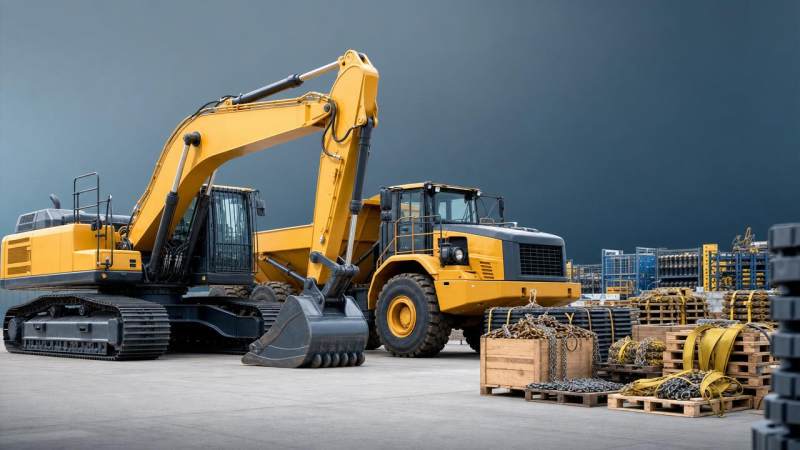
A heavy equipment auction can reduce entry cost fast, yet price alone rarely defines value. Hidden wear, weak documentation, transport exposure, and compliance gaps can turn a low bid into an expensive operational mistake.
In heavy industry, that risk matters more than ever. Project schedules are tighter, machine utilization targets are higher, and downtime now affects contract performance, fuel efficiency, safety, and total cost of ownership.
For market researchers and infrastructure decision makers, the central question is clear: are heavy equipment auction deals truly worth the hidden risks, or only when supported by disciplined intelligence?
Why the heavy equipment auction market is changing
The heavy equipment auction landscape is no longer driven only by distressed sales or fleet rotation. It now reflects broader shifts across mining, tunneling, road building, lifting, and global infrastructure investment cycles.
Digital bidding platforms have widened access. Cross-border buyers can compete for excavators, dump trucks, crawler cranes, and support assets without visiting the yard. That speed creates opportunity, but also reduces physical inspection depth.
At the same time, contractors seek lower capital intensity. Used machinery from a heavy equipment auction may help preserve cash during uncertain commodity prices, delayed payments, or uneven project pipelines.
Another change comes from technology divergence. Newer machines often include telematics, emissions controls, and software dependencies. Older auction units may look affordable, yet integration into modern fleets can be difficult and costly.
The hidden risks behind a low heavy equipment auction bid
A winning bid is only the visible part of the transaction. The deeper financial picture includes condition uncertainty, parts availability, shipping, taxes, reconditioning, delayed deployment, and operator adaptation.
Common risk factors shaping real deal value
These issues are especially relevant for large assets. In mining trucks, crawler cranes, and high-hour excavators, one hidden defect can erase the discount achieved through the heavy equipment auction process.
What is driving more buyers toward heavy equipment auction channels
Despite the risks, auction activity keeps growing because the market solves several real constraints at once: access, timing, pricing transparency, and secondary-market liquidity.
- Project volatility encourages flexible asset acquisition instead of full-price new purchases.
- Global fleet renewal releases usable machines into resale channels.
- Online marketplaces make a heavy equipment auction searchable across regions and categories.
- Financing pressure pushes buyers to target lower upfront spending.
- Niche applications may not justify new-equipment lead times or premium pricing.
This trend is visible across integrated infrastructure chains. Earthmoving, lifting, road machinery, and quarry operations often need capacity quickly, but not always on a long depreciation horizon.
When heavy equipment auction deals make strategic sense
A heavy equipment auction can be a smart move when the machine’s role, lifecycle stage, and site requirement are clearly defined. Value appears when acquisition discipline matches operational reality.
Conditions that support a worthwhile auction purchase
- The machine will serve a short or medium project window.
- Inspection evidence is available through reports, videos, telematics, or trusted local assessors.
- Required parts and service support exist in the target region.
- Transport and commissioning costs have been calculated before bidding.
- The asset type has predictable wear patterns and stable residual value.
For example, standard excavators, wheel loaders, and certain road machines often fit auction channels better than highly customized units. Specialized tunneling or extreme-lift assets require much deeper technical review.
Where hidden risks hit different business links the hardest
The effects of a poor heavy equipment auction purchase are not limited to repair invoices. They spread across planning, execution, safety, and contract performance.
In project delivery, a machine arriving late or failing acceptance checks can stall earthworks, hauling, or lifting sequences. One delayed unit may disrupt several dependent work fronts.
In operations, hidden defects increase fuel burn, reduce cycle efficiency, and create unplanned maintenance intervals. That lowers utilization and raises the effective cost per productive hour.
In compliance, undocumented modifications or emissions mismatches may block site access. Cross-border transfers are especially sensitive when serial data, customs declarations, and certificates do not align.
In resale strategy, a badly chosen heavy equipment auction asset can become illiquid. Buyers may face another discount later because the machine lacks records, support, or recognized market acceptance.
Signals that separate opportunity from risk in a heavy equipment auction
The best decisions come from comparing visible price with invisible evidence. Several signals help distinguish a genuine value purchase from a risky bargain.
- Consistent hour-meter logic relative to wear points and service intervals.
- Clear ownership chain and unbroken serial documentation.
- Photographic evidence of undercarriage, boom joints, tires, cab, and hydraulic lines.
- Service records showing component replacement, not just routine fluid changes.
- Telematics data or utilization history matching claimed application conditions.
- Local dealer confirmation for filters, pumps, seals, software, and major assemblies.
In strategic intelligence work, these signals matter because they connect equipment condition to project suitability. A cheap unit without evidence is not a low-cost asset; it is an unpriced risk position.
What to prioritize before placing a heavy equipment auction bid
This framework helps transform a heavy equipment auction decision from a price chase into an asset strategy. The goal is not simply winning the bid. The goal is winning dependable production.
A practical judgment: worth it, but only with intelligence discipline
So, are heavy equipment auction deals worth the hidden risks? Yes, but only when market access is matched by strong technical screening, cost modeling, and deployment planning.
Without that discipline, auction savings can disappear through repair events, transport overruns, compliance barriers, and lost site productivity. In that case, the cheapest machine becomes the most expensive choice.
With disciplined intelligence, however, a heavy equipment auction can support flexible expansion, faster project mobilization, and better capital efficiency across mining, lifting, tunneling support, and road construction operations.
The next step is simple: evaluate each listing as a full operational asset, not a discounted object. In heavy industry, real value comes from evidence, supportability, and fit with the work ahead.
Related News
 Oct 06, 2026Selecting Petrochemical Overhead Cranes for Hazardous Areas and Heavy Process LoadsPetrochemical overhead cranes for hazardous areas: learn how to match capacity, duty, controls, corrosion protection, and maintenance access for safer, reliable lifts.
 Oct 05, 2026Tunneling Equipment Specification Planning: Key Criteria for Ground and Project RisksEquipment specification planning tunneling: learn how to match TBM systems to ground risks, geometry, safety, logistics, and lifecycle cost for more reliable project delivery.
 Oct 04, 2026Nuclear Lifting Equipment Cost: Budgeting for Compliance, Testing, and Lifecycle RiskNuclear lifting equipment cost explained: budget for compliance, proof-load testing, installation, documentation, and lifecycle risk to make confident procurement decisions.
 Oct 03, 2026How to Assess TBM Manufacturers for Hard-Rock Tunneling Projects?Choose the right tunnel boring machine manufacturer for hard-rock projects. Explore key criteria for design, lifecycle cost, factory quality, and service support.
Ms. Elena Rodriguez
Weekly Insights
Stay ahead with our curated technology reports delivered every Monday.