
When geotechnical engineering consulting prevents costly delays
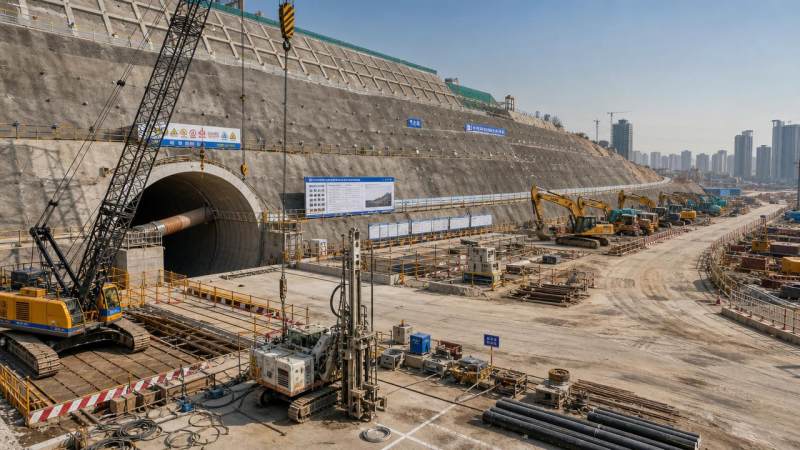
In complex infrastructure projects, small ground uncertainties can trigger major budget overruns and schedule setbacks. Geotechnical engineering consulting helps project leaders identify subsurface risks early, align design with site realities, and make faster, better-informed decisions. For managers responsible for delivery, cost control, and safety, it is often the difference between smooth execution and costly delays.
For project managers overseeing tunnels, open-pit mines, heavy lifting pads, haul roads, and large civil foundations, subsurface conditions are rarely a minor technical detail. They influence excavation methods, equipment selection, dewatering plans, support systems, crane working platforms, and the pace of construction from day 1 through commissioning.
In sectors tracked closely by TF-Strategy, where TBM deployment, ultra-large excavation, crawler crane lifting, and mining logistics depend on stable ground behavior, geotechnical engineering consulting supports more than compliance. It provides the decision framework that connects site investigation results with construction sequencing, risk allocation, and capital efficiency.
This article explains why early geotechnical input reduces delay risk, where consulting creates measurable value, how project leaders should evaluate providers, and what implementation steps matter most when time windows are tight and asset utilization costs are high.
Why geotechnical engineering consulting matters before construction starts
Many project delays begin long before visible construction starts. A site may appear straightforward on the surface, yet hidden variability in rock strength, groundwater pressure, fill quality, or slope stability can force redesign after contracts are signed. In practical terms, a 2-week investigation gap can become a 2- to 4-month construction disruption.
Geotechnical engineering consulting reduces that exposure by converting fragmented borehole, lab, hydrogeology, and topographic data into usable project decisions. The main benefit is not merely producing a report; it is turning uncertain ground into defined design assumptions, measurable construction limits, and actionable contingency planning.
Typical delay drivers hidden below grade
For project leaders, the most expensive problems are often the ones that emerge after mobilization. A TBM launch shaft can encounter water-bearing strata not reflected in preliminary mapping. A crawler crane pad can settle beyond tolerance under repeated heavy lifts. A mine haul road can deform under seasonal moisture cycling, reducing payload efficiency and increasing tire wear.
- Unexpected groundwater inflow requiring emergency pumping and support changes
- Weak fill or collapsible soils beneath temporary works and access roads
- Variable rock mass quality affecting blasting, ripping, or TBM cutter consumption
- Slope instability near excavation faces, stockpiles, or crane assembly areas
- Differential settlement under equipment foundations, heavy pads, or retaining systems
Each of these issues can affect 3 core project metrics at once: schedule, direct cost, and safety exposure. On major infrastructure programs, even a single redesign cycle can delay procurement by 10 to 21 days, especially when support systems, anchors, liners, or dewatering packages need revised approvals.
How consulting changes decision quality
Good geotechnical engineering consulting improves the quality of decisions at the concept, tender, and execution stages. At concept stage, it helps define investigation scope and likely ground classes. At tender stage, it supports realistic quantities, method statements, and risk sharing. During execution, it helps teams interpret field changes without overreacting or underestimating the hazard.
This is especially important in heavy industry environments where machinery decisions involve high daily ownership and operating costs. If a large TBM crew, a 600-ton to 1,600-ton crawler crane setup, or a fleet of mining dump trucks waits on unresolved ground issues, delay costs compound quickly through idle labor, standby equipment, and disrupted interfaces.
Where early consulting delivers the fastest payback
The fastest return usually appears in projects with deep excavation, tunneling, large foundations, temporary heavy load platforms, water-sensitive sites, or steep cut slopes. In these environments, a targeted investigation program completed 4 to 8 weeks earlier can prevent multiple downstream design revisions.
The table below shows how common geotechnical uncertainties translate into operational delays for infrastructure and heavy equipment projects.
The key pattern is clear: most delays are not caused by geology alone, but by late recognition of geology in relation to construction method. That is where geotechnical engineering consulting creates management value, because it translates field conditions into sequencing, design, procurement, and safety decisions before the site team is forced into reactive changes.
Where project managers see the strongest operational benefit
Project managers are judged on delivery certainty, not only technical correctness. From that perspective, geotechnical engineering consulting is most valuable when it helps teams protect critical path activities, maintain heavy equipment productivity, and reduce uncertainty in contracts and change management.
Tunneling and TBM launch environments
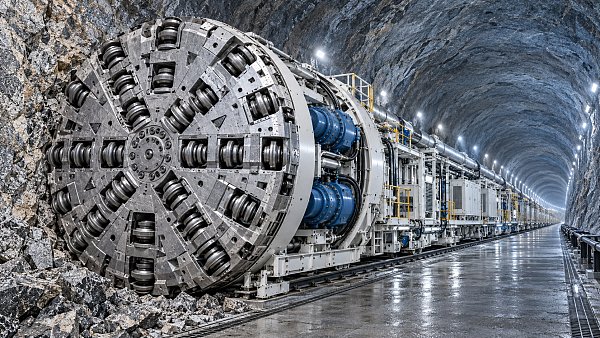
In urban and mountain tunneling, small geotechnical errors can trigger disproportionate consequences. A mismatch between expected and actual rock abrasivity may accelerate cutter wear. An underassessed mixed-face condition may slow penetration rates. Unexpected inflows at a launch or reception shaft can halt work for 48 to 72 hours while support and pumping measures are upgraded.
For TBM-linked programs, consulting should cover borehole spacing logic, groundwater regime interpretation, overburden variation, fault or fractured zone risk, and likely interaction between geology and cutterhead performance. This does not eliminate uncertainty, but it narrows the range enough for better planning of spares, interventions, and shaft support systems.
Open-pit mining and haul infrastructure
In open-pit operations, geotechnical engineering consulting affects more than slope design. It also influences bench stability, ramp drainage, dump point integrity, and ground support for ultra-large excavators and mining dump trucks. A haul route with recurring saturation can reduce average cycle efficiency by several percentage points and increase maintenance frequency across tires, suspensions, and road surfaces.
Mine operators and EPC teams benefit when consultants integrate geotechnical mapping with drainage, traffic loading, and seasonal behavior. Even a 100 mm to 200 mm change in subgrade performance assumptions can alter road maintenance intervals, water management needs, and equipment utilization planning.
Heavy lifting pads and temporary works
For crawler cranes used in wind, petrochemical, or nuclear component lifting, ground conditions beneath working platforms are mission-critical. Outrigger pressures, track loads, repeated slewing, and staged assembly can push temporary pad designs close to tolerance limits. If settlement exceeds the expected range, lifting plans may need recalculation before operations resume.
In these cases, geotechnical engineering consulting should define not only allowable bearing assumptions, but also compaction criteria, moisture control triggers, drainage measures, and monitoring frequency. A platform checked once before mobilization may not be enough if rainfall events or repeated loading alter performance over a 2- to 6-week lifting campaign.
Operational gains by project type
The next table outlines where consulting input most directly supports schedule protection and equipment efficiency across common heavy infrastructure scenarios.
Across all four scenarios, the strongest advantage is predictability. Geotechnical engineering consulting does not remove all field surprises, but it narrows the uncertainty range enough for managers to protect milestones, labor allocation, and machinery deployment plans with more confidence.
How to choose the right geotechnical engineering consulting partner
Not all consultants deliver equal value to project leadership. Some are technically sound but disconnected from construction reality. Others produce fast outputs with insufficient field depth. The right provider combines subsurface expertise with an understanding of equipment interfaces, contract risk, and the pace of decision-making on active projects.
Five evaluation criteria for project leaders
- Ability to define an investigation program matched to project risk, not a generic scope.
- Experience with comparable environments such as tunneling, mining, deep excavation, or heavy lift platforms.
- Clear interpretation of how ground data affects design, method, cost, and schedule.
- Responsiveness during execution, including rapid review windows of 24 to 72 hours when conditions change.
- Communication that helps managers act, using decision thresholds instead of purely academic descriptions.
A useful consulting deliverable should answer questions like these: What are the likely weak zones? Which assumptions are high confidence and which are provisional? What field observations would trigger a design review? What temporary works need stricter monitoring? If those answers are missing, the report may have limited value in active project control.
Questions to ask before appointment
Before selecting a geotechnical engineering consulting team, project managers should test both technical depth and delivery discipline. In many procurement processes, the scope looks similar on paper, but the practical difference appears in how the consultant frames uncertainty, coordinates field data, and supports construction teams after the initial report is issued.
- What borehole spacing or test frequency do you recommend for this specific ground risk profile?
- How do you integrate geology, hydrogeology, and temporary works into one decision package?
- What turnaround time can you commit to for field-change reviews?
- How do you present risk ranges for contractors, designers, and client representatives?
- Can your team support both pre-bid planning and construction-stage interpretation?
What strong consulting outputs should include
At minimum, the output should include a ground model, a groundwater interpretation, design parameters with stated limitations, risk zones, construction implications, and recommended monitoring or contingency actions. For complex sites, the best practice is often a 3-stage structure: investigation planning, interpretive reporting, and construction support review.
Where heavy equipment is involved, it is also useful to request direct commentary on platform stability, excavation staging, haul route suitability, or likely impacts on tool wear and productivity. That bridge between geotechnics and operations is where TF-Strategy readers often find the most practical value.
Implementation steps that prevent delays in real projects
Even good consulting can fail to prevent delay if the workflow is weak. The most effective programs treat geotechnical engineering consulting as a live management input rather than a document completed once and then archived. Timing, coordination, and escalation rules matter as much as technical content.
A practical 5-step workflow
- Define risk-critical structures and interfaces during early planning.
- Align investigation scope with those risks, including groundwater and temporary works.
- Convert findings into design assumptions, hold points, and procurement inputs.
- Monitor field conditions against assumptions during construction.
- Escalate deviations quickly with pre-agreed decision thresholds and response times.
This workflow is particularly relevant on projects with compressed schedules of 12 to 24 months, where engineering, procurement, and construction overlap. When field teams know in advance which observations require immediate review, response time improves and disruption remains localized instead of affecting multiple work fronts.
Common implementation mistakes
One common mistake is treating preliminary ground data as final. Another is separating geotechnical findings from method statements, so design assumptions never reach site supervisors or equipment planners. A third is failing to update the ground model when excavation exposes conditions different from the original interpretation.
Managers can reduce these gaps by establishing 4 practical controls: field observation logs, weekly geotechnical review points, documented trigger thresholds, and clear ownership for approval of changed methods. These controls are simple, but they often prevent small anomalies from turning into multi-week disputes.
Monitoring thresholds that deserve attention
Thresholds vary by project, but examples include settlement beyond defined tolerance, rising inflow trends, unexpected slope movement, or material changes that affect excavation rates. The purpose is not to create unnecessary alarms. It is to make sure a measurable deviation triggers review before safety or schedule is compromised.
For example, repeated pad deformation, persistent water ingress, or faster-than-expected wear on cutting tools may signal that the actual ground condition sits outside the original assumption band. In such cases, geotechnical engineering consulting should help the team decide whether the right action is local adjustment, broader redesign, or a controlled change in sequence.
Key questions project managers ask
When should geotechnical consulting begin?
Ideally during feasibility or concept design, before major procurement decisions are fixed. Starting 8 to 16 weeks earlier often provides enough time to refine investigation scope, interpret results properly, and integrate findings into tender packages and temporary works planning.
Is it still useful after construction has started?
Yes. Construction-stage geotechnical engineering consulting is valuable when exposed conditions differ from predictions, when dewatering underperforms, or when heavy equipment platforms show distress. Fast interpretation can limit shutdown duration and support defensible change decisions.
What should managers expect in terms of deliverables?
Managers should expect more than laboratory summaries. Useful deliverables include risk maps, parameter ranges, groundwater implications, temporary works guidance, field verification points, and a list of assumptions that require confirmation during excavation or loading.
How does this relate to heavy equipment strategy?
Ground conditions influence TBM performance, excavator productivity, crane platform integrity, haul road durability, and maintenance cycles. Better geotechnical understanding supports better equipment deployment, more stable TCO forecasts, and fewer interruptions across high-value assets.
For infrastructure and resource projects where physical conditions, machinery performance, and delivery commitments are tightly linked, geotechnical engineering consulting is not a background service. It is a practical control layer that helps managers reduce redesign, protect schedule, and make more confident decisions under uncertainty.
Teams working in tunneling, mining, heavy lifting, and large civil construction gain the most when consulting is started early, connected directly to methods and equipment, and maintained through execution with clear review triggers. That is how subsurface complexity is turned into operational clarity.
If you are evaluating a new project, reviewing a delayed package, or planning heavy equipment deployment in uncertain ground conditions, now is the right time to seek a more structured geotechnical approach. Contact TF-Strategy to explore tailored intelligence, compare project scenarios, and learn more solutions for safer, faster, and more predictable delivery.
Related News
 Oct 06, 2026Selecting Petrochemical Overhead Cranes for Hazardous Areas and Heavy Process LoadsPetrochemical overhead cranes for hazardous areas: learn how to match capacity, duty, controls, corrosion protection, and maintenance access for safer, reliable lifts.
 Oct 05, 2026Tunneling Equipment Specification Planning: Key Criteria for Ground and Project RisksEquipment specification planning tunneling: learn how to match TBM systems to ground risks, geometry, safety, logistics, and lifecycle cost for more reliable project delivery.
 Oct 04, 2026Nuclear Lifting Equipment Cost: Budgeting for Compliance, Testing, and Lifecycle RiskNuclear lifting equipment cost explained: budget for compliance, proof-load testing, installation, documentation, and lifecycle risk to make confident procurement decisions.
 Oct 03, 2026How to Assess TBM Manufacturers for Hard-Rock Tunneling Projects?Choose the right tunnel boring machine manufacturer for hard-rock projects. Explore key criteria for design, lifecycle cost, factory quality, and service support.
Ms. Elena Rodriguez
Weekly Insights
Stay ahead with our curated technology reports delivered every Monday.