
Why construction safety training fails without site follow-up
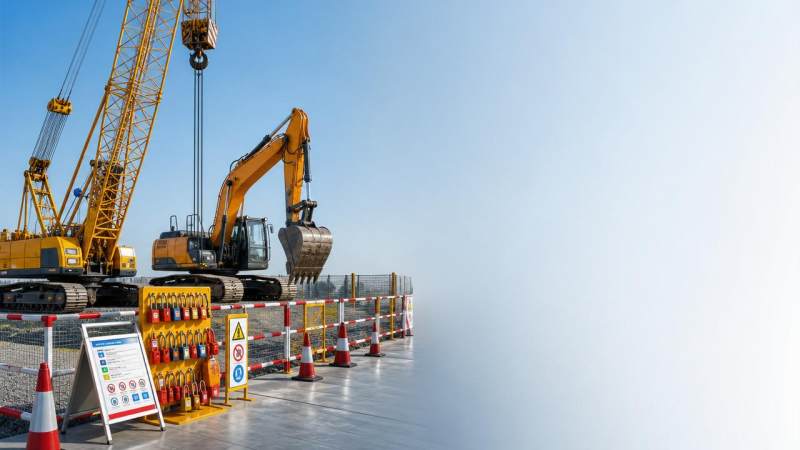
Construction safety training often appears complete in reports, attendance sheets, and audit folders. Yet incidents still happen because learning stops before field behavior changes. Construction safety training only works when supervisors verify actions, tools, and hazards where work actually happens.
In heavy construction, mining support, lifting operations, tunneling, and roadbuilding, risk shifts by the hour. Ground conditions change. Equipment interfaces change. Crew composition changes. Without site follow-up, even strong construction safety training becomes a document exercise instead of a live control system.
For organizations tracking safety performance across complex projects, the lesson is simple. Classroom instruction builds awareness. Site follow-up confirms execution. When both work together, construction safety training starts producing measurable reductions in unsafe acts, near misses, delays, and asset damage.
Why does construction safety training fail after the classroom ends?
The main failure point is transfer. People may understand a rule in training, then apply different habits under production pressure. This gap widens on jobsites with heavy machinery, multiple contractors, and rapidly changing work zones.
Construction safety training often uses controlled examples. Jobsites are uncontrolled environments. Noise, weather, fatigue, access limitations, and schedule pressure reshape decisions. Workers remember principles, but not always the exact behavior needed in that moment.
Another issue is false completion. Once training records are filed, some teams assume the risk has been managed. It has not. Training communicates expectations. Follow-up checks whether those expectations survive contact with real conditions.
This matters even more around crawler cranes, excavators, TBM support zones, haul roads, and temporary lifting plans. A small deviation in exclusion zones, signaling, lockout, or access control can escalate fast.
Common reasons transfer breaks down
- Training is generic, while site hazards are specific.
- Supervisors do not reinforce new behaviors daily.
- Procedures are taught once, then never observed in practice.
- Equipment risk changes faster than refresher cycles.
- Near misses are logged, but not used for coaching.
What does site follow-up add to construction safety training?
Site follow-up turns knowledge into verified behavior. It checks whether trained steps are followed during lifting, excavation, confined access, maintenance isolation, traffic management, and temporary works inspection.
It also catches local risk that training could not predict. A worker may know the rule for blind-spot management. But only field observation reveals whether haul routes, berm heights, spotter positions, and radio discipline support that rule.
Strong construction safety training includes site follow-up because competence is situational. One person may perform safely in a workshop drill, then struggle near live machinery, night shifts, mud, or mixed-language crews.
Practical forms of follow-up
- Task observation during real work cycles
- Short post-training field audits
- Supervisor coaching at point of risk
- Permit-to-work verification rounds
- Behavior-based safety checks linked to hazards
In advanced infrastructure environments, follow-up should connect physical parameters and safety decisions. Load radius, slope angle, cutterhead maintenance access, braking distance, and visibility are not abstract topics. They define exposure.
Which high-risk scenarios expose weak construction safety training fastest?
The weakest construction safety training usually appears where conditions change quickly and consequences are severe. Heavy industry projects provide many examples because people, machines, and temporary systems constantly interact.
1. Lifting and rigging operations
Crews may attend lifting safety sessions, yet still bypass tag-line control, radius barriers, or pre-lift communication. Follow-up reveals whether planning assumptions match actual ground bearing, weather, and equipment positioning.
2. Excavation and trench access
Workers often know entry rules. Failure happens when spoil piles move too close, ladders shift, or underground service markings become unclear. Site follow-up confirms controls remain intact throughout the shift.
3. Traffic separation near heavy haulage
Haul roads, dump zones, and support vehicles create dynamic blind spots. Construction safety training teaches principles. Follow-up verifies route discipline, signaling consistency, lighting, speed control, and pedestrian segregation.
4. TBM and underground support work
Tunnel environments combine confined spaces, electrical systems, hydraulic power, segment handling, and ventilation dependency. Site follow-up tests whether isolation, access control, and emergency readiness are functional under production conditions.
5. Maintenance and energy isolation
One of the biggest gaps in construction safety training appears during maintenance. Teams may know lockout steps, but shortcuts emerge when downtime pressure rises. Observation and sign-off discipline are essential.
How can you tell whether construction safety training is working?
Do not judge construction safety training by attendance alone. Measure field execution. The best indicators show whether trained behaviors are visible, repeatable, and resilient when conditions become difficult.
Useful metrics include observation closure rate, repeat unsafe act frequency, permit deviation trends, near-miss recurrence, and time between training and verified competent performance. These show whether construction safety training changes daily decisions.
What mistakes make site follow-up ineffective?
Not all follow-up improves safety. Some systems create inspection fatigue, shallow compliance, or blame culture. Poorly designed follow-up can weaken trust and reduce honest reporting.
Frequent mistakes
- Using generic checklists unrelated to the actual task
- Focusing only on PPE, not process risk
- Auditing too late, after unsafe habits normalize
- Recording findings without closing actions
- Correcting workers, while ignoring planning defects
Effective construction safety training needs equally effective follow-up. If workers are trained to use safe access routes, but routes are blocked by materials, behavior failure is actually a planning failure.
The strongest systems ask two questions together. Was the person prepared? Was the work environment prepared? Construction safety training succeeds only when both answers are yes.
How should organizations build a follow-up system that supports construction safety training?
A workable model is simple, repeatable, and tied to operational reality. It should fit both routine tasks and complex engineering activities involving high-value machinery and changing ground conditions.
Recommended framework
- Define critical behaviors for each high-risk task.
- Train using actual site scenarios and equipment interfaces.
- Observe the first live task after training.
- Coach immediately at the point of deviation.
- Record findings by hazard type, not only by person.
- Feed recurring issues into planning and refresher content.
This approach is especially relevant in sectors followed by TF-Strategy, where machine capability, geological conditions, and execution quality are tightly connected. Safety intelligence should be operational, not merely administrative.
When data from field observations is linked with equipment events, weather windows, and task sequencing, construction safety training becomes smarter. It can target the exact moments where risk concentrates.
FAQ: quick answers on construction safety training and site follow-up
Construction safety training fails when it is treated as an event. Safety performance improves when training becomes a loop of instruction, observation, correction, and redesign. That loop is where real prevention lives.
The next step is practical. Identify three high-risk tasks, define the critical behaviors, and verify them on site within one week of training. This single move can reveal whether construction safety training is protecting work, or only documenting intent.
Related News
 Oct 06, 2026Selecting Petrochemical Overhead Cranes for Hazardous Areas and Heavy Process LoadsPetrochemical overhead cranes for hazardous areas: learn how to match capacity, duty, controls, corrosion protection, and maintenance access for safer, reliable lifts.
 Oct 05, 2026Tunneling Equipment Specification Planning: Key Criteria for Ground and Project RisksEquipment specification planning tunneling: learn how to match TBM systems to ground risks, geometry, safety, logistics, and lifecycle cost for more reliable project delivery.
 Oct 04, 2026Nuclear Lifting Equipment Cost: Budgeting for Compliance, Testing, and Lifecycle RiskNuclear lifting equipment cost explained: budget for compliance, proof-load testing, installation, documentation, and lifecycle risk to make confident procurement decisions.
 Oct 03, 2026How to Assess TBM Manufacturers for Hard-Rock Tunneling Projects?Choose the right tunnel boring machine manufacturer for hard-rock projects. Explore key criteria for design, lifecycle cost, factory quality, and service support.
Ms. Elena Rodriguez
Weekly Insights
Stay ahead with our curated technology reports delivered every Monday.