
Can extreme temperature mining avoid costly downtime?
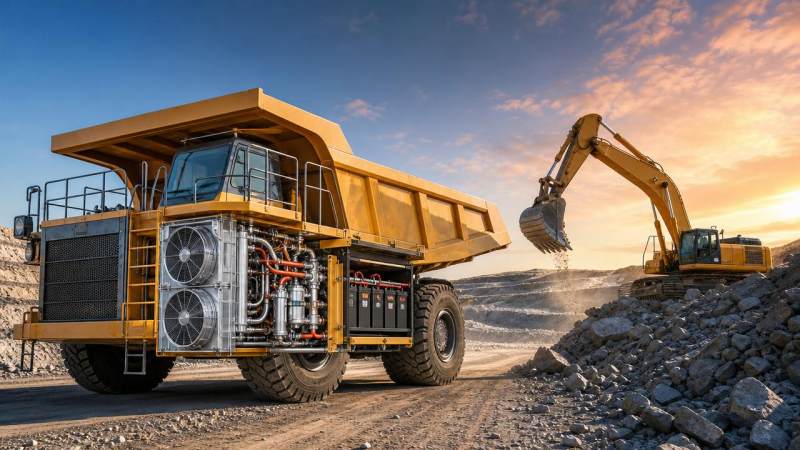
Can Extreme Temperature Mining Avoid Costly Downtime?
In extreme temperature mining, downtime is rarely caused by a single failure.
It builds from heat-stressed hydraulics, cold-start lubrication delays, battery degradation, sensor drift, and overlooked maintenance signals.
For aftersales maintenance teams supporting mining dump trucks, excavators, and heavy haulage fleets, the challenge is bigger than faster repairs.
The real question is where temperature will attack uptime next.
This article explains how disciplined service strategies, condition monitoring, and climate-specific component management help prevent costly stoppages.
What Makes Extreme Temperature Mining So Difficult?
Extreme temperature mining combines mechanical load, harsh climate, dust, vibration, and long operating cycles.
Machines do not simply work harder. They operate with less thermal margin.
In hot mines, engines, inverters, brakes, and hydraulic systems struggle to reject heat.
In cold mines, fluids thicken, seals harden, batteries weaken, and metal fatigue risks increase.
Extreme temperature mining also exposes weak maintenance routines quickly.
A delayed filter change may become an overheating event. A small coolant leak may become engine derating.
A poor cold-start procedure may damage bearings before the shift reaches production speed.
The environment magnifies every small defect across dump trucks, excavators, loaders, drills, and support vehicles.
Why does downtime cost more in remote mines?
Remote sites face long parts lead times, limited service windows, and expensive standby labor.
One stopped haul truck can disrupt shovel matching, crusher feed, and pit sequencing.
In extreme temperature mining, the repair bill is only part of the loss.
Lost tonnage, fuel waste, safety exposure, and emergency logistics often exceed direct maintenance costs.
Which Components Fail First in Extreme Temperature Mining?
Temperature affects every system, but some components show distress earlier than others.
Understanding these patterns helps maintenance planning move from reaction to prevention.
Hydraulic systems
Hydraulics are highly sensitive in extreme temperature mining.
Heat lowers viscosity, increases leakage, and accelerates oil oxidation.
Cold conditions increase viscosity, causing cavitation, slow response, and higher pump stress.
Oil selection, warm-up control, and contamination monitoring are essential.
Cooling systems
Cooling packs become downtime triggers when dust, scale, or poor airflow reduce heat transfer.
In hot extreme temperature mining, radiator performance directly controls engine power availability.
Poor fan control, blocked fins, and degraded coolant chemistry can cause repeated derating.
Batteries and electrical systems
Cold reduces battery capacity and increases starting loads.
Heat shortens battery life and damages insulation, connectors, and electronic modules.
Electric mining trucks add another layer through thermal management of battery packs and power electronics.
Seals, hoses, and elastomers
Elastomers harden in cold and soften or crack under heat.
In extreme temperature mining, hose age should be tracked by exposure conditions, not calendar time alone.
How Can Maintenance Teams Predict Temperature-Driven Downtime?
Prediction starts when service teams connect climate data with machine health data.
Extreme temperature mining requires more than standard operating-hour intervals.
Useful monitoring combines fluid analysis, telematics, inspection records, and operator feedback.
What signals matter most?
- Rising hydraulic oil temperature under normal load.
- Repeated engine derating during peak ambient heat.
- Longer cold-start crank time.
- Battery voltage instability after overnight parking.
- Coolant consumption without visible leakage.
- Sensor drift across temperature swings.
These signals should be ranked by production impact, not only by fault code severity.
A minor warning on a critical haul route may deserve faster action than a major warning on standby equipment.
How should data be interpreted?
Single readings can mislead in extreme temperature mining.
Trend direction, operating load, ambient temperature, altitude, and duty cycle must be reviewed together.
For example, rising coolant temperature during uphill haulage may be normal.
The same rise during empty return could indicate blocked airflow or failing fan control.
What Service Strategy Works Best for Extreme Temperature Mining?
The best strategy blends preventive, predictive, and condition-based maintenance.
Fixed intervals remain useful, but they need climate correction.
Extreme temperature mining often requires shorter intervals for fluids, filters, hoses, and cooling inspections.
What should be adjusted first?
- Match lubricants to real ambient ranges.
- Increase cooling system inspection frequency.
- Add pre-shift thermal checks for critical machines.
- Protect parked equipment from unnecessary heat or cold exposure.
- Use site-specific thresholds instead of generic alarm limits.
This approach reduces unplanned repair pressure and improves parts planning.
It also supports safer decisions when machines show early signs of thermal stress.
Should spare parts strategy change?
Yes. Extreme temperature mining demands a climate-aware spare parts policy.
High-risk items include hoses, belts, sensors, batteries, thermostats, filters, coolant, seals, and fan components.
Parts should be stored correctly, especially elastomers, electronics, and fluids.
Poor storage can turn a spare part into the next failure source.
How Do Hot and Cold Mining Sites Require Different Decisions?
Hot and cold climates create different failure paths.
Extreme temperature mining should not use one universal maintenance checklist.
Hot sites need stronger thermal rejection discipline.
Cold sites need controlled warm-up, energy readiness, and moisture prevention.
Mixed climates need both strategies, especially where daily temperature swings are severe.
Can Operator Behavior Reduce Extreme Temperature Mining Downtime?
Operator habits strongly influence uptime.
Even advanced equipment cannot overcome repeated thermal abuse.
In extreme temperature mining, good operation is part of maintenance.
Which habits protect machines?
- Respect warm-up and cool-down procedures.
- Avoid aggressive loading before fluids stabilize.
- Report abnormal smells, noises, and slow actuator response.
- Keep radiators and access panels free from visible blockage.
- Monitor dashboard trends, not only alarms.
Operator training should use real site examples.
A short lesson from a recent failure is more effective than generic instruction.
When operators understand cost impact, reporting quality improves.
What Are Common Mistakes in Extreme Temperature Mining Maintenance?
Many failures repeat because teams treat symptoms instead of root causes.
Extreme temperature mining punishes shortcuts quickly.
Mistake one: using standard fluids everywhere
Standard fluids may not protect machines across extreme ambient ranges.
Wrong viscosity causes start-up wear, energy losses, or weak hydraulic control.
Mistake two: ignoring small leaks
Small leaks often become serious during heat expansion or cold contraction.
A minor hose sweat mark can predict a shift-ending failure.
Mistake three: trusting alarms without context
Alarms are useful, but they are not complete diagnosis.
Extreme temperature mining requires context from weather, load, slope, altitude, and maintenance history.
Mistake four: treating batteries as simple consumables
Battery management affects starting reliability, electronics stability, and electric driveline performance.
A weak battery can create misleading fault codes across several systems.
FAQ: Practical Questions About Extreme Temperature Mining Uptime
These answers show why extreme temperature mining needs site-specific decisions.
A fleet operating in desert heat should not follow the same assumptions as an Arctic haulage site.
Even identical machines may require different inspection intervals, fluids, and spare parts profiles.
How Should a Site Build an Action Plan?
A practical plan should begin with critical equipment mapping.
List machines whose failure immediately affects tonnage, safety, or haulage balance.
Then link each machine to its main temperature-sensitive systems.
A simple implementation sequence
- Audit recent failures and identify temperature links.
- Review fluids, coolants, batteries, and hose specifications.
- Create hot-weather and cold-weather inspection checklists.
- Set alert thresholds using site operating history.
- Align spare parts stock with seasonal risk.
- Train operators on temperature-related warning signs.
This sequence keeps the plan manageable.
It also helps separate high-value actions from low-impact routine work.
Conclusion: Avoiding Downtime Requires Climate Intelligence
Extreme temperature mining can avoid many costly stoppages, but not through emergency repair alone.
Uptime improves when temperature is treated as an operating variable, not background weather.
The strongest results come from climate-adjusted maintenance, meaningful data interpretation, and disciplined operator routines.
For heavy haulage fleets, excavators, and mining dump trucks, every avoided failure protects production continuity.
The next step is clear: review recent downtime against temperature, load, and maintenance records.
That review can reveal where extreme temperature mining risk is already visible before the next costly stop.
Related News
 Oct 14, 2026High-Capacity Heavy Lifting Solutions: Matching Load, Radius, and Ground ConditionsDiscover heavy lifting solutions high capacity projects demand—compare load charts, working radius, and ground conditions to select a feasible, cost-effective system.
 Oct 13, 2026OEM Equipment Suppliers in Europe: Vetting Quality, Lead Times, and SupportCompare OEM equipment Europe suppliers on quality, lead times, and after-sales support. Discover practical vetting steps to reduce downtime and buy heavy equipment with confidence.
 Oct 12, 2026How to Assess a High-Altitude Mining Equipment Manufacturer for Remote ProjectsHigh altitude mining manufacturer assessment guide: compare derating, cold-climate reliability, remote service, parts resilience, and lifecycle risk for smarter project decisions.
 Oct 11, 2026What Drives TBM Cutter Head Material Cost and Life-Cycle Value?Cutter head material cost explained: compare TBM alloys, wear protection, downtime risk, and life-cycle value to choose the most reliable, cost-effective solution.

Ms. Elena Rodriguez
Weekly Insights
Stay ahead with our curated technology reports delivered every Monday.