Where global infrastructure investment is shifting in 2026
In 2026, global infrastructure investment is moving beyond traditional growth corridors toward projects defined by energy security, urban resilience, mineral supply chains, and digital construction efficiency.
For enterprise decision-makers, this shift is not just about where capital flows, but which heavy-equipment capabilities will shape project delivery, risk control, and long-term returns.
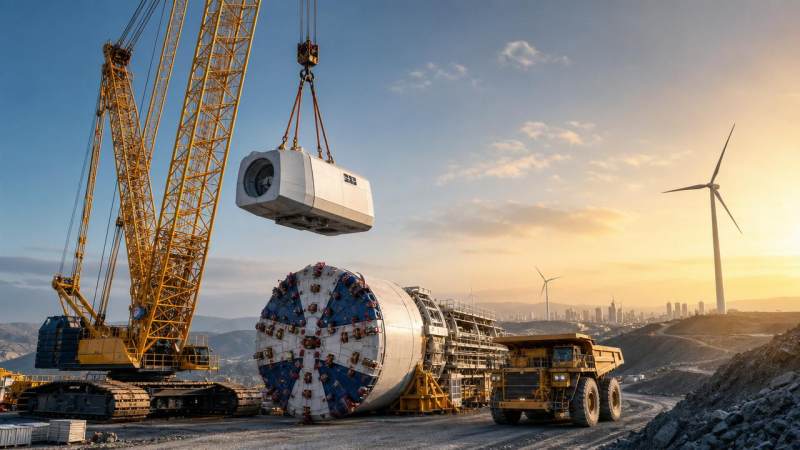
From TBM-driven metro expansions to open-pit mining fleets and ultra-large lifting systems for renewable energy, understanding these investment patterns is becoming essential for strategic positioning in the next infrastructure cycle.
The 2026 investment map is being redrawn by strategic necessity
Global infrastructure investment in 2026 is shifting from volume-led construction toward assets that protect national competitiveness, industrial continuity, and climate resilience.
Enterprise leaders should not read this cycle as a simple rebound in construction spending. It is a reallocation of strategic capital.
Governments and private investors are prioritizing projects that solve bottlenecks in energy, mobility, logistics, water security, and mineral supply.
This means the winning projects are increasingly complex, equipment-intensive, and exposed to stricter delivery, safety, and financing requirements.
For contractors, OEMs, mining operators, and infrastructure investors, the practical question is where demand will convert into executable projects.
The answer depends less on headline announcements and more on permitting speed, equipment availability, procurement models, and operating risk.
Energy security is pulling capital toward grids, storage, and heavy lifting
The most visible shift in 2026 is the acceleration of power infrastructure connected to energy security and electrification.
Investment is moving into transmission corridors, offshore wind logistics, grid stabilization, pumped storage, hydrogen facilities, and nuclear-related construction.
These projects create direct demand for crawler cranes, specialized transport, deep foundations, precision lifting, and high-reliability site coordination.
For decision-makers, the business value lies in understanding that energy projects are not only generation assets.
They are integrated construction ecosystems requiring synchronized equipment fleets, large component handling, and robust risk management.
Ultra-large lifting machinery will be especially important as wind turbines, reactors, transformers, and petrochemical modules continue increasing in size.
Capital will favor suppliers and contractors that can prove lifting safety, mobilization efficiency, digital planning, and lifecycle cost control.
The risk is underestimating schedule sensitivity. Energy infrastructure delays can trigger penalties, grid connection losses, and financing pressure.
Urban resilience is making underground construction a priority
Major cities are redirecting infrastructure budgets toward metro extensions, flood tunnels, utility corridors, and underground road connections.
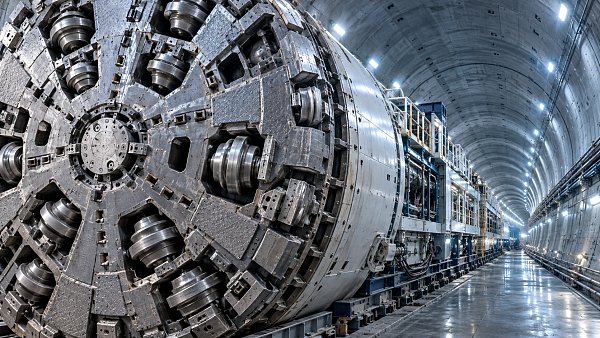
This is where tunnel boring machines become a strategic productivity tool rather than a specialist construction asset.
Urban populations still require mobility, but the available surface space for expansion is increasingly limited and politically sensitive.
TBM-led delivery helps reduce surface disruption, improve construction safety, and support deeper integration of transport and utilities.
In 2026, stronger demand is expected in Asian megacities, Middle Eastern urban programs, and European climate adaptation projects.
Enterprise decision-makers should focus on geology, cutterhead durability, settlement control, muck handling, and contractor experience.
These factors determine whether a tunnel program becomes a predictable capital project or a prolonged technical dispute.
The most valuable opportunities will combine public funding certainty with repeatable tunneling packages and clear urban mobility objectives.
Mineral supply chains are driving a new mining infrastructure cycle
Critical minerals are becoming one of the strongest forces behind global infrastructure investment, especially for copper, lithium, nickel, iron ore, and rare earths.
The transition to electrification requires mines, haul roads, rail links, ports, power supply, processing facilities, and worker infrastructure.
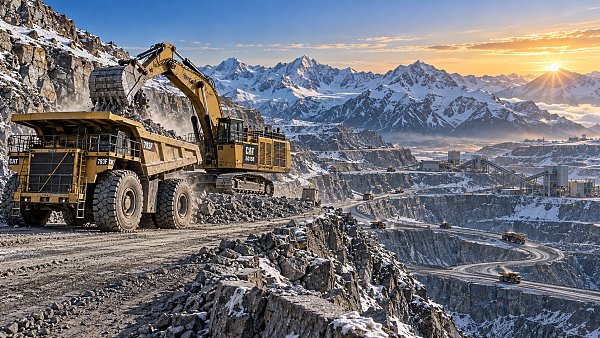
This creates demand for ultra-large excavators, mining dump trucks, crushers, conveyors, and high-altitude or extreme-temperature operating systems.
For mining executives, the decisive metric is not only production volume but the total cost per moved tonne.
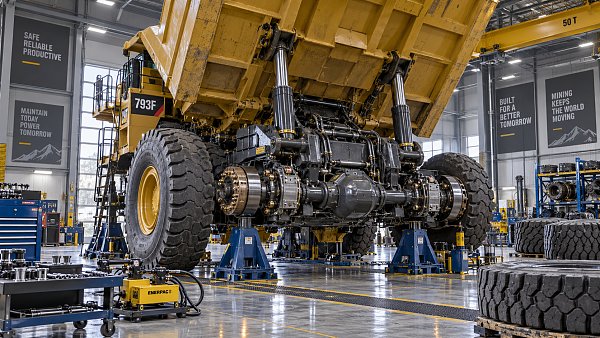
Equipment reliability, fuel efficiency, electrification potential, tire management, and autonomous haulage readiness will affect investment returns.
Open-pit mines are also facing pressure to reduce emissions while increasing output from more difficult deposits.
That combination strengthens the case for electric mining trucks, remote-controlled excavation, predictive maintenance, and integrated fleet management.
Investors should assess whether supporting infrastructure can scale with mine plans before committing to aggressive production assumptions.
Transport investment is becoming more selective and productivity-focused
Roads, bridges, ports, and railways remain central, but 2026 transport investment will be more selective than previous expansion cycles.
Capital is moving toward corridors that improve trade resilience, industrial access, and cross-border supply chain reliability.
Large road machinery will remain essential, especially where governments upgrade highways, logistics zones, and regional industrial corridors.
However, investors are demanding better evidence that transport assets create measurable economic throughput, not just construction activity.
For contractors, this increases the importance of paving precision, compaction quality, digital grade control, and faster commissioning.
Smart highway systems, weigh-in-motion platforms, and construction data integration are becoming part of project value, not optional features.
Enterprise leaders should watch for projects attached to ports, mining regions, renewable energy bases, and manufacturing relocation zones.
These corridors are more likely to receive sustained funding because they serve multiple strategic objectives simultaneously.
Digital construction is shifting value from equipment ownership to equipment intelligence
One of the most important changes in global infrastructure investment is the growing premium on construction intelligence.
Heavy equipment is no longer evaluated only by rated power, bucket size, lifting capacity, or penetration rate.
Decision-makers increasingly ask whether machines can generate data that improves scheduling, safety, fuel use, and maintenance planning.
5G remote control, telematics, autonomous haulage, digital twins, and AI-enabled maintenance are moving into mainstream procurement requirements.
This is especially important for projects in hazardous mines, dense cities, extreme climates, and remote energy zones.
The commercial logic is clear: better machine intelligence reduces downtime, improves utilization, and strengthens contractor accountability.
For OEMs and fleet owners, the competitive advantage will come from combining mechanical reliability with usable decision data.
Companies that treat digital systems as after-sales accessories may lose tenders to operators offering integrated performance visibility.
Regional shifts: where decision-makers should look first
Asia will remain a major center of infrastructure demand, but the opportunity profile is changing across markets.
India, Southeast Asia, and selected Middle Eastern economies are likely to attract capital for metros, ports, highways, power, and industrial zones.
In these markets, project speed, financing structures, and equipment service networks may matter as much as headline growth rates.
North America is expected to focus on grid modernization, semiconductor-related infrastructure, mining supply chains, and transport rehabilitation.
Europe will emphasize energy transition, rail modernization, water resilience, and urban tunneling under tighter environmental standards.
Africa and Latin America offer significant mining, power, port, and corridor opportunities, but risk screening must be more rigorous.
Decision-makers should evaluate political continuity, currency exposure, contractor capacity, logistics access, and local maintenance capability.
The best markets are not always the largest. They are where capital, permitting, equipment, and execution discipline align.
How enterprises should evaluate infrastructure opportunities in 2026
Executives need a disciplined framework for judging whether an infrastructure opportunity is investable, executable, and strategically valuable.
The first test is demand durability. Projects linked to energy security, essential mobility, minerals, or water resilience deserve priority.
The second test is delivery complexity. Complex projects can generate higher margins, but only for companies with matching technical capabilities.
The third test is equipment fit. Fleet selection should consider geology, climate, load cycles, lifting plans, and maintenance ecosystems.
The fourth test is financing resilience. Projects relying on unstable subsidies or weak counterparties require stronger contractual protection.
The fifth test is lifecycle value. Winning bids should not sacrifice long-term operating efficiency for short-term procurement savings.
For heavy-equipment stakeholders, the strategic advantage is early alignment with project owners before specifications become fixed.
Early intelligence on tenders, material supply, and engineering methods can materially improve pricing, fleet planning, and partnership selection.
What this means for heavy-equipment strategy
The 2026 investment cycle favors machinery that combines power, precision, endurance, and verifiable operational intelligence.
TBM suppliers should prepare for more geology-specific solutions, cutterhead innovation, and integrated settlement monitoring requirements.
Mining equipment providers should focus on fuel transition, autonomous readiness, high-utilization service contracts, and extreme-condition reliability.
Crawler crane operators should strengthen engineering lift planning, site logistics capability, and safety documentation for renewable and nuclear projects.
Road machinery manufacturers should emphasize automation, paving accuracy, fuel efficiency, and data-enabled quality control.
Fleet owners should rethink asset allocation across regions, prioritizing machines that can serve multiple strategic infrastructure categories.
The key is avoiding stranded capability. Equipment portfolios built for yesterday’s construction mix may underperform in tomorrow’s project pipeline.
Companies that connect machine specifications with infrastructure strategy will have stronger pricing power and better utilization rates.
Risks that could slow the shift in capital flows
Although the direction is clear, global infrastructure investment in 2026 will still face serious constraints and execution risks.
Higher financing costs can delay marginal projects, especially where revenue models depend on uncertain user fees or subsidies.
Permitting delays may remain a major obstacle for transmission lines, mines, ports, tunnels, and large renewable projects.
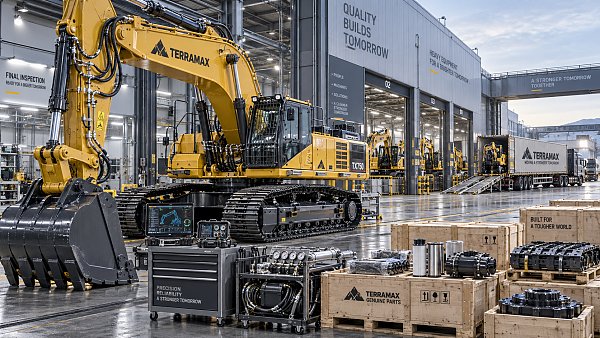
Supply chain volatility can affect steel, bearings, hydraulic components, electronics, tires, and specialized TBM or crane components.
Labor shortages may increase reliance on automation, but they can also delay commissioning when technical skills are unavailable.
Geopolitical fragmentation can redirect procurement decisions, complicate cross-border logistics, and alter equipment sourcing strategies.
Decision-makers should build scenarios around cost escalation, schedule slippage, local-content rules, and foreign-exchange exposure.
The strongest companies will not avoid risk entirely. They will price it accurately and manage it earlier than competitors.
Conclusion: capital is following resilience, resources, and execution certainty
In 2026, infrastructure capital is shifting toward projects that strengthen energy systems, urban resilience, mineral supply, and industrial logistics.
For enterprise decision-makers, the opportunity is not simply entering fast-growing markets, but matching capabilities with strategic demand.
Heavy equipment will play a decisive role because these projects require deeper excavation, larger lifts, smarter fleets, and tighter delivery control.
The companies best positioned for the next cycle will combine project intelligence, equipment precision, and disciplined risk evaluation.
Global infrastructure investment is becoming more selective, but also more strategic. That makes informed positioning more valuable than broad exposure.