
Choosing Construction Gas Detection Systems for Confined Spaces
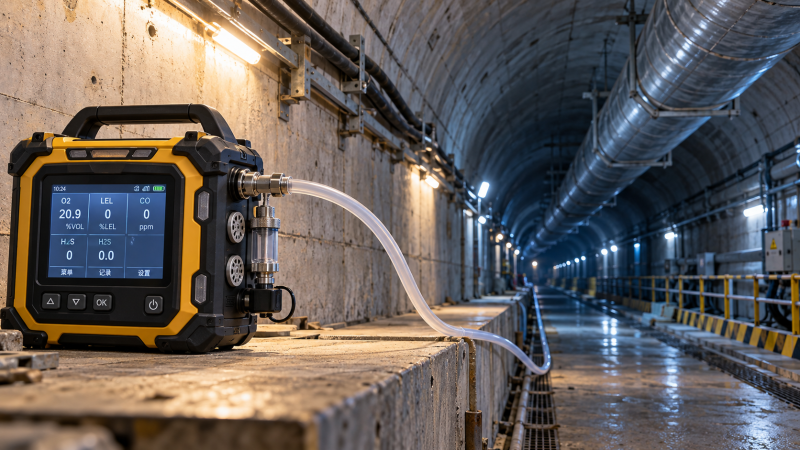
Confined spaces in construction can expose workers to oxygen deficiency, combustible gases, and toxic atmospheres that change as excavation and equipment operations progress. For technical evaluators, choosing construction gas detection systems means assessing sensor capabilities, alarm thresholds, response times, environmental durability, and applicable safety requirements against the conditions of each site. This guide explores the key selection criteria for tunnels and other confined work areas, helping project teams compare solutions and support safer, more reliable operations.
The most capable detector on a specification sheet is not necessarily the best fit underground. A monitor that performs well at the surface may be difficult to sample through a long hose, vulnerable to moisture, or poorly located once ventilation and machinery are running. Selection should start with how the work and atmosphere can change, then move to instrument specifications.
Start with the work sequence, not the sensor count
A tunnel boring machine excavation, a utility chamber and a crane-related foundation shaft may all involve restricted access, but their atmospheric hazards can be quite different. Review geological information, nearby utilities, groundwater, previous site use, construction materials and the equipment planned for each phase. Include foreseeable deviations: a ventilation interruption, a fuel leak, an unexpected ground condition or maintenance work involving welding and solvents.
In a TBM drive, for example, diesel-powered support equipment can introduce combustion gases, while ground conditions may create a separate risk of gas ingress or oxygen displacement. Those hazards do not necessarily occur at the same location. The face, conveyor transfer points, cross passages and low-lying sumps may each need a different monitoring arrangement. A single reading at the portal cannot establish the atmosphere throughout a long heading.
Also distinguish a confined space from an area that simply feels enclosed. Applicable entry rules depend on the jurisdiction and the characteristics of the space. The project’s competent safety personnel should determine the classification and entry controls before the detection package is finalized.
Match the gases to the actual hazards
A common four-gas monitor measures oxygen, combustible gas, carbon monoxide and hydrogen sulfide. That combination is useful in many settings, but it is not a universal confined-space solution. It will not necessarily detect the solvents, welding-related contaminants or other substances identified in a particular task assessment.
Oxygen measurement deserves attention beyond the obvious risk of deficiency. Enrichment can make materials ignite more readily, while some combustible-gas sensor technologies depend on sufficient oxygen to operate correctly. Ask the supplier what happens to the reading when oxygen is low and whether the instrument signals that the combustible-gas measurement may no longer be reliable.
For flammable atmospheres, check the target gas, measurement range and calibration gas. A detector displaying a percentage of the lower explosive limit is not automatically equally sensitive to every vapor. Correction factors may be needed, and some instruments or sensor technologies may be unsuitable for particular compounds. Catalytic sensors can be affected by poisoning or inhibition; infrared sensors avoid some of those limitations but do not detect every combustible gas, including hydrogen. The sensor choice should follow the expected mixture, not a generic preference for one technology.
Electrochemical toxic-gas sensors also require scrutiny. Cross-sensitivity can produce a response to a gas other than the intended target, and sensor life depends on exposure and operating conditions. Where the hazard assessment identifies volatile organic compounds, a photoionization detector may be appropriate for screening some substances, but its response varies by compound and lamp specification. It is not a substitute for substance-specific measurement where that is required.
Decide what must be measured before entry and during work
Pre-entry testing and continuous monitoring solve different problems. Pre-entry sampling helps assess the atmosphere before workers enter; continuous monitoring helps identify changes after entry. Depending on the space and the entry plan, teams may need both, along with ventilation, isolation and rescue arrangements.
For a shaft or chamber, a pumped instrument with a sampling hose can allow testing from outside. Confirm the manufacturer’s permitted hose length, compatible tubing, pump capability and required sampling time. The time for gas to travel through the hose is additional to the sensor’s own response time. A quick glance at the display immediately after lowering the probe is not a defensible test.
Sample at locations and depths selected for the credible hazards and geometry. Some gases tend to collect high or low, but airflow, temperature and turbulence can disrupt simple layering assumptions. If a hose can contact water or contaminated surfaces, use suitable filters and water traps as specified by the manufacturer; check that these accessories do not undermine the required flow or delay detection unacceptably.
Once work begins, personal monitors show conditions near the wearer, while fixed or transportable area monitors can cover selected locations and provide shared warnings. They are complementary. A fixed sensor near a possible release point may warn of a developing problem, but it does not prove that every worker’s breathing zone is safe. Conversely, a personal monitor only protects if it is worn correctly, switched on and within reach of the atmosphere being sampled.
Compare response time as a system, not a catalog number
Manufacturers often state sensor response using measures such as T90: the time required for the sensor to reach 90% of its final response under specified test conditions. That number is useful for comparison, but it is not the total warning time on site. Gas must reach the sampling point, move through any tubing and filters, activate the sensor, trigger an alarm and then be recognized by the crew.
For a long tunnel, ask how the proposed system performs at the furthest sampling point and under realistic airflow conditions. A fast sensor connected to a poorly placed inlet may provide less useful warning than a slower device positioned where the hazard is likely to appear. Request documentation for the complete sampling configuration, not just the sensor element.
Placement should be reviewed as construction advances. A sensor installed beside a ventilation outlet may show clean supply air while a poorly ventilated recess remains unmonitored. Conversely, positioning directly in a turbulent discharge or where machinery repeatedly strikes the unit can create maintenance problems. Involving the ventilation designer and the people responsible for advancing the work usually exposes these conflicts early.
Set alarms around an action plan
Alarm thresholds must reflect applicable regulations, exposure limits, instrument capabilities and the site’s entry procedure. They should not be copied from a different project simply because the same monitor was used there. For toxic gases, check whether the device supports the relevant instantaneous, short-term and time-weighted alarm functions, and confirm how those values are calculated and reset.
Each alarm needs an assigned response: stop work, leave by the designated route, notify the attendant, investigate from a safe position or follow another action established in the project plan. Workers should understand what a sensor fault, pump blockage, low battery or loss of communications means as well. Those indications are not interchangeable with a confirmed gas alarm, but they can mean the monitoring arrangement is no longer dependable.
Audibility is easy to overestimate near compressors, conveyors and heavy machinery. Compare sound, visual and vibration alerts with the actual working environment, including hearing protection and sight lines. Remote repeaters or communications links can help, but assess what happens during a power failure or a network interruption. A connected dashboard is not a substitute for an alarm that reaches the people at risk.
Check the underground operating envelope
Dust, water spray, humidity, temperature and vibration can all affect serviceability. An ingress-protection rating is useful, but it does not describe every condition a detector will face. Check the complete instrument’s operating limits, the sensor-specific restrictions, the durability of connectors and hoses, and whether filters can be changed without creating excessive downtime.
Battery life should be evaluated against a real shift, including pump use, alarms, cold conditions and the time needed to return equipment for charging. For fixed systems, examine backup power, cable routing and protection from vehicle movements. If the atmosphere can be explosive, verify that the complete equipment configuration is appropriately certified for the relevant hazardous-area classification and jurisdiction. Certification of an individual component alone does not establish suitability of the assembled system.
Construction programs also change ownership frequently: a tunneling team may hand a completed section to another contractor. Agree who maintains the detectors, controls alarm settings, stores records and responds to failures after each handover. This is an operational issue as much as a purchasing one.
Evaluate maintenance before comparing prices
A low purchase price can become expensive if replacement sensors, calibration gas or technical support are hard to obtain at the project location. Ask for the expected service requirements, availability of consumables, lead times and the supplier’s process for repair or replacement. For remote work, check whether the calibration equipment and certified gas mixtures can be transported and stored under the relevant local requirements.
A bump test checks whether sensors respond to test gas and alarms operate; it is not the same as calibration, which adjusts or verifies measurement accuracy according to the instrument’s procedure. Follow the manufacturer’s instructions and the site’s applicable requirements for both. Also establish what happens when a unit fails a check: taking it out of service only works if a suitable replacement is available.
Data logging can help investigate trends and demonstrate that maintenance occurred, but records need context. A reading without its location, time, operating state and any associated fault may be difficult to interpret. Confirm whether records can be retrieved in a usable format and who will review them rather than assuming that storage alone improves control.
Make the final comparison against the entry plan
Before selecting a system, ask competing suppliers to respond to the same project scenario: identified gases, sampling locations, hose lengths, environmental conditions, shift duration and required alarm actions. Request sensor response and cross-sensitivity information, hazardous-area documentation where applicable, and a maintenance schedule for the proposed configuration. A practical demonstration with the intended accessories is more revealing than a standalone display-unit demonstration.
For infrastructure projects, TF-Strategy’s focus on the relationship between heavy-equipment parameters and construction methods offers a useful lens: gas detection should be assessed alongside the TBM, ventilation and access strategy, not after those decisions are fixed. If the proposed system cannot reliably sample the locations the entry plan depends on, revise the layout or the method before approving the equipment.
Have questions about this sector analysis, or seeking best practices specific to your niche? Drop us a line below and let the senior consultants at TF-Strategy assist you.
Related News
 Nov 11, 2026Choosing Equipment Capacity for Different Workloads and ApplicationsExplore equipment application by capacity to match machines to real workloads, reduce bottlenecks and choose cost-effective solutions with confidence.
 Nov 10, 2026Crane Performance Comparison: Load Capacity, Reach and Lifting SpeedCrane performance comparison made practical: evaluate load capacity, reach and lifting speed to choose the right crane for your site and work sequence.
 Nov 09, 2026Heavy Equipment Technology Systems: Telematics, GPS and Machine ControlExplore heavy equipment technology systems, from telematics and GPS to machine control, and learn how to choose the right tools for your fleet and site.
 Nov 10, 2026Selecting a Four-Axle Rear Dump Semi-Trailer for Aggregate HaulingExplore dump special trailers for aggregate hauling. Learn how to compare legal payload, body durability and tipping safety before choosing a four-axle rear dump semi-trailer.
Ms. Elena Rodriguez
Weekly Insights
Stay ahead with our curated technology reports delivered every Monday.