
Construction Machinery Standards: Key Certifications and Compliance Checks to Review
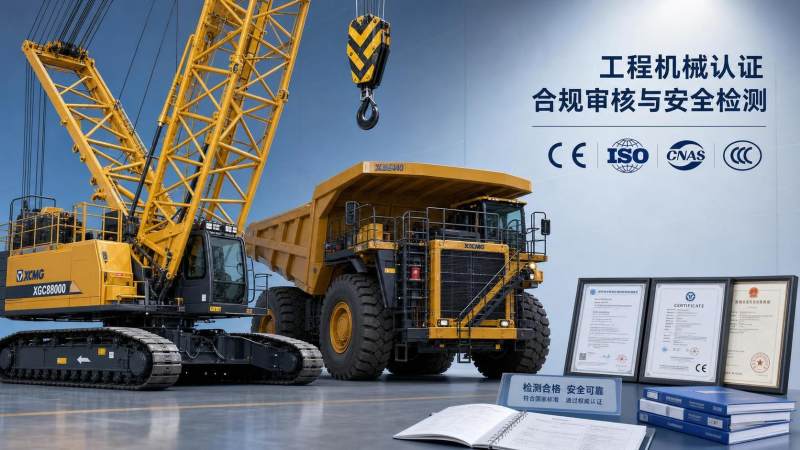
Construction machinery standards sit at the center of equipment approval long before a machine reaches the jobsite. In heavy sectors such as tunneling, mining, lifting, and road building, the right certifications and compliance checks do more than satisfy paperwork. They help verify whether a machine can operate safely, match project conditions, and avoid delays tied to rejected inspections, insurance issues, or unplanned modifications.
That is why construction machinery standards matter across the full equipment lifecycle. A crawler crane lifting wind components, a TBM entering a mountain tunnel, or a mining dump truck working at high altitude all face different risks. The standards review must connect legal compliance, technical fitness, and practical operating reality rather than treating certification as a simple box-ticking exercise.
Why standards review has become more critical
Global projects are becoming larger, more regulated, and more data-driven. Equipment now moves across borders more often, and the same machine may need to satisfy local rules, client specifications, insurer demands, and internal governance controls.
At the same time, machinery is becoming more complex. Digital control systems, remote operation, electrification, advanced hydraulics, and sensor-based safety functions have expanded what must be checked. Construction machinery standards now cover not only structural strength and guarding, but also control integrity, emissions, noise, visibility, and maintenance traceability.
This is especially visible in the areas tracked by TF-Strategy. TBM deployment, ultra-large excavators, crawler cranes, road machinery, and mining trucks all operate in environments where a weak compliance review can become a project risk rather than a procurement issue.
What construction machinery standards actually cover
In practice, construction machinery standards combine several layers. One layer addresses design and manufacturing requirements. Another addresses market access and regulatory conformity. A third layer concerns on-site readiness, testing, and operational control.
The most relevant framework usually includes product safety standards, management system certifications, inspection records, and project-specific compliance evidence. A compliant machine on paper may still fail deployment if the supplied documents do not match the delivered configuration.
Core categories to verify
- Regulatory conformity, such as CE marking where applicable
- International standards alignment, including relevant ISO requirements
- Load, stability, braking, or pressure test records
- Operator protection, guarding, alarms, and emergency systems
- Technical documentation, manuals, drawings, and serial traceability
- Maintenance history and modification control for used equipment
Simple compliance claims are rarely enough. The key question is whether the machine, the documents, and the intended working condition still align after shipping, customization, attachment changes, or site retrofits.
Key certifications worth close attention
Not every standard applies to every machine, yet several certifications repeatedly appear in serious reviews. The issue is not only whether they exist, but whether they are current, authentic, and relevant to the exact model and application.
For high-value machinery, construction machinery standards should also be read alongside national laws, client specifications, and sector rules. A tunnel project, an open-pit mine, and a petrochemical lift each add their own compliance layers.
The compliance checks that often reveal hidden risk
Most failed reviews do not come from missing certificates alone. They come from inconsistencies. A serial number may not match the declaration. A rated load chart may reflect another boom length. An emergency stop function may have been bypassed during retrofit.
This is where construction machinery standards become operational rather than theoretical. The review needs to move from document collection to document verification and then to physical confirmation.
Checks that deserve extra scrutiny
- Nameplate data against contract, drawings, and inspection reports
- Safety devices, interlocks, limiters, and warning systems
- Hydraulic hoses, pressure settings, and leak-control arrangements
- Braking, steering, visibility, and camera systems on mobile equipment
- Noise, emission, and electrical protection requirements for site conditions
- Records of repairs, software updates, or structural modifications
Used imports require even closer attention. A machine may carry valid historical records, yet still fail current site deployment rules because of changed emissions laws, outdated guarding, or undocumented field modifications.
How review priorities change by equipment type
The phrase construction machinery standards sounds broad because it is broad. Review logic should shift with the machine’s duty cycle, consequence of failure, and operating environment.
TBM and underground systems
Focus tends to fall on electrical safety, fire protection, pressure systems, cutterhead integrity, and interface control between backup systems and tunnel conditions. Documentation quality is crucial because assembly is often modular and site-specific.
Ultra-large excavators and mining dump trucks
Structural fatigue, braking performance, tire or track suitability, and thermal management become central. High altitude, dust, and temperature swings can make a nominally compliant machine operationally non-compliant for the intended mine.
Crawler cranes
Load charts, moment limitation, foundation assumptions, and assembly sequence records deserve close checking. Compliance is inseparable from actual lifting plans, rigging interfaces, and wind condition limits.
Road machinery
Attention often shifts to paving precision, control calibration, operator visibility, and transport compliance. In smart highway projects, digital systems and sensor accuracy are becoming part of the standards conversation.
TF-Strategy’s industry lens is useful here because standards review works best when technical parameters are linked to method statements and project strategy, not isolated inside a certificate file.
A practical review approach before approval or deployment
A disciplined workflow helps reduce subjective judgment. It also makes multi-country projects easier to manage, especially where suppliers, contractors, and site teams use different compliance habits.
- Map the applicable standards by market, project, and machine type.
- Collect certificates, declarations, inspection reports, and technical files.
- Verify model numbers, serial numbers, and configuration consistency.
- Inspect critical safety functions and compare them with documents.
- Review site-specific gaps, including altitude, climate, lifting plan, or tunnel constraints.
- Record exceptions and define corrective actions before release.
In many cases, the most valuable outcome is not a pass or fail label. It is a clear deviation list. That list supports faster remediation, cleaner supplier communication, and stronger traceability if an audit or incident later occurs.
What to watch next
Construction machinery standards are expanding with the industry itself. Remote-controlled excavation, electric drivetrains, battery systems, advanced telematics, and smarter hydraulic controls are changing what compliance evidence looks like.
That shift matters for future approvals. A machine may meet traditional mechanical standards while raising new questions around software validation, cybersecurity exposure, battery safety, or sensor reliability in harsh environments.
A useful next step is to build a review matrix that separates mandatory certifications, project-specific checks, and machine-specific risk points. For organizations tracking global heavy equipment, intelligence sources such as TF-Strategy can help connect evolving standards with real project demands in tunneling, mining, lifting, and transport infrastructure.
The strongest decisions usually come from that combination: verified certificates, field-relevant technical checks, and a clear view of how construction machinery standards are changing across regions and equipment classes. That is the basis for safer deployment, fewer compliance surprises, and more dependable project delivery.
Related News
 Sep 22, 2026How to Evaluate a High-Altitude Mining Solutions Manufacturer for Remote ProjectsEvaluate a high-altitude mining solutions manufacturer with proven derating, cooling, service logistics, and lifecycle-cost support for remote projects.
 Sep 21, 2026Industrial Supplier Evaluation: A Risk-Based Scorecard for Quality, Capacity, and DeliveryIndustrial supplier evaluation made practical: use a risk-based scorecard to assess quality, capacity, and delivery reliability, reduce project risk, and select suppliers with confidence.
 Sep 20, 2026Comparing Heavy Equipment Warranty Suppliers: Coverage, Claims, and Downtime RiskSupplier comparison for heavy equipment warranty: evaluate coverage, claims speed, service networks, and downtime risk to protect uptime and project costs.
 Sep 19, 2026Mining Truck Technology Trends: What Fleet Managers Should Prioritize for 2026Mining truck technology trends for 2026: prioritize electrification, autonomy, predictive maintenance, and road intelligence to improve fleet uptime, safety, and cost control.


Ms. Elena Rodriguez
Weekly Insights
Stay ahead with our curated technology reports delivered every Monday.