
How to Use an Infrastructure Equipment Reference Platform for Faster Vendor Research
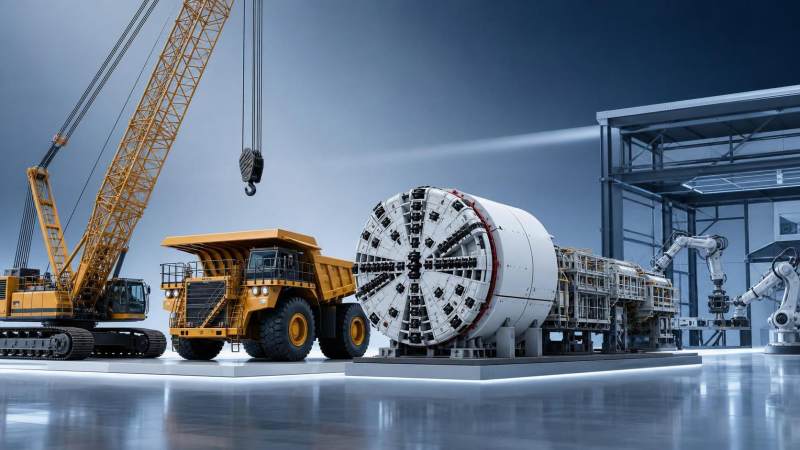
Using an infrastructure equipment reference platform well is less about searching faster and more about comparing better. When technical specifications, project records, supplier signals, and market shifts sit in one research flow, vendor evaluation becomes clearer, especially in heavy infrastructure where one wrong assumption can affect cost, schedule, and operational fit for years.
Why vendor research in heavy infrastructure is unusually complex
Heavy equipment research rarely fails because information is missing.
It fails because information is fragmented, inconsistent, or disconnected from the actual project context.
A crawler crane may look comparable on headline lifting capacity.
Yet transport constraints, foundation conditions, wind exposure, and installation sequence can change the real choice completely.
The same pattern appears with TBMs, mining dump trucks, road machinery, and ultra-large excavators.
On paper, several vendors may qualify.
In operation, only a few will match the geology, haul profile, duty cycle, maintenance environment, and delivery window involved.
That is where an infrastructure equipment reference platform becomes valuable.
It does not replace expert judgment.
It gives that judgment a stronger factual base.
What an infrastructure equipment reference platform should actually contain
A useful platform is not just a product catalog with polished descriptions.
It should connect machinery data with engineering use cases and market intelligence.
At a practical level, that means bringing together several layers of evidence.
- Core technical parameters, including capacity, dimensions, power systems, operating ranges, and compatibility details.
- Project application records that show where a model has been used and under what conditions.
- Supplier background signals such as delivery history, manufacturing focus, regional footprint, and update cadence.
- Commercial context, including tender activity, demand shifts, technology direction, and replacement trends.
- Operational insights that affect TCO, reliability, maintenance intervals, and training demands.
This broader structure matters because vendor research is never only about equipment.
It is about whether a machine can succeed inside a specific delivery model.
Platforms such as TF-Strategy are built around that idea.
Their value comes from stitching together physical parameters, construction methods, and strategic infrastructure demand instead of treating them as separate research tasks.
How to start research with the project, not the vendor list
The fastest way to misuse an infrastructure equipment reference platform is to search by brand name too early.
A better starting point is the project profile.
That profile creates the filters that make later vendor comparisons meaningful.
Build a project-based research frame
Before comparing suppliers, define the conditions that shape equipment performance.
- Operating environment, such as mountain tunneling, urban underground work, desert haulage, or offshore-adjacent lifting.
- Material and geology factors, including rock hardness, abrasive conditions, slope demands, and ground variability.
- Output targets, such as daily advance rates, lift sequence requirements, or haul cycle expectations.
- Site limitations, including transport access, altitude, temperature, emissions policy, and power infrastructure.
- Lifecycle expectations, especially maintenance support, parts access, operator learning curve, and redeployment potential.
Once these factors are clear, the infrastructure equipment reference platform becomes a decision map rather than a storage library.
It helps narrow the field before time is wasted on weak candidates.
How comparison becomes faster across major equipment categories
Different equipment types require different comparison habits.
A strong infrastructure equipment reference platform should support category-specific evaluation, not one generic checklist.
This is one reason TF-Strategy’s sector focus is useful.
Its coverage of TBMs, ultra-large excavators, crawler cranes, road machinery, and mining dump trucks matches the categories where research mistakes are expensive and often hard to reverse.
Use market intelligence to test whether a vendor is truly relevant
Technical fit is only the first screen.
Faster vendor research also depends on spotting who is active, credible, and strategically aligned with the market.
This is where many databases fall short.
They show machines, but not momentum.
An infrastructure equipment reference platform with intelligence depth can add signals that save weeks of follow-up work.
Signals worth checking early
- Presence in recent project tenders or specialized supply chains.
- Visible investment in technology updates, such as remote control systems or electrified haulage.
- Evidence of adaptation to regional regulations, safety requirements, or energy transitions.
- Consistency between claimed capability and observed project deployment.
This intelligence layer changes research quality.
A vendor may still look strong in archived brochures while losing relevance in current field conditions.
Another may appear smaller but be more aligned with new demand in green energy, high-altitude mining, or digitalized tunneling.
Where faster research creates the most business value
Speed matters, but only if it improves decision quality.
A better infrastructure equipment reference platform reduces wasted review cycles in several ways.
It shortens the gap between technical screening and commercial shortlist creation.
It helps separate comparable vendors from merely visible vendors.
It improves internal alignment because decisions can be linked to documented parameters and field examples.
It also supports TCO thinking earlier, before teams become anchored to a familiar brand or one headline metric.
For large infrastructure programs, that shift is important.
Procurement risk often begins during early information gathering, long before any quotation is reviewed.
A practical workflow for using the platform well
Research becomes more efficient when the platform is used in stages.
That structure keeps the process analytical instead of reactive.
- Start with project constraints and non-negotiable performance thresholds.
- Filter equipment by category-specific technical relevance.
- Review project use cases to confirm field suitability.
- Add supplier intelligence, including activity level and technology direction.
- Compare lifecycle considerations, not just acquisition metrics.
- Convert findings into a shortlist with explicit reasons for inclusion and exclusion.
This workflow is especially effective on platforms that combine latest sector news, evolutionary trend analysis, and commercial insights.
That combination helps explain not only what equipment exists, but why certain solutions are gaining strategic traction.
What to watch before making the next comparison
Even a strong infrastructure equipment reference platform should be treated as a structured starting point, not the final verdict.
The most useful next step is to turn platform findings into a comparison framework tailored to the project at hand.
That means identifying which parameters are critical, which claims need verification, and which vendors deserve deeper follow-up based on evidence rather than familiarity.
In practice, the best results come from revisiting the same three questions.
- Is the machine technically suited to the real operating environment?
- Is the supplier active and credible in the relevant market direction?
- Does the full lifecycle picture still support the shortlist choice?
When those answers are built on centralized, cross-checked information, vendor research moves faster without becoming shallow. That is the real advantage of using an infrastructure equipment reference platform with depth, especially in sectors where power, precision, and timing all shape project outcomes.
Related News
 Sep 22, 2026How to Evaluate a High-Altitude Mining Solutions Manufacturer for Remote ProjectsEvaluate a high-altitude mining solutions manufacturer with proven derating, cooling, service logistics, and lifecycle-cost support for remote projects.
 Sep 21, 2026Industrial Supplier Evaluation: A Risk-Based Scorecard for Quality, Capacity, and DeliveryIndustrial supplier evaluation made practical: use a risk-based scorecard to assess quality, capacity, and delivery reliability, reduce project risk, and select suppliers with confidence.
 Sep 20, 2026Comparing Heavy Equipment Warranty Suppliers: Coverage, Claims, and Downtime RiskSupplier comparison for heavy equipment warranty: evaluate coverage, claims speed, service networks, and downtime risk to protect uptime and project costs.
 Sep 19, 2026Mining Truck Technology Trends: What Fleet Managers Should Prioritize for 2026Mining truck technology trends for 2026: prioritize electrification, autonomy, predictive maintenance, and road intelligence to improve fleet uptime, safety, and cost control.

Ms. Elena Rodriguez
Weekly Insights
Stay ahead with our curated technology reports delivered every Monday.