
How to Improve Construction Equipment Efficiency on Busy Job Sites
How to Improve Construction Equipment Efficiency on Busy Job Sites
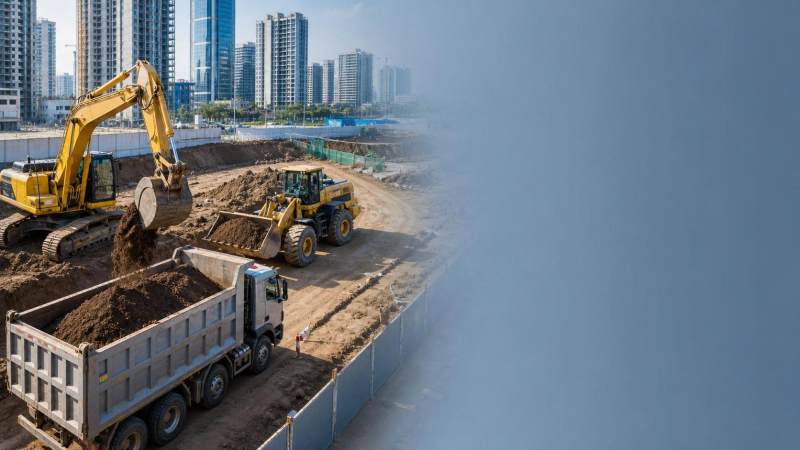
On busy job sites, improving construction equipment efficiency is not a nice-to-have. It directly affects schedule control, labor productivity, fuel use, and project margin.
The real challenge is rarely about adding more machines. It is about aligning equipment, operators, site flow, and maintenance with the daily production target.
When that alignment is missing, even modern fleets underperform. Idle time grows, rework increases, and crews start waiting on machines instead of moving work forward.
A practical approach to construction equipment efficiency combines planning, utilization tracking, operator discipline, preventive maintenance, and smarter job site coordination.
From recent industry changes, the stronger signal is clear. Efficient fleets are built through better decisions, not just bigger capital budgets.
Start with the Right Equipment Mix
Construction equipment efficiency begins before the first machine arrives. Poor fleet selection creates bottlenecks that no field workaround can fully solve.
Match machine size, reach, cycle time, and hauling capacity to the site’s actual production sequence. Oversized equipment often burns fuel without adding useful output.
Undersized equipment causes the opposite problem. It forces more cycles, creates crew delays, and increases wear under constant peak loading.
This is especially important on constrained urban sites, road projects, deep excavation zones, and heavy lifting operations where movement space is limited.
What to check before mobilization
- Daily material volume and target output per shift
- Haul distance, slope, and turning constraints
- Ground conditions, weather exposure, and access roads
- Attachment compatibility and changeover frequency
- Peak versus average loading demand
In practical terms, the best fleet is the one that keeps the work stream balanced. Every machine should support the next activity without creating queues.
Reduce Idle Time Through Better Site Flow
On crowded projects, idle time is one of the biggest hidden losses. It quietly destroys construction equipment efficiency while fuel, rental cost, and labor expense continue.
Machines usually do not sit still because they are broken. They sit because the site flow is broken.
Common causes include late truck dispatch, poor stockpile layout, blocked access lanes, unclear lift sequencing, and crews arriving before the work face is ready.
A simple traffic and workflow redesign can improve equipment productivity faster than a costly fleet expansion.
High-impact flow improvements
- Create one-way travel paths for haul trucks and service vehicles.
- Separate loading, staging, fueling, and maintenance zones.
- Sequence trades to avoid machine interference in tight areas.
- Use short interval planning for critical work fronts.
- Review waiting time at shift handover and break periods.
Even a five-minute delay repeated across loaders, cranes, excavators, and trucks can erase hours of productive capacity by the end of the day.
That is why site logistics should be treated as a production system, not just a safety map.
Use Data to Measure Real Equipment Performance
If construction equipment efficiency is not measured, it is usually overestimated. Daily reports often show activity, but not true performance.
The most useful indicators are simple. Track utilization, idle ratio, fuel burn per output unit, cycle time, mechanical availability, and unplanned stoppages.
Telematics helps, but the value comes from action. A dashboard alone will not improve machine efficiency on a busy construction site.
Review exceptions at the end of each shift. Focus on why performance missed target, not only on how many hours the machine was running.
This kind of visibility makes construction equipment efficiency a controllable operating issue, not a vague management goal.
Train Operators for Consistency, Not Just Speed
Operator skill has a direct effect on equipment productivity, component life, fuel economy, and safety performance.
However, the goal is not simply to push faster. The goal is smooth, repeatable, low-waste operation under real site pressure.
Harsh braking, overloading, poor swing control, unnecessary idling, and rough attachment handling all reduce construction equipment efficiency over time.
Short coaching cycles work better than occasional classroom sessions. Use machine data, supervisor feedback, and peer review during active operations.
Focus training on these behaviors
- Maintaining stable cycle rhythms
- Reducing unnecessary travel and repositioning
- Using attachments at the correct operating range
- Avoiding overloads and shock loads
- Following shutdown and startup best practices
A skilled operator often delivers more value than a newer machine used poorly. That remains one of the most overlooked truths in fleet performance.
Prevent Downtime Before It Disrupts Production
Unplanned downtime is one of the fastest ways to lose control of a busy project. It damages production, sequencing, and sometimes client confidence.
Improving construction equipment efficiency requires maintenance planning that fits the production calendar, not one that competes with it.
Daily walkarounds still matter. Many serious failures begin with leaks, loose pins, abnormal heat, unusual noise, or neglected wear parts.
The stronger practice is predictive scheduling. Service high-risk components before failure windows appear during critical path work.
Maintenance habits that improve equipment efficiency
- Schedule maintenance around shift transitions or low-demand periods.
- Stock fast-moving spare parts on or near the site.
- Flag repeat fault codes and recurring operator complaints.
- Inspect attachments, hoses, tires, and undercarriage more frequently.
- Coordinate service teams with the daily work plan.
In heavy-duty environments, uptime is never accidental. It is the result of disciplined routines and fast field response.
Improve Coordination Across People, Machines, and Priorities
Construction equipment efficiency often breaks down at the communication level. The machine may be ready, but the decision chain is too slow.
This is common when multiple subcontractors share access roads, lift zones, utility corridors, or temporary staging areas.
A short daily coordination rhythm helps. Review constraints, confirm machine assignments, flag equipment conflicts, and reset priorities before delays spread.
In more advanced operations, digital planning tools, telematics, and remote diagnostics improve visibility further. That said, field discipline still matters most.
This is where intelligence-led decision making adds value. Stronger operational insight helps teams connect machine capability with method, risk, and timing.
Build a Repeatable Efficiency Plan
For lasting results, construction equipment efficiency should be managed as a repeatable site process, not a one-time improvement campaign.
Start with three questions. Are the machines matched to the job? Is site flow supporting continuous work? Are maintenance and operators aligned with production goals?
Then set a short action cycle. Measure, identify losses, adjust workflows, and review results every week.
The most effective teams do not chase perfection. They remove the next major cause of waste, then move to the next one.
That approach works across excavation, road construction, heavy lifting, mining support, and underground infrastructure operations.
Better construction equipment efficiency means more than lower cost. It supports safer execution, stronger schedule reliability, and better asset value over time.
On a busy job site, the fastest gains usually come from clearer decisions, tighter coordination, and disciplined follow-through. That is where performance starts to compound.
Related News
 Sep 22, 2026How to Evaluate a High-Altitude Mining Solutions Manufacturer for Remote ProjectsEvaluate a high-altitude mining solutions manufacturer with proven derating, cooling, service logistics, and lifecycle-cost support for remote projects.
 Sep 21, 2026Industrial Supplier Evaluation: A Risk-Based Scorecard for Quality, Capacity, and DeliveryIndustrial supplier evaluation made practical: use a risk-based scorecard to assess quality, capacity, and delivery reliability, reduce project risk, and select suppliers with confidence.
 Sep 20, 2026Comparing Heavy Equipment Warranty Suppliers: Coverage, Claims, and Downtime RiskSupplier comparison for heavy equipment warranty: evaluate coverage, claims speed, service networks, and downtime risk to protect uptime and project costs.
 Sep 19, 2026Mining Truck Technology Trends: What Fleet Managers Should Prioritize for 2026Mining truck technology trends for 2026: prioritize electrification, autonomy, predictive maintenance, and road intelligence to improve fleet uptime, safety, and cost control.


Ms. Elena Rodriguez
Weekly Insights
Stay ahead with our curated technology reports delivered every Monday.