
How to Evaluate Industrial Equipment Information Sources in Asia for Market Entry

The Information Market Is Fragmenting Faster Than the Equipment Market
The biggest change in Asian heavy equipment intelligence is not simply that there is more data. It is that the gap between visible information and decision-grade information is widening. Anyone studying tunnel boring machines, mining fleets, crawler cranes, or large road machinery across Asia can now access a constant stream of manufacturer updates, trade media stories, dealer announcements, project headlines, and procurement chatter. The problem is that much of it describes market activity without explaining whether that activity is commercially usable for market entry.
For business evaluators, the practical question is no longer where to find industrial equipment information Asia coverage. It is how to judge which sources reflect real demand, real technical requirements, and real barriers to execution. In many segments of heavy industry, a glossy project announcement tells you almost nothing about machine specification preferences, localization pressure, financing constraints, after-sales expectations, or the role of state-linked contractors. Those factors decide whether a market is open in theory or workable in practice.
This is becoming more pronounced because Asian infrastructure and extractive markets are moving on different clocks. India’s urban rail and tunnel activity, Southeast Asia’s transport buildout, Indonesia’s mining expansion, and energy-related heavy lifting demand across several markets do not produce one unified signal. They generate clusters of information with different levels of transparency. A source that is useful for tracking project momentum in one country may be weak for understanding procurement qualification in another.
Source Quality Now Depends on What You Are Trying to Validate
A useful shift in evaluation is to stop asking whether a source is “reliable” in a general sense. Reliability depends on purpose. A business evaluator trying to estimate TBM demand needs a different evidence base than someone assessing entry potential for ultra-large excavators or mining dump trucks.
If the question is demand timing, public tender notices, project owner disclosures, transport ministry releases, and multilateral development bank procurement pages tend to be more informative than brand marketing. If the question is machine fit, technical conference papers, contractor interviews, geological discussions, and maintenance-side commentary often reveal more than sales brochures. If the question is market access, customs classifications, local standards authorities, dealer footprint evidence, financing availability, and import policy changes may matter more than headline project volume.
This sounds obvious, but many market-entry errors come from mixing these layers together. A source can be accurate and still commercially misleading. A manufacturer may correctly report a strategic partnership while saying little about whether localized service capacity exists. A trade article may accurately describe a new mine or port project while omitting that the procurement package favors incumbents with established parts inventories. That distinction is where many desktop market studies fail.
Official Sources Are Necessary, But They Rarely Explain the Real Friction
Across Asia, official information has become easier to collect, yet harder to interpret in isolation. Ministries, project authorities, stock exchange filings, environmental assessment disclosures, and customs portals can provide strong verification signals. They are usually the best starting point for confirming whether a project, capex program, or regulatory change actually exists.
What they often do not show is operational friction. In heavy equipment, that friction sits in places such as site geology, operator training, spare parts lead time, road transport limitations for oversized modules, power supply constraints for electrified equipment, or acceptance risk around unfamiliar control systems. These are not side issues. They can determine whether a product category is entering an adoption phase or remaining stuck at pilot level.
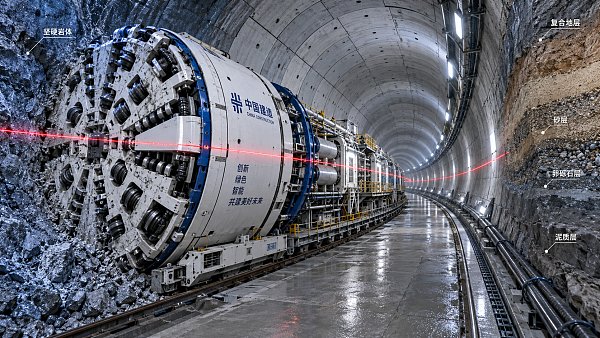
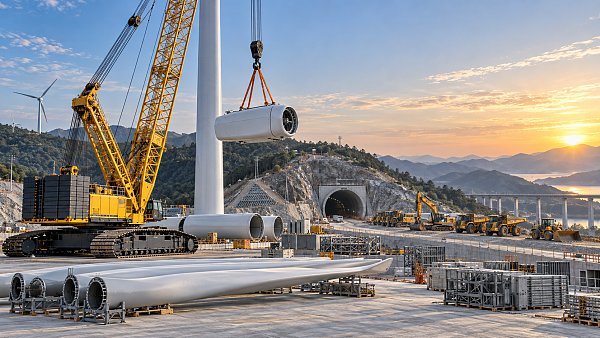
The result is that high-authority sources now need to be read alongside field-proximate signals. In TBM and underground construction, for example, project route complexity and geology discussions may be more revealing than a generic project budget figure. In open-pit mining, fleet renewal headlines matter less without context on haul road conditions, payload utilization, tire support, fuel strategy, and mine-life confidence. In crawler cranes, the strongest signals often come from the project mix itself: offshore wind assembly, petrochemical module lifting, nuclear construction, and large bridge erection do not translate into the same crane requirements or service model.
Local Language and Local Trade Networks Are No Longer Optional
One trend that has sharpened over the past few years is the growing penalty for relying only on English-language industry coverage. In Asia, commercially meaningful information often appears first in local-language tender platforms, regional contractor media, provincial government updates, mining association notices, equipment rental channels, or technical forums tied to specific industries. English summaries usually arrive later, stripped of technical nuance, or not at all.
This matters especially in sectors where procurement is relationship-heavy and operational trust matters more than catalog breadth. Dealer changes, service center expansion, local assembly intentions, labor rules affecting site access, and contractor preferences for certain hydraulic, powertrain, or telematics ecosystems may be visible in local networks long before they appear in formal market reports. Evaluators who cannot access those channels are often left with the illusion of transparency.
That does not mean every local source deserves equal weight. The point is that local-language visibility has become part of source evaluation itself. If an intelligence provider cannot explain where local project and procurement signals originate, its regional market view is probably too thin for serious entry decisions.
Technology Claims Need Cross-Checking Against Site Economics
Another notable shift is the volume of technology-forward claims circulating around automation, remote control, electrification, predictive maintenance, and lower-emission heavy equipment. Some of these are grounded in genuine adoption. Others are still ahead of site economics, grid conditions, maintenance readiness, or customer risk tolerance.
In practice, technology information in Asia now needs two filters. The first is technical plausibility: does the source describe a real deployment environment, supporting system, and operating condition? The second is commercial plausibility: who is paying for the transition, and under what return logic? A mining truck electrification article may be interesting, but without understanding energy availability, charging or trolley infrastructure, duty cycle, and mine ownership structure, it does not tell you how quickly adoption could move beyond flagship sites.
The same applies to TBM cutterhead materials, 5G-enabled remote excavation, or digitally managed road machinery fleets. The most useful sources are the ones that connect technology language to constraints: uptime, consumables, geology response, training intensity, maintenance intervals, financing, and project penalties. Without that bridge, innovation coverage becomes branding material disguised as intelligence.
A Good Source Should Improve a Commercial Hypothesis, Not Just Add Facts
The standard for evaluating information sources is getting stricter because market entry decisions now require sharper hypotheses. In heavy equipment, those hypotheses are usually specific: whether demand is greenfield or replacement-led, whether buyers prioritize capex or lifecycle service, whether local content expectations are hardening, whether contractors will accept a new brand in critical-path work, whether financing can offset service-network weakness, and whether regulation is pushing certain product upgrades sooner than the installed base can absorb.
A strong source helps refine one of those hypotheses. A weak one merely adds more facts to the pile. This distinction is especially useful in Asia, where project volume alone can mislead. Large infrastructure pipelines can coexist with highly concentrated procurement power. Fast-growing mining output can coexist with conservative fleet preferences. New energy construction can expand lifting demand while still favoring suppliers with proven local assembly, transport engineering, and field service depth.
That is why experienced evaluators increasingly rank sources by decision utility. Can this source help estimate equipment specification direction? Can it expose service-model expectations? Can it reveal where the buyer’s real switching costs sit? If not, it may still be interesting, but it should not shape entry timing or resource allocation.
What the Better Signals Usually Look Like
The most dependable market reading usually comes from overlap. When a public project pipeline, local contractor behavior, standards direction, and service-network evidence point the same way, confidence rises. When only one layer is active, caution is warranted.
The Next Phase: Less Market Visibility, More Intelligence Discipline
The next few years are likely to reward disciplined source evaluation more than broad information harvesting. Asian heavy equipment markets should remain active, but they are unlikely to become uniformly transparent. Some segments will publish more data while becoming harder to interpret because policy, financing, and localization priorities are shifting beneath the surface. Others will look quiet in mainstream coverage even as regional procurement and service ecosystems evolve quickly.
For TF-Strategy’s world of TBM systems, open-pit mining machinery, crawler cranes, road equipment, and heavy haulage, the real edge will come from intelligence that links physical machine realities to project strategy. That means treating information sources as assets with different failure modes, not just different formats. Some are late. Some are promotional. Some are technically shallow. Some are locally rich but hard to scale. The evaluator’s task is to know which weakness matters for the decision at hand.
A sensible near-term view is that source evaluation in Asia will become more specialized by equipment category and by country. Broad regional summaries will still have value for orientation, but entry decisions will increasingly depend on narrow, corroborated signals: which contractors are shaping specification norms, which standards are beginning to affect machine configuration, which service expectations are rising, and where technology narratives are outrunning execution capacity. That is where market intelligence stops being content and starts becoming usable judgment.
Related News
 Sep 17, 2026How TBM Guidance Technology Maintains Alignment Through Curves and Variable GroundTunnel boring machine guidance technology helps teams maintain precise alignment through curves and variable ground, reducing risk, improving lining accuracy, and protecting schedules.
 Sep 16, 2026Infrastructure Equipment Market Reference: Demand, Pricing, and Supplier BenchmarksInfrastructure equipment market reference for buyers: assess demand signals, total cost, pricing risks, and supplier benchmarks for tunnels, mining, cranes, and road projects.
 Sep 15, 2026How to Evaluate Infrastructure Equipment Suppliers for Complex Project RequirementsInfrastructure equipment solutions supplier evaluation guide for complex projects: assess technical fit, lifecycle cost, reliability, local support, and contract risk.
 Sep 14, 2026What Drives Surface Mining Equipment Cost Across a Mine’s Operating Life?Surface mining equipment cost depends on fleet matching, fuel, wear, maintenance, availability, and rebuild timing. Explore lifecycle strategies that protect output and margins.


Ms. Elena Rodriguez
Weekly Insights
Stay ahead with our curated technology reports delivered every Monday.