
Construction Safety Equipment Checklist: What to Choose for Site Access, Fall Protection, and PPE
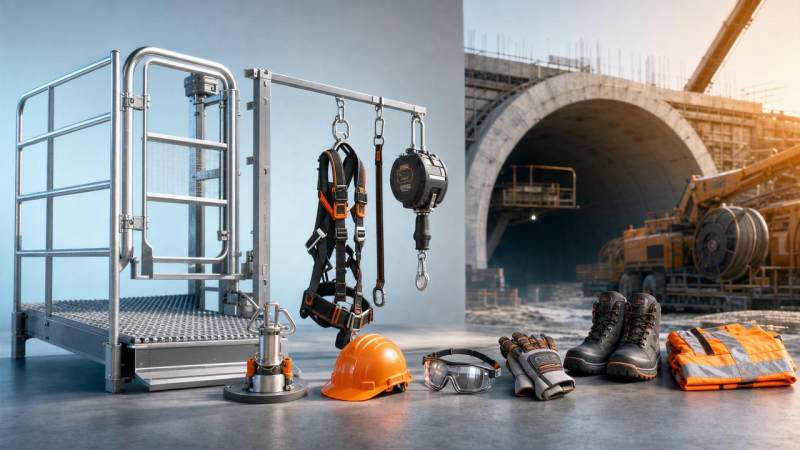
Choosing construction safety equipment is rarely a box-ticking exercise on complex jobsites. It affects access control, fall exposure, daily productivity, incident prevention, and the quality of project delivery, especially where heavy machinery, confined work zones, and shifting ground conditions intersect.
That is why a practical checklist matters. For projects involving TBM operations, crawler cranes, road machinery, open-pit fleets, or large material handling, the right mix of site access systems, fall protection, and PPE helps turn safety rules into repeatable field performance.
From the perspective of TF-Strategy, where construction methods, machine parameters, and infrastructure intelligence are closely linked, construction safety equipment is not a separate topic from operations. It is part of how risk is designed, monitored, and controlled across the full project cycle.
Why this checklist matters in today’s work environment
Jobsite risk has become more layered. Equipment is larger, schedules are tighter, and work often continues across night shifts, bad weather, elevation changes, and mixed contractor interfaces.
In this setting, construction safety equipment must do more than meet a specification sheet. It has to remain usable under dust, vibration, mud, restricted visibility, and repeated handling.
This is especially relevant in heavy industry environments. A tunnel launch shaft, a crane assembly pad, a haul road maintenance zone, and a highwall service area all present different exposure patterns, even when the same regulation applies.
More attention is also moving toward auditability. Buyers and site leaders increasingly need construction safety equipment that supports inspection records, traceability, standardized replacement cycles, and clear compatibility across brands and systems.
What construction safety equipment should cover
At a basic level, construction safety equipment includes the physical items used to reduce exposure to injury during access, movement, lifting support, elevated work, and routine site activity.
For this topic, three categories deserve close attention because they affect both everyday operations and serious incident prevention.
Site access equipment
This covers ladders, stair towers, gangways, access platforms, temporary walkways, edge barriers, gate controls, anti-slip surfaces, and entry systems for restricted zones.
Access equipment is often underestimated because it appears routine. In reality, poor access design creates repeated exposure, and repeated exposure creates predictable incidents.
Fall protection systems
This includes harnesses, lanyards, self-retracting lifelines, anchor devices, horizontal and vertical lifeline systems, guardrails, rescue kits, and positioning equipment.
Fall protection should be treated as a system, not a collection of products. Compatibility between anchors, connectors, clearance distance, and rescue planning is essential.
Personal protective equipment
PPE usually includes helmets, eye protection, gloves, footwear, high-visibility clothing, hearing protection, respiratory protection, and task-specific protection for cutting, chemical contact, or arc exposure.
Good PPE selection balances certified protection with wearability. If equipment is too heavy, too hot, too restrictive, or poorly fitted, field compliance quickly falls.
How site conditions change the selection logic
A useful checklist starts with the environment, not the catalog. The same construction safety equipment may perform very differently across projects.
This is where intelligence-led review becomes useful. TF-Strategy’s focus on heavy equipment methods highlights a simple truth: risk controls should match equipment behavior, work sequencing, and maintenance reality, not just procurement preference.
A practical checklist for site access
Access routes shape behavior all day long. If the safest route is slower, unstable, or badly placed, people will bypass it.
- Check whether access points match real workflow, not only the layout drawing.
- Confirm load rating for tools, materials, and two-way movement where needed.
- Review slip resistance in wet, oily, dusty, or icy conditions.
- Inspect handrails, toe boards, gate closures, and edge protection details.
- Verify access for inspection, maintenance, and emergency retrieval tasks.
- Look for pinch points near moving equipment, rotating machinery, or suspended loads.
Temporary access systems should also be reviewed for installation quality. Many failures come from poor setup, missing components, or unauthorized modification rather than weak product design.
What to evaluate in fall protection
Fall protection decisions should begin with exposure mapping. The question is not only where height exists, but where uncontrolled movement can occur.
That can include climbing onto drilling platforms, crossing formwork, entering shaft edges, servicing conveyors, or reaching upper crane sections during assembly and inspection.
- Prefer passive controls such as guardrails when the task allows them.
- Use personal fall arrest only after anchor location and clearance distance are validated.
- Confirm that connectors and harness attachment points are fully compatible.
- Include rescue planning in the original selection, not after mobilization.
- Set inspection intervals based on usage intensity, contamination, and storage conditions.
A common purchasing error is treating all certified systems as functionally equal. In practice, worker mobility, anchor geometry, leading-edge exposure, and retrieval constraints can make one compliant option far safer than another.
PPE selection should reflect the actual task
PPE is the most visible part of construction safety equipment, but visibility does not guarantee suitability. The better approach is to compare the task, exposure duration, and surrounding equipment interaction.
For example, gloves that perform well for material handling may reduce dexterity during rigging checks. Boots that handle rough ground may become problematic on smooth steel access surfaces if tread design is wrong.
Respiratory and hearing protection also need more careful review on high-output jobsites. Dust type, particulate concentration, engine noise, ventilation, and communication demands all affect the best choice.
Compliance is essential, but field performance decides value
Standards, certifications, and documented inspections remain non-negotiable. Still, the strongest construction safety equipment programs go further than formal compliance.
They compare supplier consistency, spare part availability, shelf life, user training requirements, and replacement triggers after exposure to shock, chemicals, UV, or contamination.
This matters even more on globally sourced projects. Mixed fleets and multinational contractors often bring different equipment habits onto the same site. Without a unified approval logic, compatibility gaps appear quickly.
That broader view fits the TF-Strategy approach to infrastructure intelligence. Safety equipment decisions become stronger when connected to equipment deployment models, maintenance intervals, logistics constraints, and total cost of control failure.
Where to focus next
A useful next step is to review construction safety equipment by task cluster rather than by product category alone. Group elevated work, confined access, mobile plant interface, and maintenance exposure into separate decision tracks.
Then compare what is currently issued, what is actually used, and where workarounds appear in the field. That gap often reveals more than the purchasing record.
For sites tied to heavy machinery, tunneling, mining, lifting, or major roadworks, it is also worth aligning safety equipment reviews with equipment movement plans, shift patterns, and emergency response capability.
When construction safety equipment is selected this way, it supports compliance, but it also improves reliability, site discipline, and operational resilience. That is the basis for making safer decisions before the next audit, next mobilization, or next critical lift begins.
Related News
 Oct 21, 2026Choosing Tunneling Equipment for the Middle East: Rock, Soil, and GroundwaterCompare underground tunneling equipment Middle East projects need. Explore rock, soil, groundwater, and TBM options to reduce risk and make confident procurement decisions.
 Oct 20, 2026Which Heavy Machinery Maintenance Standards Apply to Your Construction Fleet?Discover which heavy machinery maintenance standards apply to your fleet. Clarify legal duties, OEM requirements, and inspection rules to reduce risk and keep equipment ready for work.
 Oct 19, 2026Sizing Industrial Hydraulic Power Packs: Pressure, Flow, and Duty CycleSize industrial hydraulic power packs with confidence. Learn how pressure, flow, and duty cycle affect performance, energy costs, and heat control—and avoid costly sizing mistakes.
 Oct 18, 2026How Equipment Specifications Affect Purchase, Installation, and Operating CostsExplore equipment specification planning cost factors that shape purchase, installation, and operating budgets. Compare lifecycle costs, avoid oversizing, and buy with confidence.
Ms. Elena Rodriguez
Weekly Insights
Stay ahead with our curated technology reports delivered every Monday.