
Heavy Equipment Auction Buying Checklist: Inspection Points, Hidden Costs, and Bid Strategy
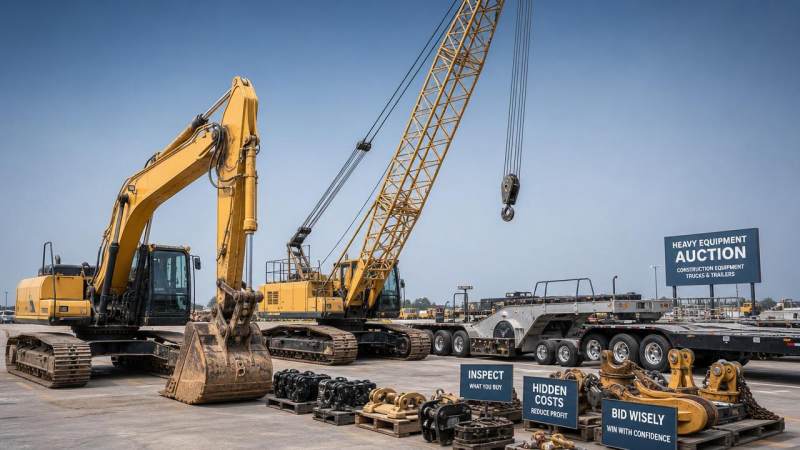
A heavy equipment auction can cut capital cost fast, but the lowest hammer price rarely equals the best deal. In mining, tunneling, lifting, and roadbuilding, one overlooked defect can erase the savings in weeks.
That is why a smart heavy equipment auction decision starts before bidding. It combines field inspection, cost modeling, fleet-fit thinking, and a clear walk-away number.
Across the sectors tracked by TF-Strategy, from TBM support systems to crawler cranes and mining dump trucks, the same rule keeps showing up: buy the machine, not the story around it.
Start with the machine’s working reality
At any heavy equipment auction, photos and seller notes only provide a starting point. What matters is whether the machine can return to productive service without surprise downtime.
For earthmoving and mining assets, first check structural integrity, service history, and wear patterns. For cranes and road machinery, inspection should go deeper into safety systems, load components, and calibration records.
- Verify hour meter consistency against wear on pedals, pins, seats, hoses, and control surfaces. A mismatch often signals replacement parts, poor records, or manipulated machine history.
- Inspect the undercarriage, tires, tracks, rollers, and idlers first. In many heavy equipment auction deals, these wear items decide whether the asset is cheap or quietly expensive.
- Look for leaks around hydraulic pumps, cylinders, swing drives, final drives, and transmission housings. Fresh paint near seals can hide active problems instead of showing refurbishment.
- Review welds, boom sections, carbody plates, frames, and counterweight mounts. Uneven beads, hairline cracks, and plate distortion may point to overload, impact damage, or fatigue.
- Check cold-start behavior, exhaust color, idle stability, and response under load. A machine that starts poorly on site usually becomes a reliability issue after transport.
- Confirm attachments, buckets, hooks, rigging interfaces, electrical modules, and safety devices are included. Missing components are common at heavy equipment auction yards and costly to replace later.
Why this matters in field-heavy sectors
A large excavator working in open-pit mining can tolerate cosmetic wear, but not weak hydraulics or undercarriage loss. Production cycles punish small defects quickly.
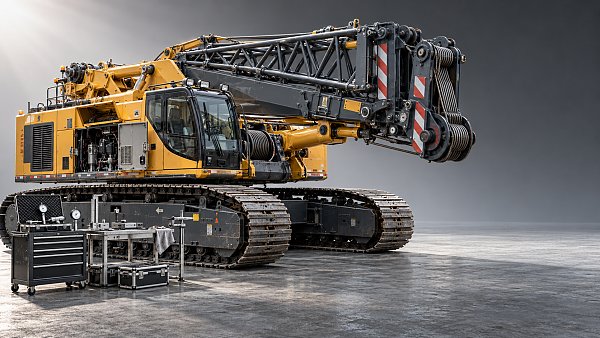
A crawler crane is even less forgiving. If records for boom sections, load moment systems, or winch assemblies are incomplete, the real risk sits far beyond the bid price.
Focus on the costs that usually stay off the auction sheet
The biggest mistake in a heavy equipment auction is treating the hammer price as the total investment. Real ownership cost starts stacking up the moment the lot closes.
TF-Strategy often highlights total cost of ownership because infrastructure equipment operates in complex environments. Remote mines, mountain tunnels, and wind project sites all magnify hidden costs.
- Add buyer premiums, taxes, customs, inland transport, dismantling, cranage, and site assembly before placing a bid. Cross-border heavy equipment auction deals often fail on logistics math.
- Estimate immediate repair spend within the first 100 operating hours. Fluids, filters, seal kits, track work, tires, and overdue preventive maintenance can change the business case fast.
- Check parts availability by model, region, and dealer network strength. An attractive heavy equipment auction unit loses value when simple replacement parts take months to arrive.
- Calculate technician access, software diagnostics, and recalibration needs. Newer machines may require OEM tools, subscription access, or specialist commissioning before productive deployment.
- Review fuel burn, idle efficiency, and emission compliance for the target project. Older assets can look cheap upfront but underperform badly in regulated or fuel-sensitive operations.
- Include downtime cost in the model, not just repair invoices. In tunneling, mining, or heavy lifting, one stalled unit can disrupt an entire production sequence.
Bid with a ceiling, not with adrenaline
A heavy equipment auction moves fast, and that speed can create expensive optimism. Good bidding discipline comes from knowing the asset’s recovered value before the first offer.
Set a maximum bid based on three numbers: fair market value, total correction cost, and expected productivity in the intended project cycle. If one number is uncertain, lower the ceiling.
- Build a pre-bid sheet with target price, repair allowance, freight, and walk-away number. This keeps heavy equipment auction decisions tied to facts, not competitive pressure.
- Rank lots before auction day and focus only on strategic fits. Chasing backup units without a use case often leads to avoidable inventory and maintenance burden.
- Watch bidding rhythm during the first minutes. Fast jumps may signal emotional buying, while slow movement can reveal market doubts about condition or resale value.
- Do not use best-case utilization in your model. Base the number on realistic shift patterns, operator availability, and the site environment where the machine will actually work.
- Leave room for post-sale surprises, especially on older machines. A disciplined margin protects the deal when inspections were limited or documentation was incomplete.
One practical way to set the cap
Start with comparable market pricing for the same model and age band. Subtract transport, first-stage repairs, compliance upgrades, and a downtime reserve.
Then compare that result with expected utilization on the target project. If the machine only works economically under perfect conditions, pass and wait for the next heavy equipment auction.
Adjust the decision to the equipment category
Not every asset should be screened the same way. A machine’s value depends on how its technical condition affects output, safety, and mobilization time.
Excavators and mining dump trucks
Focus on engine health, hydraulic efficiency, frame stress, and tire or track life. In high-cycle mining work, delay risk often costs more than component replacement.
Payload systems, braking response, and cooling performance matter more in hot or high-altitude operations. These details directly affect safety and haulage efficiency.
Crawler cranes
Look closely at boom condition, wire ropes, sheaves, load charts, and control electronics. Missing certification or inspection records can make a low-price machine impossible to use quickly.
Assembly cost also matters. A heavy equipment auction win is less attractive when transport splits, support cranes, and commissioning crews consume the savings.
Road machinery and tunneling support assets
For pavers, rollers, and support machines around tunneling projects, check sensors, leveling systems, compaction consistency, and electronic controls. Small calibration problems often become quality defects later.
In TBM-related support fleets, the machine must match the project sequence. Even a cheap asset becomes wasteful if it cannot integrate with site logistics and maintenance planning.
Common misses that turn savings into rework
Many poor heavy equipment auction outcomes come from details that seem small at the yard. They only become visible after shipping, mobilization, or the first production week.
- Do not assume maintenance records are complete because a binder exists. Confirm dates, hour intervals, major rebuilds, and serial-number matches against the actual machine.
- Avoid treating repainting as proof of refurbishment. Clean cosmetic work can hide corrosion, welding repairs, or component mixing from multiple donor machines.
- Check whether software locks, telematics ownership, or regional settings limit usage. Some newer assets need digital transfer steps before they are fully operational.
- Confirm the machine fits the target crew’s skill level. An advanced unit with weak local support can create slower ramp-up and inconsistent operating performance.
- Review resale path before buying. A niche configuration may work today but prove hard to remarket if project demand or regional regulations shift.
Make the final call with a full-value view
The best heavy equipment auction purchase is not the cheapest unit in the yard. It is the asset that reaches productive work fastest, with manageable risk and predictable support cost.
That is also where TF-Strategy’s perspective becomes useful. In sectors shaped by deep excavation, extreme haulage, major lifting, and precision paving, equipment value always connects to application context.
Before the next heavy equipment auction, build a short decision file for each target lot: condition findings, hidden cost estimate, deployment timeline, and maximum bid. If the numbers still work after that, bid with confidence. If not, walk away early and keep capital ready for a better-fit asset.
Related News
 Oct 20, 2026Which Heavy Machinery Maintenance Standards Apply to Your Construction Fleet?Discover which heavy machinery maintenance standards apply to your fleet. Clarify legal duties, OEM requirements, and inspection rules to reduce risk and keep equipment ready for work.
 Oct 19, 2026Sizing Industrial Hydraulic Power Packs: Pressure, Flow, and Duty CycleSize industrial hydraulic power packs with confidence. Learn how pressure, flow, and duty cycle affect performance, energy costs, and heat control—and avoid costly sizing mistakes.
 Oct 18, 2026How Equipment Specifications Affect Purchase, Installation, and Operating CostsExplore equipment specification planning cost factors that shape purchase, installation, and operating budgets. Compare lifecycle costs, avoid oversizing, and buy with confidence.
 Oct 17, 2026Tunnel Boring Machine Supplier List: Compare TBM Types and Service CoverageExplore our tunnel boring machinery supplier list to compare EPB, slurry and hard rock TBMs, assess service coverage and lifecycle costs, and build a smarter procurement shortlist.
Ms. Elena Rodriguez
Weekly Insights
Stay ahead with our curated technology reports delivered every Monday.