
Heavy Equipment Sourcing Strategy: How to Balance Cost, Lead Time, and Supplier Risk
Heavy Equipment Sourcing Strategy: How to Balance Cost, Lead Time, and Supplier Risk
For procurement teams, a solid heavy equipment sourcing strategy is no longer about chasing the lowest quote.
Global supply volatility, long production cycles, and supplier uncertainty have changed the rules.
A cheaper machine can become the most expensive choice if delivery slips or support fails.
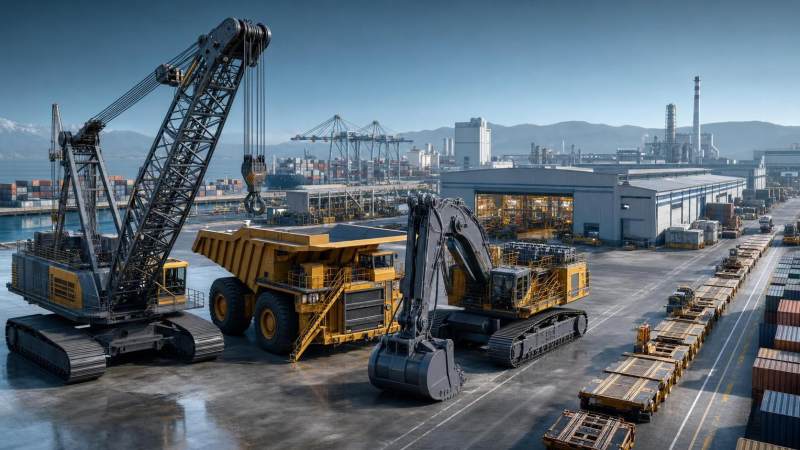
That is especially true for TBMs, crawler cranes, mining trucks, and ultra-large excavators.
In these categories, one sourcing mistake can delay a project and damage lifetime returns.
A practical heavy equipment sourcing strategy must balance three forces at the same time.
Those forces are cost, lead time, and supplier risk.
When they are managed together, procurement becomes more resilient and more commercially effective.
Why a Heavy Equipment Sourcing Strategy Must Go Beyond Price
In heavy industry, price is visible first, but hidden costs usually decide final performance.
A lower purchase price may come with slower factory scheduling, weaker localization, or uncertain spare parts support.
That weakens uptime, extends commissioning, and increases total cost of ownership.
From recent market shifts, a stronger signal is the lengthening of decision-to-delivery windows.
Critical components such as hydraulic systems, cutter heads, drivetrains, and control units remain exposed.
This means a heavy equipment sourcing strategy must start with project reality, not supplier brochures.
The right question is simple: what sourcing mix protects schedule, budget, and operating continuity?
Define Cost the Right Way
Any serious heavy equipment sourcing strategy should replace unit price with full-cycle cost analysis.
That means looking beyond acquisition and into operation, maintenance, and downtime exposure.
For large machines, small differences in fuel burn or wear life can outweigh initial discounts.
The same applies to training, site assembly, logistics, insurance, and compliance adaptation.
A workable sourcing model usually evaluates cost through these lenses:
- Base equipment price and payment terms
- Ocean freight, inland transport, and customs cost
- Installation, testing, and operator training expense
- Expected maintenance intervals and spare parts pricing
- Downtime impact on production or construction milestones
- Residual value and redeployment potential
In practice, this helps procurement avoid false savings.
A strong heavy equipment sourcing strategy treats TCO as a negotiation tool, not just a finance exercise.
Lead Time Is a Commercial Variable, Not Just a Supply Metric
Lead time often gets reviewed too late, after specifications and pricing are nearly fixed.
That approach creates avoidable pressure and reduces sourcing options.
A better heavy equipment sourcing strategy maps lead time from tender release to operational readiness.
This should include engineering confirmation, factory slot allocation, inspection, shipping, customs, and commissioning.
For customized equipment, approval cycles can add more delay than manufacturing itself.
That is why procurement must separate nominal lead time from usable lead time.
Useful questions include:
- Which components have the longest replenishment cycle?
- Is factory capacity guaranteed in writing?
- What design changes would trigger schedule resets?
- Can transport routes handle oversized loads without permit delays?
- Is local service support ready before machine arrival?
When lead time is priced into the business case, sourcing decisions become more realistic.
This is where a disciplined heavy equipment sourcing strategy creates direct competitive advantage.
How to Assess Supplier Risk Without Slowing Procurement
Supplier risk is not only about bankruptcy or contract breach.
It also includes engineering weakness, unstable sub-suppliers, poor after-sales execution, and weak compliance systems.
In large equipment categories, these issues rarely stay small.
A practical heavy equipment sourcing strategy uses a short but disciplined risk screen.
This process does not need to be bureaucratic.
It needs to be consistent, comparable, and tied to deal value.
A high-value crawler crane package deserves deeper validation than a standard support vehicle order.
Build a Balanced Sourcing Model
The most effective heavy equipment sourcing strategy rarely depends on a single supplier or a single region.
Instead, it builds a balanced supplier portfolio based on equipment criticality.
In real procurement environments, three sourcing lanes often work well.
- Strategic core suppliers for mission-critical machines and major project packages
- Competitive secondary suppliers for leverage, flexibility, and benchmark pricing
- Regional service partners for maintenance, retrofits, and emergency response
This approach improves resilience without turning procurement into constant firefighting.
It also supports category-specific logic.
A TBM sourcing plan may prioritize cutter technology and field service depth.
A mining truck plan may focus more on haul-cycle efficiency and battery or engine support.
A sound heavy equipment sourcing strategy adapts its weighting by equipment function, project location, and downtime cost.
Use a Decision Matrix to Align Stakeholders
Many sourcing delays come from internal misalignment, not supplier failure.
Engineering, operations, finance, and procurement often value different outcomes.
A clear decision matrix keeps the heavy equipment sourcing strategy objective.
Common scoring dimensions include cost, lead time, technical fit, service readiness, and supplier risk.
The weighting should reflect project exposure.
For example, a remote open-pit mine may assign more weight to parts availability.
A metro tunneling contract may prioritize schedule certainty and geotechnical compatibility.
Once this matrix is agreed, supplier discussions become faster and more transparent.
Practical Steps for Immediate Improvement
A stronger heavy equipment sourcing strategy does not require a complete reset.
It usually starts with better discipline in a few high-impact areas.
- Segment equipment by criticality, customization level, and downtime exposure.
- Track total landed cost and operating cost in one sourcing dashboard.
- Validate supplier production slots before final commercial approval.
- Audit service readiness as seriously as factory capability.
- Maintain backup sources for critical systems and wear parts.
- Review sourcing assumptions after major freight, energy, or policy changes.
These steps make procurement more predictable and easier to defend internally.
They also create stronger negotiating positions with OEMs and specialized suppliers.
Final Takeaway
An effective heavy equipment sourcing strategy is a balancing act, but it should not be a guessing game.
When cost, lead time, and supplier risk are measured together, sourcing decisions become sharper.
That matters even more in sectors shaped by long asset lives and billion-dollar project schedules.
For organizations tracking global heavy equipment shifts, this is where market intelligence becomes practical value.
The next move is clear: review current supplier portfolios, recalculate real cost drivers, and test where lead time risk is hiding.
A better heavy equipment sourcing strategy starts with better questions, then turns them into repeatable sourcing decisions.
Related News
 Oct 20, 2026Which Heavy Machinery Maintenance Standards Apply to Your Construction Fleet?Discover which heavy machinery maintenance standards apply to your fleet. Clarify legal duties, OEM requirements, and inspection rules to reduce risk and keep equipment ready for work.
 Oct 19, 2026Sizing Industrial Hydraulic Power Packs: Pressure, Flow, and Duty CycleSize industrial hydraulic power packs with confidence. Learn how pressure, flow, and duty cycle affect performance, energy costs, and heat control—and avoid costly sizing mistakes.
 Oct 18, 2026How Equipment Specifications Affect Purchase, Installation, and Operating CostsExplore equipment specification planning cost factors that shape purchase, installation, and operating budgets. Compare lifecycle costs, avoid oversizing, and buy with confidence.
 Oct 17, 2026Tunnel Boring Machine Supplier List: Compare TBM Types and Service CoverageExplore our tunnel boring machinery supplier list to compare EPB, slurry and hard rock TBMs, assess service coverage and lifecycle costs, and build a smarter procurement shortlist.
Ms. Elena Rodriguez
Weekly Insights
Stay ahead with our curated technology reports delivered every Monday.